Roofing & Exterior · 6 min read · 17 June 2026
Home Structural Inspection Checklist for UK Houses (Printable)
Structural problems give you months of warning before they cost real money. Here is the twice-yearly walk-round we use on British housing stock, with times, costs and the point where you stop and pick up the phone.
By the Nims Casa editorial team — written from professional cleaning experience and checked against our editorial standards.
Almost every serious structural job we get called to was visible eighteen months earlier and nobody wrote it down. A door that starts catching each October, a hairline crack above a bay that reopens every dry August. Individually they mean nothing; recorded twice a year with dates and measurements, they tell you whether your house is moving, and in which direction.
This walk-round takes about two hours on a dry day. It will not replace a survey; it gives you a dated baseline, so when something changes you can prove it — exactly what an engineer or a loss adjuster will ask for.
Before you start: kit, time and the legal lines
One-off kit costs £60-£90 and lasts a decade. Do the outside first while the light is good, then work indoors from the loft down.
Two boundaries matter. You are inspecting, not opening up: no cutting into walls, lifting structural floors or hacking off render for a look. And almost any alteration is notifiable — chimney breast removal, taking out an internal wall and underpinning all fall under Building Regulations Part A, and work to a shared wall triggers the Party Wall etc. Act 1996. Listed and conservation-area properties need consent even for like-for-like window repairs.
- •Torch, 5m tape and a screwdriver for probing timber (£25)
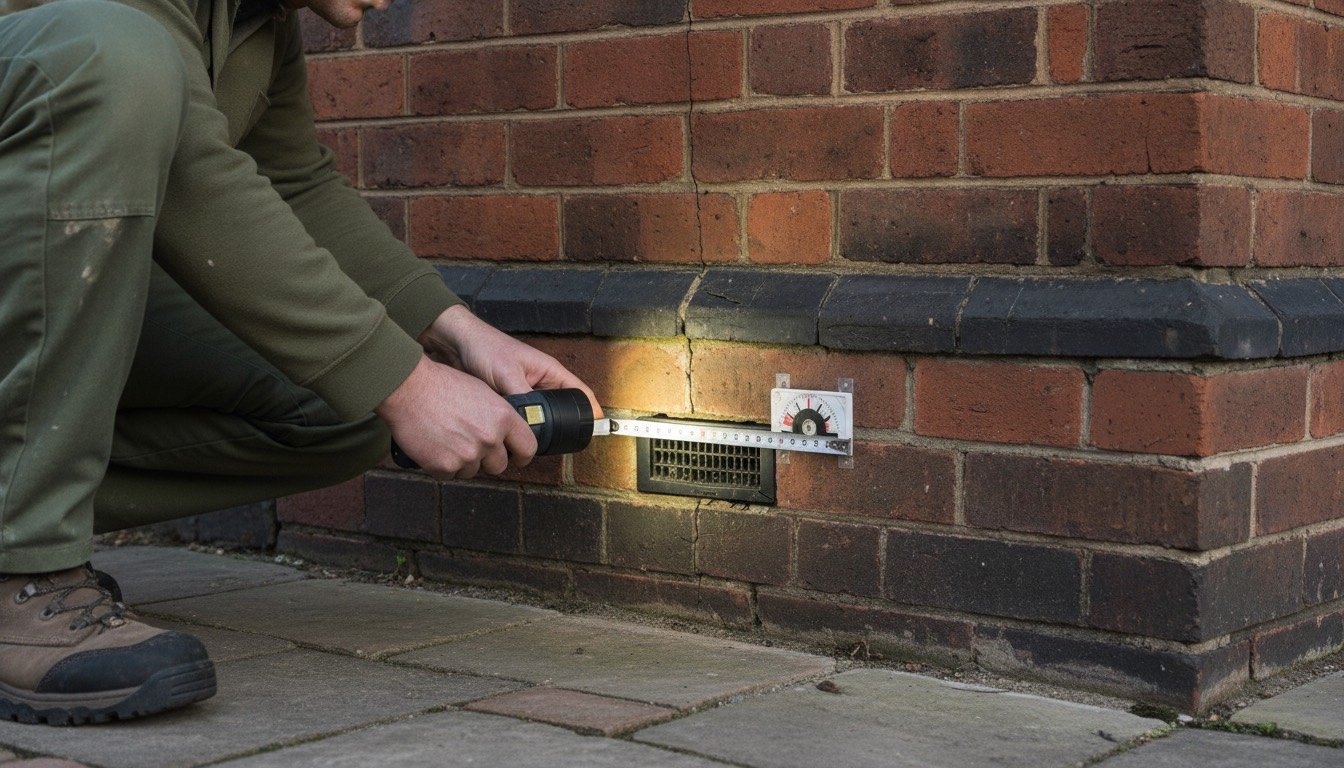
- •Crack tell-tale gauge or plastic crack monitors (£8-£15 a pair), plus a pencil to date every mark
- •Pin-type moisture meter (£20-£40)
- •Binoculars (£25) to read the roof and stack from the ground, not a ladder
- •Phone camera and notebook: same angles, same spots, dated
Every six months: the outside walk-round (45 minutes)
March and September suit the UK climate — one pass after winter frost, one before it. Walk the perimeter slowly, then stand across the road and read the roof line and verticals. Measure cracks in millimetres rather than describing them, and grade them with our guide to which foundation cracks are serious.
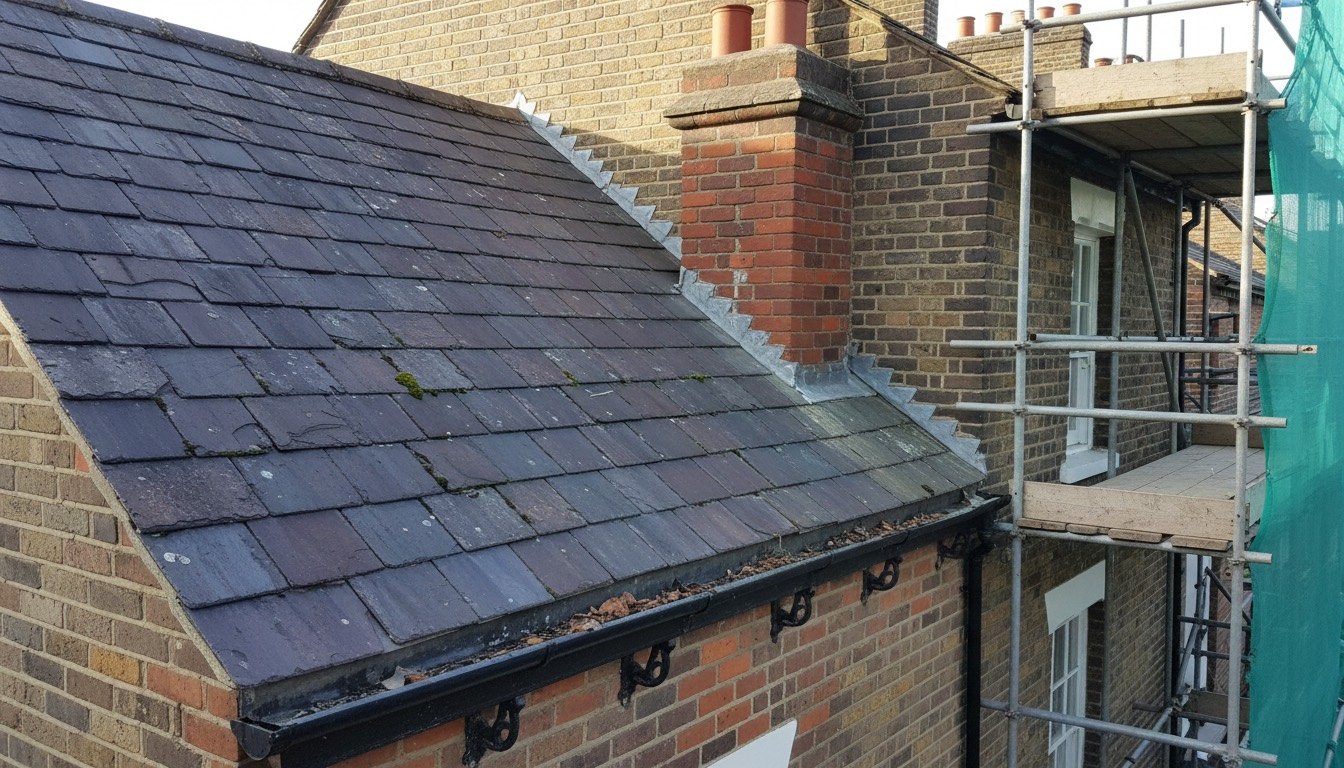
- •Roof line from 20m back: sagging ridge, dished slopes, slipped slates, bulging eaves. 10 mins, free
- •Chimney stack: lean, open joints, cracked flaunching. Repointing runs £400-£900 with access
- •Cracks in brick and render: width in mm, direction, dated pencil tick at each end. 15 mins. Over 5mm, or tapering, needs professional eyes
- •Damp proof course: 150mm clear of the ground. Raised patios and block paving bridging it cause most so-called rising damp; cutting a channel later costs £150-£400
- •Air bricks: clear, unpainted, not buried. Blocked vents rot suspended timber floors within a few winters
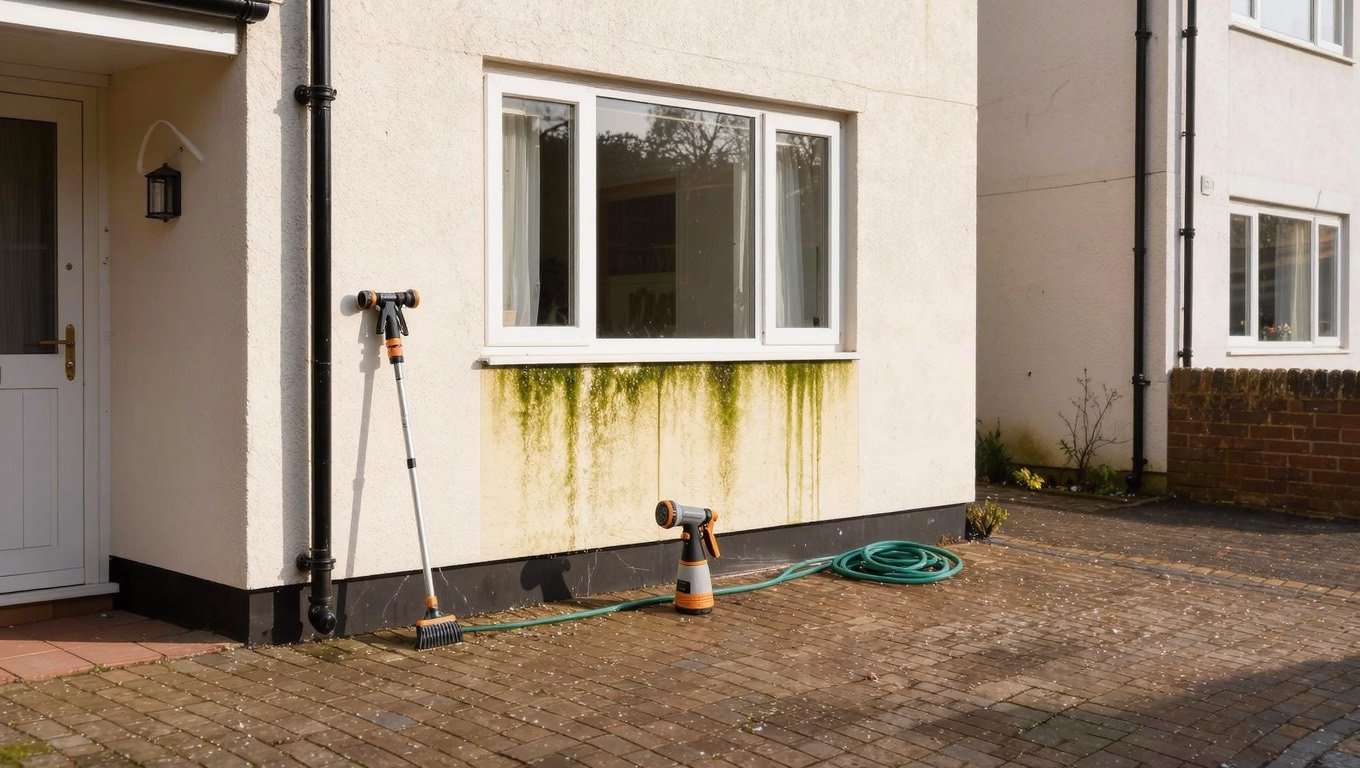
- •Gutters, downpipes and gullies: staining down a wall means water is soaking the brickwork. Method in our gutter maintenance guide
- •Trees within one-and-a-half times their mature height, especially willow and oak on clay
Every six months: inside, room by room (30 minutes)
Indoors you are hunting for movement, not decoration. Doors are the most honest instruments in the house — they bind before a crack becomes obvious. Work in the same order every time.
- •Every internal door: does it swing, catch or need lifting, and which edge is tight? 10 mins, free
- •Window and door reveals: diagonal cracks out of the top corners are the classic movement signature
- •Floors: roll a marble across each room, note any consistent fall, check bounce mid-span
- •Ceilings: new cracks along a joist line, or a bulge, mean movement above or a failed plaster key
- •Where an extension meets the original house: a hairline joint is normal, a widening one is not
Once a year: loft, floors, drains and services
The annual pass adds the parts you cannot see from a corridor. Do it in autumn, before the heating season, and pin it to your monthly maintenance schedule so it does not drift.
- •Loft with a torch: rafters and purlins for sag, a gap at the ridge board, daylight through the covering. 20 mins
- •Timber probe: press a screwdriver into rafter feet, wall plates and joist ends near the eaves. If it sinks 5mm, that is rot
- •Woodworm: 1-2mm holes with fresh pale dust is active furniture beetle; 3mm holes in old oak suggest deathwatch. Treatment £400-£1,200 per floor
- •Under-floor void: standing water, sagging joists, joists notched to death by a plumber
- •Drains: lift every chamber cover, run a tap, watch it flow. Standing water in a Victorian clay run usually means root ingress. CCTV survey £150-£350
- •Consumer unit: rewireable fuses or no earth at the lighting switches means a rewire conversation. An EICR on a three-bed is £180-£300
Old houses play by different rules
If your house predates about 1930 the standard checklist will mislead you, because pre-war construction is built to move and breathe. Solid 225mm walls have no cavity, so driving rain on the south-westerly elevation soaks through instead of draining down; the answer is repointing in NHL 3.5 lime mortar, not cement or a water repellent, which traps moisture and blows the brick face off. Our rundown of problems in 100-year-old houses covers the wider picture.
- •Bay windows: often on shallower footings than the main wall, carried on timber or a shallow steel. A bay dropped 10mm relative to the front elevation is an engineer's job, not a filler's
- •Sash windows: probe the bottom rail, cill and box frame corners. Wet rot is joinery (£150-£400 a sash), but a frame racked out of square points at the lintel above
- •Lime plaster on lath: fine crazing is normal, blown areas sound hollow, and gypsum skimmed over lime traps moisture and bubbles within two winters
- •Victorian drainage: salt-glazed clay with mortar joints and open gullies. Displaced joints leak under footings for years before anything shows
- •Pre-1970s wiring: VIR rubber cable perishes and cloth-sheathed lighting circuits often have no earth — see electrical repairs you should never DIY
- •A chimney breast removed at first floor without support: a stack apparently floating above an opening
If you only have twenty minutes
Short on time, or turning a rental round between tenancies? These five catch most of the failures that become four-figure bills.
- •Ground level clear of the damp proof course all the way round
- •Gutters and downpipes running clear, no staining below
- •Roof line and chimney from across the road
- •Every door: any new binding since last time?
- •Widest crack in the house: measure, photograph, date
When to stop and call a professional
The line is clear. Recording, measuring and photographing are yours. Diagnosing movement, anything involving support, and anything you would have to open up to confirm belongs to a chartered structural engineer — £400-£900 for a visit and report, or £800-£1,500 for a RICS Level 3 survey if you are buying. Our guide on when to call a structural engineer covers what a report should contain.
Call the same week for: a crack over 5mm, or one that has widened 2mm since your last dated photo; a diagonal crack wider at the top running through brick rather than mortar; horizontal cracks in mortar beds at roughly 450mm centres, which suggests wall tie failure; or orange-brown fungus with white sheeting and a mushroom smell, which is dry rot. If a wall bulges or a ceiling sags, clear the room and phone from outside it. Tell your insurer before any subsidence work — expect a £1,000 excess and their own engineer on site.
Found this useful?
There's plenty more — hundreds of guides and honestly-tested product reviews for every corner of your home.
Browse All Guides