Energy & Insulation · 6 min read · 5 July 2026
How Much Do Solar Panels Cost in the UK? 2026 Price Guide
A fully installed UK solar array is a five-figure decision dressed up as a four-figure one. Here is what the trade actually charges per kWp, and which line items quietly double a quote.
By the Nims Casa editorial team — written from professional cleaning experience and checked against our editorial standards.
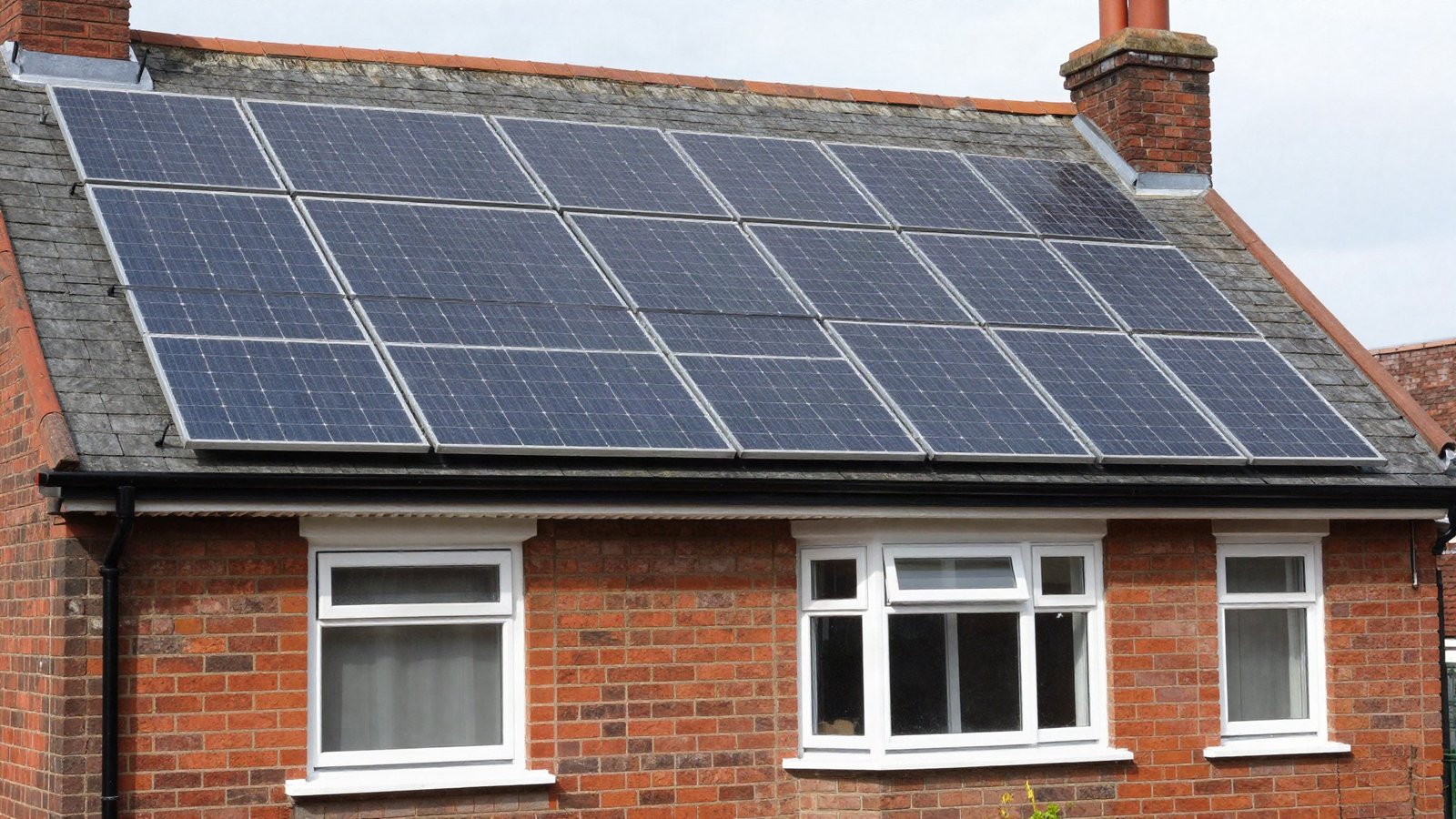
Solar quotes in Britain vary far more than they should. Two installers can look at the same roof in the same week and come back £4,000 apart, and neither is necessarily trying it on. The difference is usually scaffolding, inverter choice, whether a battery has been slipped in, and whether a salesman is taking a commission out of your total.
The numbers below are installed prices including VAT, labour, certification and paperwork — not wholesale kit prices. If you want the physics before the money, our explainer on how solar panels work covers generation.
Typical UK Prices in 2026
For a standard pitched tile or slate roof on a two-storey house, with a straightforward electrical connection and no battery, expect these fully installed totals:
- •3.5 kWp (8 panels): £5,000–£7,000
- •4.5 kWp (10 panels): £6,200–£8,200
- •5.4 kWp (12 panels): £7,000–£9,500
- •7.2 kWp (16 panels): £9,000–£12,500
- •Battery added at install: £3,000–£4,200 for 5 kWh, £4,800–£7,000 for 10 kWh
- •Bungalow or single-storey extension roof: knock roughly £400–£800 off for reduced scaffolding
Unit Costs, and the Labour Split
Per kilowatt-peak is the only figure that lets you compare quotes fairly. In 2026 most honest domestic installs land between £1,300 and £1,800 per kWp, smaller systems sitting at the top of that band because the fixed costs — scaffolding, a day of labour, the inverter, the paperwork — don't shrink when you fit four fewer panels.
On a typical £8,000 twelve-panel job the split runs roughly 55–65% materials, 20–25% labour, and 10–15% scaffolding and access. That last slice is the one homeowners forget. Line by line, at trade prices:
- •Panel, 440–460 W all-black monocrystalline: £95–£165 each
- •String inverter, 3.68 kW: £550–£950. Hybrid (battery-ready): £900–£1,600
- •Power optimisers, where shading demands them: £50–£75 per panel
- •Roof hooks, rails, clamps and flashing: £280–£600 for twelve panels
- •DC isolators, AC isolator, generation meter, cable and containment: £180–£350
- •Scaffolding, two-storey semi, one elevation, two weeks' hire: £500–£1,100
- •Bird-proofing mesh around the array: £200–£400
- •Labour: two fitters plus an electrician, one to two days, £1,200–£2,000
What Moves the Price
Roof covering matters more than most people expect. Plain clay or concrete tiles are quick; Welsh slate is slow and brittle, and metal or fibre-cement needs a different mounting kit entirely. Anything above three storeys, over a conservatory, or hipped on every side pushes labour and scaffolding up together.
- •Roof pitch below 15° or above 45°: extra fixings, add £200–£500
- •East–west split arrays: two strings, two MPPT inputs, add £250–£600
- •Brittle covering needing replacement tiles: £150–£400
- •Consumer unit with no spare way or no RCD protection: £350–£700 to remedy
- •Cable run over 15 m, or an inverter sited in a garage: add £120–£300
- •In-roof trays instead of on-roof mounting: add £700–£1,400 — see our solar panels vs solar tiles comparison
The UK Rules That Sit Inside the Price
Several regulatory requirements are baked into a legitimate quote, and their absence is a warning sign rather than a saving. Domestic solar in Great Britain currently carries 0% VAT until 31 March 2027, after which it reverts to 5% — a genuine £400–£700 difference on an average system, so timing matters.
Your installer must be MCS certified for you to claim Smart Export Guarantee payments; without that certificate exported units are simply given away. The AC side is notifiable under Part P, self-certified by a competent-person-scheme electrician. Up to 3.68 kW per phase is notified to the Distribution Network Operator after the event under G98; above that needs a G99 application before work starts, taking six to eleven weeks and occasionally returning an export limit or a £150–£400 connection charge.
Panels are usually permitted development in England if they sit no more than 200 mm proud of the roof plane and no higher than the ridge. Listed buildings need consent regardless, and in a conservation area you generally cannot fit them to a slope fronting a highway; Scotland and Wales set their own thresholds. Loading falls under Building Regulations Part A — panels add 12–15 kg/m², which most sound roofs carry, though a purlin check is sensible on a bungalow with 100 mm rafters.
Three Worked Examples
Real jobs, priced as invoiced. Generation assumes 950 kWh per kWp a year in southern England, 800 in central Scotland.
- •Mid-terrace, Sheffield. 8 panels, 3.5 kWp, south-facing concrete tile, no battery. Kit £2,050, scaffolding £620, labour £1,450, sundries and certification £480, margin £1,300. Total £5,900. Roughly 2,900 kWh a year, saving £430–£560 depending on self-consumption.
- •1930s semi, Reading. 12 panels, 5.4 kWp split east–west, hybrid inverter and 5.2 kWh battery. Kit £5,600, scaffolding £850, labour £1,900, G98 and MCS £350, margin £2,500. Total £11,200. About 4,600 kWh a year; the battery lifts self-consumption from roughly 35% to 70%.
- •Detached, Perthshire. 16 panels, 7.2 kWp, slate, 10 kWh battery, bird mesh, G99. Kit £8,900, scaffolding on two elevations £1,650, labour £2,600, G99 and structural check £620, margin £3,000. Total £16,770 before Home Energy Scotland grant-and-loan support.
How to Sanity-Check a Quote
Before comparing quotes at all, check solar is the right first job. If the roof needs recovering within five years, do that first — stripping an array off and refitting it later costs £800–£1,500. If the house is draughty, draught-proofing costs a fraction of an array, and a home energy assessment will tell you which order to spend in. Solar pays back fastest where daytime demand already exists — home working, a heat pump, or an EV charger on the drive. If the house empties at 8am, a home battery does more for the bill than four extra panels.
Once you are committed, do the arithmetic. Divide the total by the system size in kWp; if the answer is over £2,000 you need a reason, and if it is under £1,100 look hard at what has been left out.
- •Check the MCS certificate number on the MCS register yourself, not a logo on a leaflet
- •Insist scaffolding is a separate line, not folded into 'installation'
- •Separate the panel product warranty (12–25 years) from the performance warranty (25–30 years); the first is the one that pays for a replacement
- •Confirm the inverter warranty — 10 to 12 years is standard, and a replacement in year 13 costs £700–£1,400
- •Ask who submits the G98 or G99 and who pays if the DNO imposes an export limit
- •Treat savings claims above £900 a year for a 4 kWp system as marketing, not modelling
- •Be wary of finance-linked quotes: interest-free deals are often priced 25–40% above the cash equivalent
- •Check RECC or HIES membership and that an insurance-backed guarantee is issued in writing
How We Priced This Guide
Figures come from installed-price quotes gathered across England, Wales and Scotland in the first half of 2026, cross-checked against MCS-registered installer pricing and current UK wholesale rates for panels, inverters and mounting kit. Totals include VAT at the 0% domestic rate and assume a sound existing roof. Scaffolding reflects two-week hire in the Midlands and North; London and the South East run 20–30% higher. We review these bands annually — your own price will move with access, roof type and how busy local installers are that season.
Found this useful?
There's plenty more — hundreds of guides and honestly-tested product reviews for every corner of your home.
Browse All Guides