Energy & Insulation · 6 min read · 1 July 2026
Solar Panels vs Solar Shingles (Solar Tiles): UK Costs, Pros and Cons
Same silicon, very different bills. Here is what solar tiles actually cost against ordinary panels on a British roof, and the one situation where they genuinely make sense.
By the Nims Casa editorial team — written from professional cleaning experience and checked against our editorial standards.
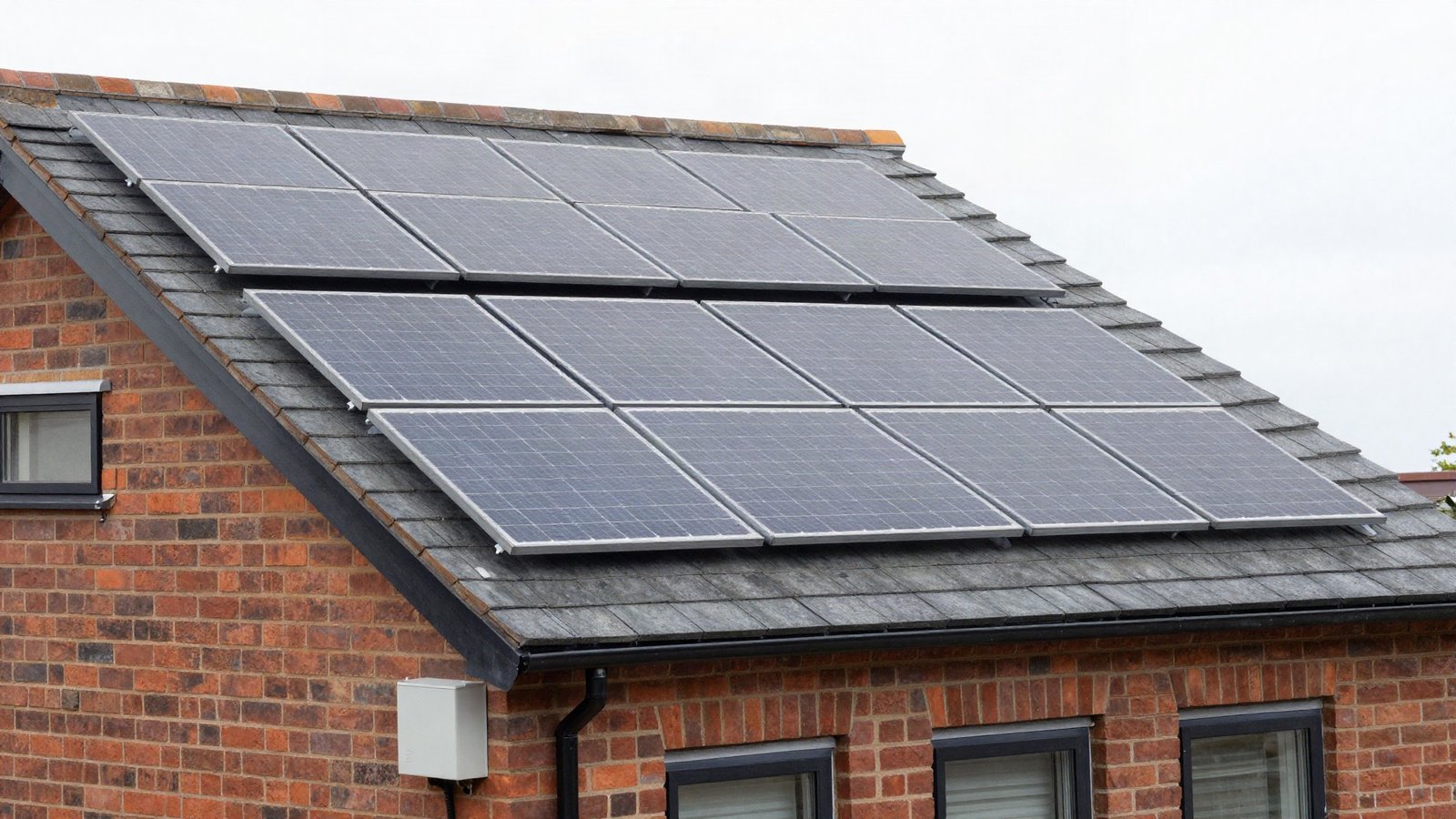
Roof-integrated solar has been sold in Britain for over a decade and the pitch has barely changed: the same electricity, without the bolted-on look. What has changed is the price gap, still wide enough that the decision usually comes down to the age of your roof and the mood of your planning officer rather than to kilowatt-hours.
Both use the same silicon cells. Panels sit on rails above your existing tiles; solar shingles, sold here as solar tiles or PV slates, replace the covering and become the weatherproof layer. That one distinction drives everything below.
The core differences, side by side
Six things change the outcome. If you understand how solar panels work, none will surprise you: it is the mounting, not the physics, that varies.
- •Power density: panels give 200-215 W per square metre of roof, tiles 100-140 W. The same pitch takes about a third less capacity in tile form.
- •Weatherproofing: panels sit above an intact roof, so a leak is a roofing fault. Tiles are the roof, so a fault and water ingress become one job.
- •Installed price: £1,350-£1,750 per kWp for panels, £2,800-£4,200 for tiles before any stripping and re-battening.
- •Appearance: panels read as equipment from the pavement, tiles as a glossy dark roof. In a conservation area that decides the application.
- •Installer pool: thousands of MCS-certified panel fitters nationally, against a few dozen firms doing integrated tiles well.
- •Warranty risk: mainstream panel makers have traded twenty years. Several UK solar tile brands have not survived ten.
Performance on a British roof
On a south-facing pitch at 30-40 degrees, expect 850-950 kWh per installed kWp a year in southern England, 750-850 across the Midlands and the North, and 680-780 in central Scotland. East or west facing costs 12-18 per cent; a north slope is not worth wiring.
Solar tiles lose twice. They fit less capacity on the same area, and sitting flush with no ventilation gap behind them they run 8-15C hotter in July, shaving another 3-7 per cent off summer yield. A 4.2kWp panel array on a semi makes about 3,500 kWh a year; the same pitch in tiles gives 3.2kWp and roughly 2,700 kWh. Chimney shading hurts tiles more, so budget for optimisers.
The ten-year cost, worked honestly
Domestic solar is zero-rated for VAT until 31 March 2027, worth £1,000-£1,500 on a typical install. Watch the trap on tiles: the generating element is zero-rated, the roofing work bundled into the quote may not be. Our 2026 solar panel costs match current quotes. Below assumes 27p/kWh import, 15p export and 35 per cent self-consumption.
- •Nottingham semi, roof 12 years old: 4.2kWp of panels, £6,400 fitted with scaffolding. 3,500 kWh a year saves £330 on imports and earns £340 exporting, breaking even around year ten.
- •Same house in tiles: 3.2kWp for £13,800, because the covering must be stripped and re-battened. Around 2,700 kWh a year, worth £520, with payback past year twenty-five.
- •1930s slate house in a conservation area, roof at end of life: the re-roof was £9,500 anyway and a 3.4kWp PV slate array £21,000 all-in, so solar cost £11,500 net for £560 a year - the only version planning would pass.
- •A 5kWh battery at £2,500-£3,500 lifts self-consumption to 65-75 per cent and takes two to three years off payback on a time-of-use tariff. Check specifications against our guide to home battery backup.
Installation, planning and paperwork
A panel install is one to two days: scaffolding, rails through the tiles onto rafters with flashed hooks, inverter and isolator on a wall, then commissioning. Tiles take three to seven days, because a roofer strips, re-felts and re-battens the pitch first.
In England, roof solar is normally permitted development if it projects no more than 200mm from the roof plane and sits no higher than the ridge, chimney excepted. A slope fronting a highway in a conservation area, or any listed building, needs consent, and that is exactly where tiles win. Scotland, Wales and Northern Ireland set their own rules.
Both need an MCS-certified installer for export payments, a Part P notification and a network application: G98 notified within 28 days up to 3.68kW per phase, G99 approved in advance above that, which takes up to 45 working days. If an EV charger is also planned, survey both at once.
Maintenance and what actually goes wrong
The commonest British call-out on panels is pigeons nesting in the gap underneath, fouling the roof and blocking gutters. Proofing mesh costs £300-£650 fitted and is worth doing on day one. Cleaning runs £80-£150 every two or three years. The inverter is the wear part: budget £700-£1,600 at the 10-15 year mark.
Solar tiles have no pigeon gap and nothing to clean around, which is genuinely nicer. The problem is repair. One dead tile means finding a roofer willing to lift a live electrical covering, and a decade on the maker may not exist to supply a match. Check how long your roof has left first, because you are tying covering and generation to a single lifespan.
The renter-safe version
None of this is available to a tenant in its normal form. Anything fixed to the roof or wired into the consumer unit needs the landlord's written consent and an MCS installer, and becomes the landlord's asset once screwed down. One warning: plug-in balcony solar that backfeeds through a 13A socket, legal in Germany, is not permitted here. It fails BS 7671 and G98, so do not buy one from an EU seller.
What works is a fully off-grid kit that never touches the building. A 200W folding panel runs £200-£320 and a 1kWh power station £450-£800. On a bright April day that panel harvests 0.5-0.9 kWh in a south-facing garden; in December, nearer 0.15 kWh. Enough for a router, laptop, lamps and phone charging, worth £40-£70 a year plus real resilience in a cut.
- •Ballasted or free-standing frames only. No screws into tile, brick, render, fascia or decking.
- •Photograph the ground or balcony before you set up and again when you take it down.
- •Check the alterations clause in your tenancy. Most allow free-standing items, almost none allow fixings.
- •Spend the first £200 on draught-proofing instead; in a rented flat it returns more per pound than any generation you can legally install.
Who each suits, and the verdict
Choose ordinary panels if your roof has fifteen years left, you are outside a conservation area, and you want the money back. They are cheaper per kilowatt, better supported, easier to repair and fully reversible. For most UK homeowners it is not close.
Choose tiles in three cases only: the roof needs replacing anyway so you pay just the difference; planning or listed status rules out surface-mounted panels; or the elevation matters enough that you accept a twenty-year-plus payback. In-roof panel trays are the middle route, sitting flush for £400-£900 more than on-roof while keeping panel economics.
Get three MCS quotes with kWp, annual kWh, inverter model and scaffolding itemised, and work through our home energy efficiency checklist first. Insulation beats generation on cost per pound saved, and a sealed house needs a smaller array.
Found this useful?
There's plenty more — hundreds of guides and honestly-tested product reviews for every corner of your home.
Browse All Guides