Garden & Outdoor · 6 min read · 14 June 2026
How Much Does a Patio Cost in the UK? 2026 Price Guide
Most of a patio budget disappears into 200mm of ground you will never see again. Here is what each layer actually costs in 2026, and how to tell a fair quote from a fantasy.
By the Nims Casa editorial team — written from professional cleaning experience and checked against our editorial standards.
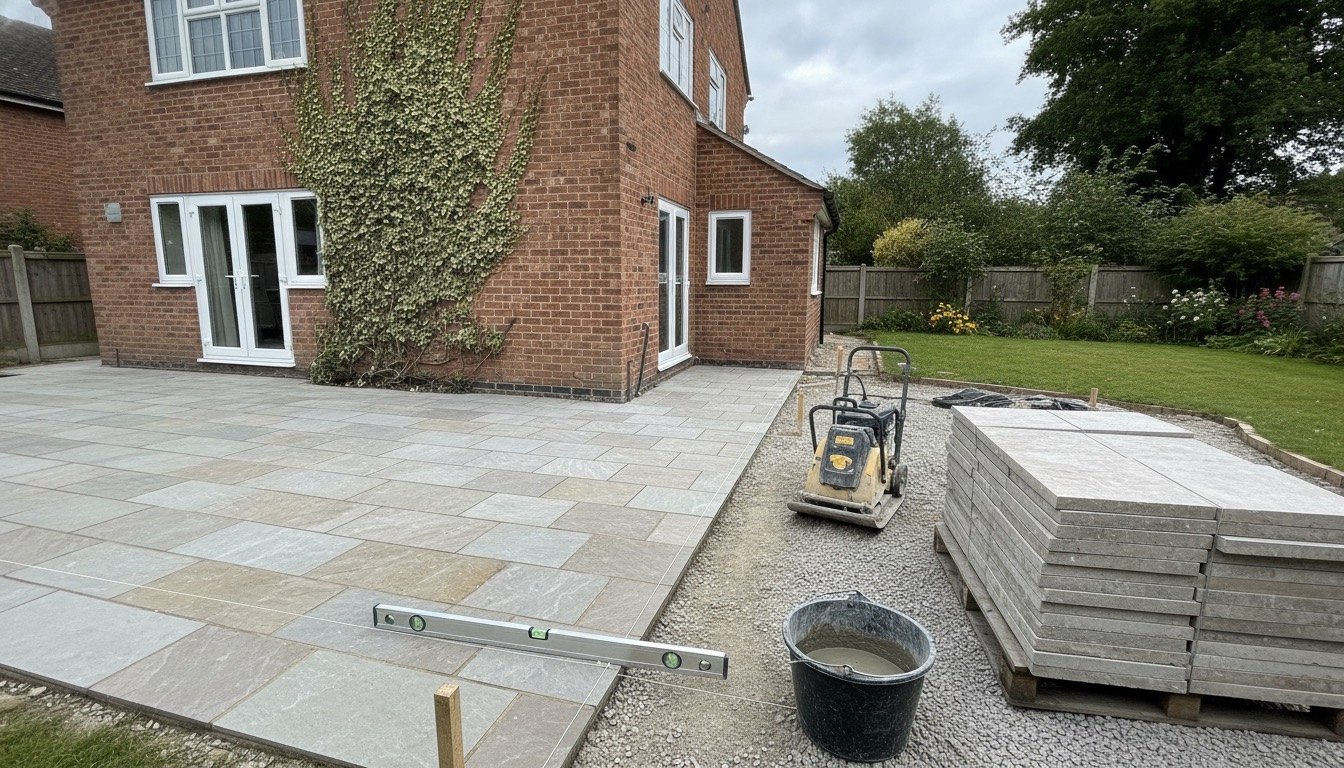
A patio is one of the few garden jobs where the part you can see accounts for less than half the money. Excavation, spoil removal, sub-base and bedding swallow the rest, which is exactly why two quotes for the same 20 m² terrace can sit £1,600 apart and both be honest.
The figures below are UK rates for 2026, inclusive of VAT where a domestic customer would pay it, and broken down so you can work out which line on your quote is doing the damage.
What a Patio Costs in the UK in 2026
For a professionally laid patio on ordinary ground with reasonable access, budget £95 to £190 per square metre all in. A typical back-garden terrace of 18 to 25 m² therefore lands between roughly £1,900 and £4,200. The number we see most often is about £2,800 for 20 m² of Indian sandstone in the Midlands or the North.
Installed rates by surface, before regional adjustment:
- •Riven concrete slabs: £75–£105/m² laid
- •Indian sandstone, 22mm calibrated: £100–£145/m² laid
- •Sawn granite or premium concrete stone-effect: £130–£175/m² laid
- •Porcelain, 20mm, slurry-primed: £150–£210/m² laid
- •Block paving: £95–£135/m² laid
- •Poured concrete with a brushed or tamped finish: £70–£100/m²
- •London and the South East: add 25–40% to every figure above
Unit Costs and the Labour/Materials Split
On a mid-range sandstone job the split is close to 45% materials, 50% labour and 5% plant hire and waste. Porcelain flips it: the slabs alone often account for 55–60% of the total. Poured concrete goes the other way again, because the material is cheap and you are paying almost entirely for screeding skill and the days it takes.
If a quote shows materials at 75–80% of the price, someone has under-priced their own time and will feel it by day three. That is when corners get cut on the layer nobody can inspect afterwards. The same logic applies to decking projects, where the frame and posts are the expensive, invisible half.
Ask a landscaper to itemise and you should get roughly these components. Quantities are per square metre of finished patio unless stated.
- •Excavation to 200mm plus spoil removal: £22–£35/m². A 20 m² dig produces 6–7 tonnes of muck
- •Skip hire, 8-yard: £280–£400 depending on region, or a grab lorry at £260–£340 per load
- •MOT Type 1 sub-base, 100–150mm compacted: £40–£65 per tonne delivered loose. One tonne covers about 5 m² at 100mm
- •Full sharp sand and cement bed at 6:1, 40mm thick: £9–£14/m²
- •Slurry primer, essential under porcelain: £3–£5/m²
- •Brush-in resin jointing compound: £38–£48 per 20kg tub, covering 6–9 m² depending on joint width
- •Wacker plate hire: £48–£60 a day, £95–£120 a week. Disc cutter: £45–£55 a day
- •Two-person landscaping team: £300–£420 a day, £420–£560 in London
What Moves the Price
Access is the single biggest swing factor and the one homeowners consistently forget. If every tonne of Type 1 and every barrow of spoil has to go through the house or down a narrow terrace passage, add 20–30% to labour. Two people can shift 6 tonnes through a side gate in an afternoon; through a hallway with dust sheets down, it is a day and a half.
The other multipliers: breaking out an existing concrete slab adds £18–£30/m²; a change in level needing sleeper or block retaining adds £120–£220 per linear metre; a soakaway or channel drain adds £250–£600. Diagonal and circular layouts waste 10–15% more stone. And if your patio sits at the front of the house, more than 5 m² of impermeable paving triggers planning permission rules in England unless it drains to a border. Standing water is nearly always a levels problem rather than a material one, so read up on garden drainage before anyone starts digging.
Three Worked Examples
Real jobs, priced the way a landscaper would build them up.
- •16 m² riven concrete slabs, Leeds semi, wide side access, lawn dug out. Materials £430, sub-base and bedding £310, skip £290, labour 3 days at £330 = £990. Total £2,020, or £126/m².
- •25 m² Indian sandstone, Midlands, replacing a cracked 1970s concrete slab. Breaking out and grab lorry £780, stone £980, sub-base, mortar and jointing £520, labour 5 days at £360 = £1,800. Total £4,080, or £163/m².
- •30 m² porcelain with two steps, south London, no rear access. Porcelain £1,650, primer, mortar and sub-base £720, waste through the house £620, labour 8 days at £480 = £3,840, steps £550. Total £7,380, or £246/m².
The Renter's Patio: Reversible and Deposit-Safe
If you rent, none of the above applies, because excavation and mortar are alterations and your deposit will pay for putting them back. What works instead is loose-laid: interlocking composite or porcelain deck tiles that clip together over an existing concrete slab or tired paving, £25–£45/m² and liftable in an afternoon. A 9 m² courtyard comes to roughly £250–£400 including a stiff brush and a few bags of levelling sand.
Rules that keep the deposit intact: photograph the original surface before you start, never screw or drill into walls or fences, avoid weedkiller near borders, and use freestanding planters rather than raised beds. Check your tenancy for an alterations clause, and put anything semi-permanent to the landlord in writing first, because some will part-fund work that improves the property. Give the underlying slabs a proper wash before you lay tiles and again when you lift them, following the same method as our patio cleaning guide, so the check-out photos match the check-in ones.
How to Sanity-Check a Patio Quote
A one-line quote saying "supply and lay 20 m² patio, £2,600" tells you nothing. Ask for the build-up in writing and compare like with like.
- •Excavation depth and sub-base spec: you want 100–150mm of compacted MOT Type 1, not 50mm of whatever came out of the hole
- •Bedding method: a full wet mortar bed, never five-spot dabs. Spot bedding is the reason slabs rock, ring hollow and stain from below
- •Falls: a minimum of 1:80, about 12mm per metre, running away from the house
- •DPC clearance: the finished surface must sit at least 150mm below the damp-proof course
- •Waste disposal included, with a valid waste carrier licence number on the paperwork
- •Whether the price includes VAT, and a payment schedule with no more than 25–30% up front
- •Two or three quotes minimum, compared on £/m² of the finished build-up rather than the headline total
How We Costed This
Prices come from 2026 builders' merchant and paving supplier listings, national tool hire tariffs, and day rates quoted by independent landscaping teams across four UK regions: the North West, the Midlands, the South West and Greater London. Ranges are the middle 80% of what we saw, so the odd £300/m² bespoke job sits outside them. Stone prices move with shipping costs and are worth re-checking each spring.
One last point on value: a patio rarely pays for itself in isolation. If you are pricing a wider garden makeover or weighing pavers against poured concrete, do the whole scheme on paper first. Digging the same ground twice is the most expensive mistake in landscaping.
Found this useful?
There's plenty more — hundreds of guides and honestly-tested product reviews for every corner of your home.
Browse All Guides