Plumbing · 6 min read · 12 April 2026
How Much Does Mould Remediation Cost? UK Prices for 2026
Two households describe the same problem — black mould in the bedroom — and get quotes of £280 and £2,900. Here is what each price band actually buys, and how to tell which one your house needs.
By the Nims Casa editorial team — written from professional cleaning experience and checked against our editorial standards.
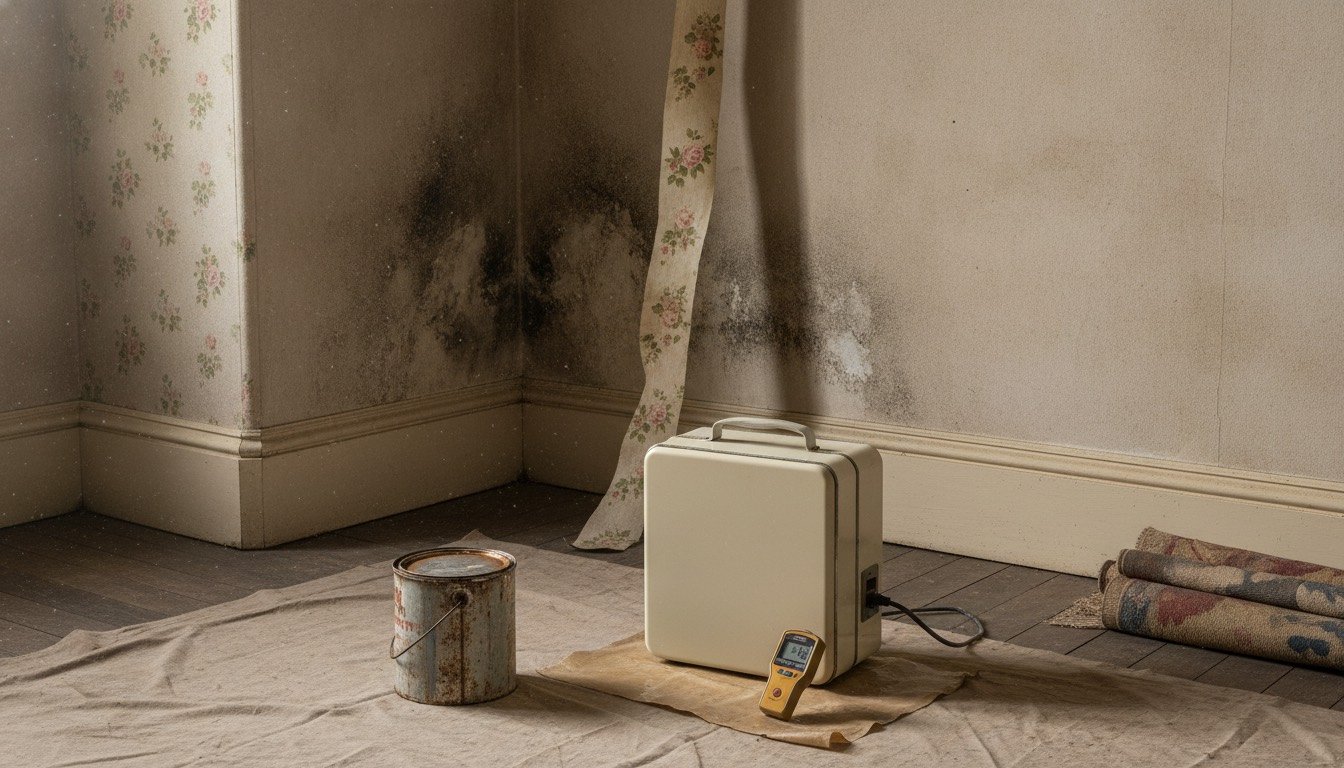
Two calls in one week: a Leeds flat quoted £280 to clear black mould from a bedroom, a Bristol terrace quoted £2,900 for what the owner described in identical words. Neither firm was lying. One was selling ninety minutes of wash-down and a tin of fungicidal paint; the other nine linear metres of hacked-off plaster, a chemical damp-proof course and six weeks of drying. That gap is the difference between treating a stain and treating a cause.
American guides call it mold; the UK trade calls it mould, and our version is its own animal: condensation in under-ventilated 1930s and 1960s stock, bridged cavities, failed DPCs and cellars never meant to be lived in. Below are the 2026 numbers, split into labour and materials. If you have not worked out which type you have, start with the causes and cures of damp and mould.
The typical UK price range
Most domestic mould jobs are invoiced between £400 and £1,600. The outliers at both ends are common enough to matter:
- •One wall or ceiling under 2 m², cleaned and treated: £120–£260 done for you, or £25–£45 in materials if you do it yourself
- •One room stripped, treated, mist-coated and redecorated: £350–£900
- •Several rooms or a whole flat, condensation-driven: £1,400–£4,500
- •Containment work with sheeting and negative-air HEPA extraction, after flooding or a sewage escape: £3,000–£10,000+
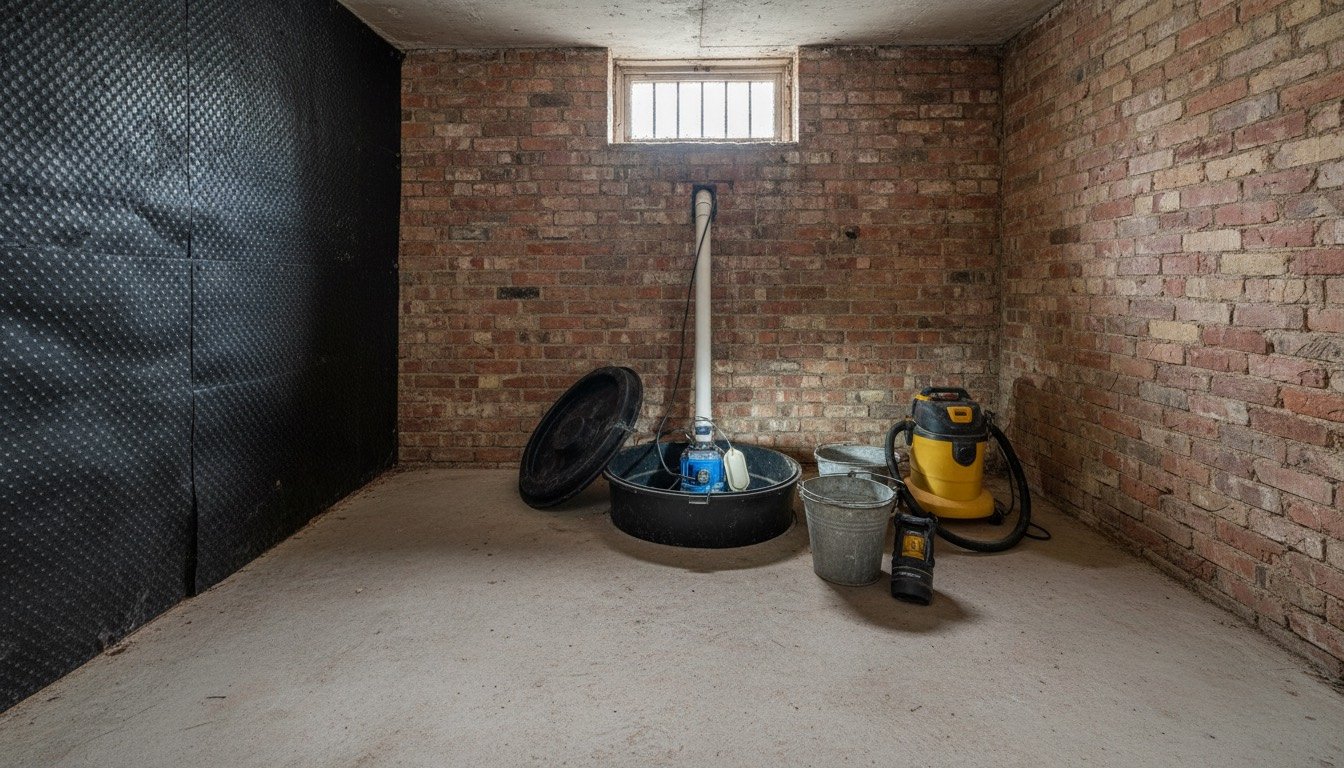
- •Cause work on top: humidity-sensing extractor £220–£420 fitted; loft PIV unit £450–£950; chemical DPC with replastering £110–£180 per linear metre; cellar cavity-drain membrane with sump and pump £5,500–£12,000
Unit costs, line by line
Ask for a breakdown in these terms and a vague £900 becomes checkable. Q1 2026 figures, excluding VAT.
- •Independent damp and timber survey from a PCA-qualified surveyor who sells no remedial work: £180–£450. CSSW cellar waterproofing design: £350–£650
- •Remediation technician £220–£320 a day; a two-person team with kit £400–£560 a day
- •Plasterer £180–£260 a day; sand-and-cement render with a skim finish £48–£75 per m²
- •Fungicidal wash £14–£28 for 5 litres, covering roughly 25 m². Anti-mould emulsion such as Zinsser Perma-White £38–£55 for 2.5 litres
- •Dehumidifier hire £9–£16 a day, or £150–£300 to buy a 12–20 litre unit — check our dehumidifier guide before renting one for a month
- •6-yard skip for contaminated plasterboard and carpet: £220–£360, more inside London
Labour versus materials
This ratio tells you more than the total does. Remediation is a labour trade: the chemicals are cheap and the time is not. On a clean-and-redecorate, 75–85% of the invoice is somebody's day rate. On replastering it settles near 65%; only a cellar scheme approaches an even split, because membrane and pumps are genuinely expensive goods.
Materials to treat and repaint an average bedroom rarely exceed £130. A £900 room quote is buying three days of skilled time, disposal and a guarantee — often entirely fair. What is not fair is a quote where "materials and sundries" is the largest line.
- •Wash-down, treat and repaint one room: labour £280–£700 / materials £70–£130
- •Strip, treat, replaster and decorate one wall: labour £450–£800 / materials £180–£320
- •Chemical DPC to 8 linear metres plus salt-retardant render: labour £700–£1,100 / materials £250–£450
- •Cavity-drain membrane to a 22 m² cellar: labour £2,800–£4,200 / materials and pump £2,600–£4,800
What moves the price
Two houses of the same size, £1,200 apart. The variables, roughly in order of impact:
- •Region. London and the South East run 25–40% above the national middle; the North East, South Wales and central Scotland sit 10–20% below it
- •Whether the cause has been found. Treat mould without fixing the blocked gutter, bridged cavity or missing extractor and you have bought nine months, not a repair
- •VAT. Larger firms add 20%; a sole trader under the £90,000 threshold cannot charge it
- •Guarantees. An insurance-backed guarantee adds 3–8%, and is worth it if the firm folds
- •Asbestos. Textured coatings and insulation board in pre-2000 homes must be tested first: £50–£100 a sample, licensed removal from £600
- •Cellars. A membraned or tanked system is a different job entirely; see how basement waterproofing is specified
Three costed jobs
Real scopes and invoices, anonymised. Use them as shape, not gospel.
- •1930s semi, Nottingham. Mould behind a fitted wardrobe on a north-facing bedroom wall, roughly 5 m², plus a spotted bathroom ceiling. Wash-down and fungicidal mist, 1.5 days, £320; anti-mould emulsion £96; humidity-sensing extractor fitted £310. Invoiced £726, or £871 with VAT. The cause was condensation, not damp
- •Victorian mid-terrace, Cardiff. Salt-blown plaster to 900 mm on the front and party walls, 9 linear metres. Independent survey (not the contractor's) £275; reducing raised ground levels and repointing £340; hack off, inject 9 m of chemical DPC, salt-retardant render and skim £1,480; five weeks' drying, then three coats £420. Total £2,515 — the same scope nationally runs £1,900–£3,400
- •Edwardian semi, south London. A 20 m² cellar with persistent ingress and mould through stored contents. Waterproofing design £520; clearance and skip £480; cavity-drain membrane, perimeter channel and twin sump pumps with battery backup £7,900; annual service to keep the guarantee valid £160. Year one £8,900 — the same scheme in County Durham quoted £6,200
How to sanity-check a quote
The most useful question is what reading was taken, and how. A pin meter responds to hygroscopic salts as readily as to water, which is why walls get injected that never needed it — ask for a carbide sample with the figures written down. Then get three quotes and read them line by line; our guide to comparing contractor estimates covers mismatched scopes.
A sound quote is itemised per m² or per linear metre, names the cause rather than the symptom, states VAT status and carries a guarantee with a named underwriter. Treat the reverse as a warning: a free survey from a firm that sells one product, "rising damp" diagnosed on a first floor, a per-room price with no measurements, or a chemical DPC proposed before anyone has looked at the gutters and external ground levels.
If you rent, check liability before paying. Under the Homes (Fitness for Human Habitation) Act 2018 a home must be free of serious damp and mould hazards, and social landlords work to fixed investigation deadlines. Photograph it, date it, report it in writing.
Where these figures come from, and when to stop
These prices come from quotes and invoices gathered across England, Wales and Scotland between September 2025 and February 2026, subcontractor day rates, and materials priced at UK trade merchants. They exclude VAT unless stated, are bands not fixed prices, and we revise them annually. Regional multipliers work off a national middle rather than an average.
Do the small work yourself: under about 3 m² on a sound, non-porous surface is a wash-down, a fungicidal treatment and a repaint, and surface mould on a bathroom ceiling is well within reach. Hire someone when the area exceeds 3 m², when anyone in the house has asthma or a suppressed immune system, when the water was contaminated, when pre-2000 textured coatings are in the way, or when it is growing in a cellar that keeps getting wet. Then you are not buying mould removal — you are buying waterproofing, and the price reflects it.
Found this useful?
There's plenty more — hundreds of guides and honestly-tested product reviews for every corner of your home.
Browse All Guides