Plumbing · 6 min read · 27 June 2026
How Much Does Repiping a House Cost? UK Replumb Prices for 2026
A full replumb runs from about £2,500 to well over £10,000 in 2026. Here is where every pound of that goes, and how to tell a fair quote from a chancer's.
By the Nims Casa editorial team — written from professional cleaning experience and checked against our editorial standards.
Nobody replumbs a house for entertainment. It happens after the third leak in eighteen months, during a renovation while the floors are already up, or the morning a survey report uses the phrase "original galvanised steel pipework". At that point you need a number, and most numbers online are American ones with a pound sign on the front.
In 2026 a full UK replumb lands between roughly £2,500 for a small two-bed terrace and £11,000 for a large detached house with three bathrooms. The width of that band is the actual story: what sits inside it is decided by floor construction, access, pipe routes and how much plaster has to come off and go back. If you are still working out whether you need this at all, the signs your pipework is on borrowed time are worth reading first — plenty of houses need three days of remedial work, not a strip-out.
Typical UK Price Range in 2026
All-in figures for replacing hot and cold distribution pipework throughout, including new isolation valves, a new internal stop tap and basic making good, with the boiler, cylinder and sanitaryware staying put.
- •Two-bed terrace or flat, one bathroom: £2,500 to £4,200
- •Three-bed semi, one bathroom plus downstairs cloakroom: £3,800 to £6,500
- •Four-bed detached, two bathrooms plus en-suite: £6,000 to £11,000
- •Partial replumb (upstairs only, or all hot runs): £1,200 to £2,800
- •Replacing a lead mains supply pipe from the boundary stop tap: £750 to £1,900
- •London and the South East: add 25 to 40 per cent to every figure above
Unit Costs: What Your Money Actually Buys
Merchant prices are public, so know them. A 15 to 20 per cent markup on materials is normal trade practice; 100 per cent means someone is hoping you will not check.
The number most quotes are built on is an installed rate of £30 to £50 per metre of pipe run, which folds labour, fittings, clips and lagging into a single figure. Whether the job uses copper or plastic barrier pipe changes the material cost far less than people expect — the honest comparison sits in our breakdown of plastic push-fit against copper.
- •Copper tube, 3m length: £13 to £17 in 15mm, £23 to £30 in 22mm
- •15mm plastic barrier pipe, 25m coil: £30 to £45
- •Push-fit elbow or tee: £1.60 to £2.80 each; solder ring fitting: £0.80 to £1.60
- •New internal stop tap, supplied and fitted: £90 to £160
- •Pipe insulation, 19mm wall lagging, 2m length: £2.50 to £4.50
- •Six-yard skip for a full strip-out: £250 to £380
Labour vs Materials: The 75/25 Rule
On almost every replumb we have costed, materials account for 20 to 30 per cent of the total and labour takes the rest. That surprises people who have priced a coil of pipe and concluded the job should be cheap. You are not buying pipe. You are buying several trades-days of lifting boards, chasing walls and threading 3m lengths through joists.
A £4,800 replumb of a three-bed semi typically breaks down as materials £1,050, plumbing labour £2,700 (two plumbers, roughly four and a half days at prevailing plumber's day rates), plastering and making good £650, and waste, sundries and skip hire £400. If a quote shows materials at 45 per cent of the total, ask what is inside them: either a cylinder is hidden in there, or the figures have been shuffled.
What Moves the Price
Two identical-looking houses on the same street can come in £2,000 apart. The factors that do it, in rough order of impact:
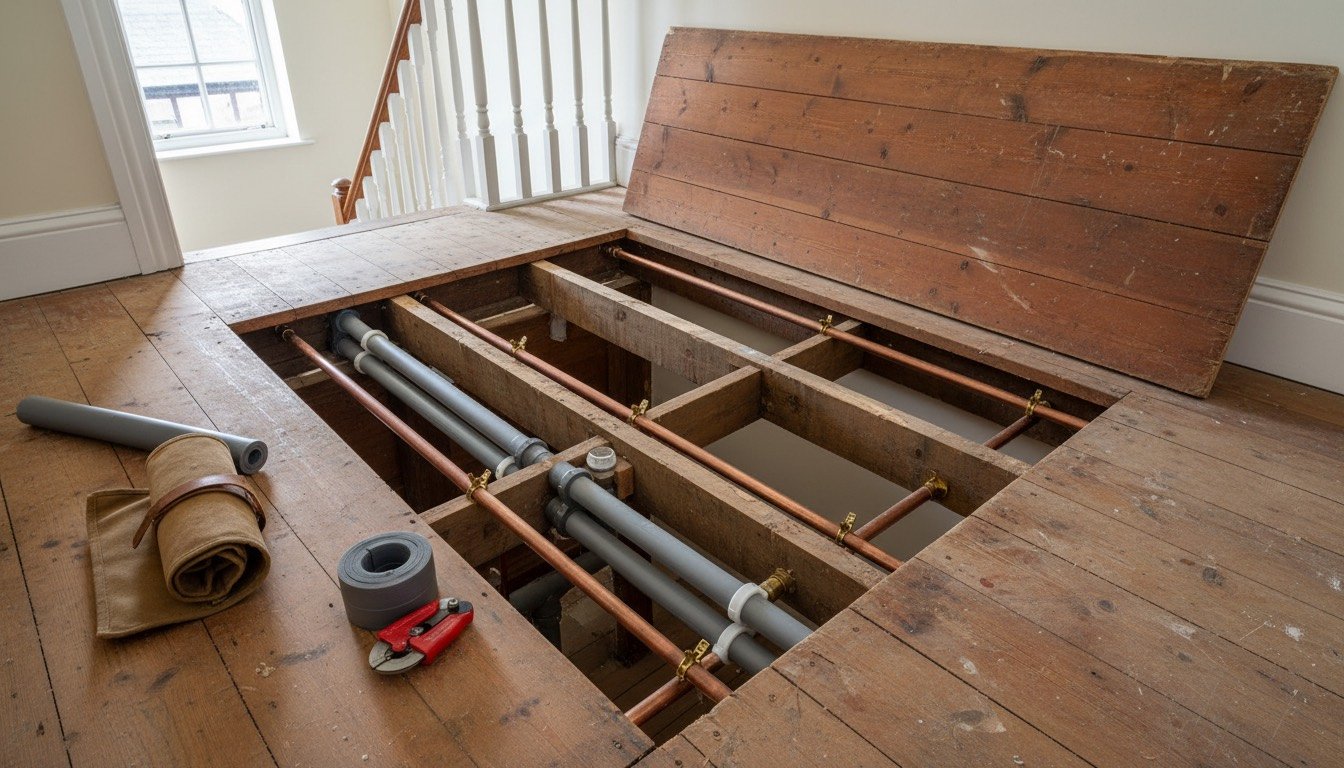
- •Floor construction: suspended timber lifts easily, whereas a concrete ground floor pushes pipes overhead or through walls and adds £600 to £1,500
- •Microbore: 8mm and 10mm runs from the 1970s get torn out rather than reused, and are frequently the reason for low water pressure in the first place
- •Occupied versus empty: capping off and restoring water each evening adds 15 to 25 per cent in lost time
- •Chased and buried versus boxed in: chasing looks far better and costs £400 to £900 more in plastering
- •Old vented systems: removing loft tanks and converting to mains-fed adds £1,200 to £3,000, and an unvented cylinder needs a G3-qualified installer
- •Lead: any surviving lead has to go, and the supply pipe from the boundary stop tap is your responsibility, not the water company's
Three Worked Examples
Real jobs with the arithmetic shown. Figures include VAT where the contractor was registered.
- •Victorian two-bed terrace, Leeds, empty during works. Full replumb in 15mm plastic barrier pipe under lifted boards, new stop tap, kitchen and bathroom points renewed. Materials £620, labour £1,650 (three days, two plumbers), making good £380, skip £280. Total £2,930.
- •1970s three-bed semi, Reading, occupied throughout. Microbore stripped out and replaced in 15mm copper, loft tank removed and the system converted to mains pressure. Materials £1,190, labour £3,150, electrician for the immersion £220, plastering £700, waste £330. Total £5,590.
- •1930s four-bed detached, outer London, two bathrooms and an en-suite, solid concrete ground floor. Overhead routing, chased walls upstairs, lead supply pipe replaced by moling. Materials £2,100, labour £6,400, moling contractor £1,250, plastering and decorating £1,400. Total £11,150.
How to Sanity-Check a Quote
Get three written quotes and insist every one of them is itemised. A single line reading "replumb house, £6,400" tells you nothing and protects nobody. A quote that reads well names the pipe material and sizes, states how many points are being renewed, says explicitly whether plastering and decorating are included, and carries a WaterSafe, CIPHE or APHC registration number you can check yourself.
- •Reasonable: a deposit of 10 to 25 per cent for materials, staged payments against milestones, VAT shown separately, and a plumber who lifted at least two floorboards before pricing
- •Reasonable: a contingency line of 5 to 10 per cent for the rot or buried joint nobody could see
- •Suspect: any whole-house price given from photographs or a ten-minute walk-round with no boards up
- •Suspect: a whole-house figure under £2,000 for anything larger than a small flat, which usually means old pipework stays in the walls
- •Suspect: cash only, no VAT number on a price implying a business well over the registration threshold, or more than half the money demanded upfront
- •Suspect: an upsell to a full replumb during an emergency callout, before anyone has traced the leak
Methodology, and What These Figures Exclude
These ranges come from 2026 merchant list prices at the major UK plumbing suppliers, regional day rates of £240 to £340 outside London and £380 to £520 inside the M25, and quoted jobs across the Midlands, the North West and the South East. They are refreshed annually. Treat any replumb figure older than eighteen months, from any source, as fiction.
Excluded: a new boiler or cylinder, new sanitaryware, tiling, floor coverings beyond relaying existing boards, and full redecoration. Those routinely add £2,000 to £8,000 and are the commonest reason a replumb overshoots, so fold them in when you budget for the whole renovation rather than pricing pipework in isolation. If you are reading this with a ceiling coming down, handle the emergency steps for a burst pipe first and price the rebuild tomorrow.
Found this useful?
There's plenty more — hundreds of guides and honestly-tested product reviews for every corner of your home.
Browse All Guides