Pest Control · 6 min read · 16 June 2026
How to Get Rid of Cockroaches in a UK Home (Step by Step, With Honest Costs)
Two very different insects get called cockroaches in Britain, and the treatment that clears one barely touches the other. Here is the professional sequence, plus what the chemicals in a £350 job actually cost.
By the Nims Casa editorial team — written from professional cleaning experience and checked against our editorial standards.
Squashing what you see achieves almost nothing. By the time an adult crosses the kitchen floor in daylight, the population behind the kickboards runs from forty to several hundred. What you see is the overflow, not the infestation.
Below is the sequence a technician follows: identify, monitor, strip, bait, proof, re-bait, verify. It takes weeks, not an afternoon — and we have costed every stage, including how little chemical sits inside a £350 job.
Identify the species before you buy anything
Two species cover nearly every UK domestic case and need opposite treatments. Set six to ten sticky monitor traps flat against walls in corners, behind the fridge, under the sink and by the boiler. Read the catch at 48 hours, before spending a penny.
- •German cockroach: 12–15mm, pale tan, two dark stripes behind the head, climbs gloss and glass. Lives indoors in warmth — fridge compressor housings, dishwasher insulation, kettle bases, hinge recesses. One egg case holds 30–40 eggs; nymphs mature in 6–12 weeks. This is the species that spreads through blocks of flats via risers.
- •Oriental cockroach: 20–30mm, glossy near-black, cannot climb smooth surfaces. Prefers cool damp — cellars, bin stores, drain runs, ground-floor boiler cupboards. Usually walking in from outside.
- •Neither: small soft insects near the sink are usually flies — see our kitchen fly guide.
Safety first
- •Do not use a fogger or 'bug bomb'. German cockroaches respond to pyrethroid vapour by dispersing into wall voids and neighbouring flats — you spread the problem and still have it months later.
- •Never spray a residual insecticide over or near gel bait. Contaminated gel is refused outright, and you have neutralised the only thing that reliably works.
- •Use only products HSE-approved for amateur use and follow the label exactly — using a biocide outside its label conditions is an offence.
- •Gel goes inside cracks, hinge recesses and appliance voids, never as a smear on a worktop. Cover pet bowls overnight, keep bait off food-contact surfaces, and unplug appliances before cleaning behind them.
- •If you rent, report it in writing first — treating one flat while next door goes untreated is money burnt.
Tools and materials, with real prices
- •Sticky monitor traps, pack of 10 — £8–£14
- •Gel bait syringe, 30g (indoxacarb or fipronil) — £12–£22; treats a kitchen twice
- •Insecticidal or desiccant dust plus a puffer bottle — £10–£18
- •Heavy-duty degreaser, brush and cloths — £6–£10
- •Torch, inspection mirror and nitrile gloves — £12–£16
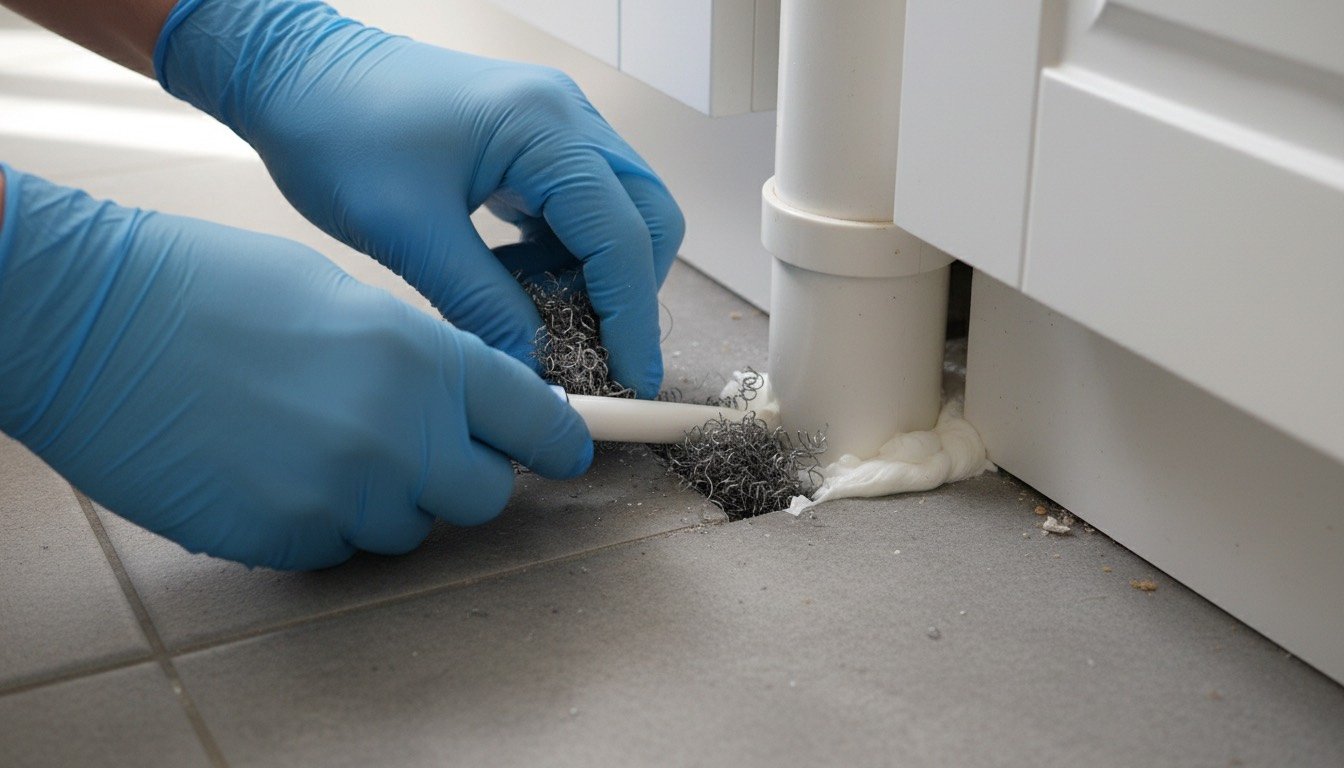
- •Steel wool, expanding foam, silicone sealant and a caulking gun — £20–£30
- •One-bedroom flat total: £58–£90, two-thirds of it proofing materials you keep.
- •Not on the list: aerosol sprays, ultrasonic plug-ins or 'natural' repellents — the plug-ins do nothing, and repellents drive insects off the bait.
Realistic time and cost — DIY versus a professional programme
Monitoring takes 48 hours, the deep clean 3–5 hours, gel application 45–90 minutes, proofing about 2 hours. Then you wait: 3–8 weeks to zero catch if caught early, longer where a drain or shared riser feeds it.
A domestic visit runs £110–£180. A standard programme is two or three visits 10–14 days apart — £220–£480 for a flat or small house, £450–£800 where it is established in a larger property. London and same-day call-outs sit at the top; our exterminator cost guide splits pricing by pest.
Here is the part nobody volunteers: the gel and dust used on that visit cost the firm £8–£25 at trade prices. So 85–90% of your invoice is labour, insurance, trade body membership and reporting — fair enough, since you are buying identification, placement and follow-up. But judge a quote on visits and paperwork, never on 'the chemicals we use'.
Ring the council first: many authorities still treat cockroaches for £70–£160 a course, free on qualifying benefits, with a one to three week wait. If you rent, the bill is normally the landlord's.
The step-by-step treatment
- •1. Days 0–2: set the traps and mark each location on a plan. They give you species, population centre and, later, proof you are winning.
- •2. Day 2: strip the harbourage. Kickboards off, fridge and cooker out, degrease hinge recesses, compressor trays and the cooker underside — grease is food and cover. Our oven cleaning method is the right thoroughness.
- •3. Day 2: remove competing food. Dry goods sealed, toaster tray emptied nightly, bin out before bed, sink wiped dry, pet bowls lifted. Bait wins only when it is the best meal available.
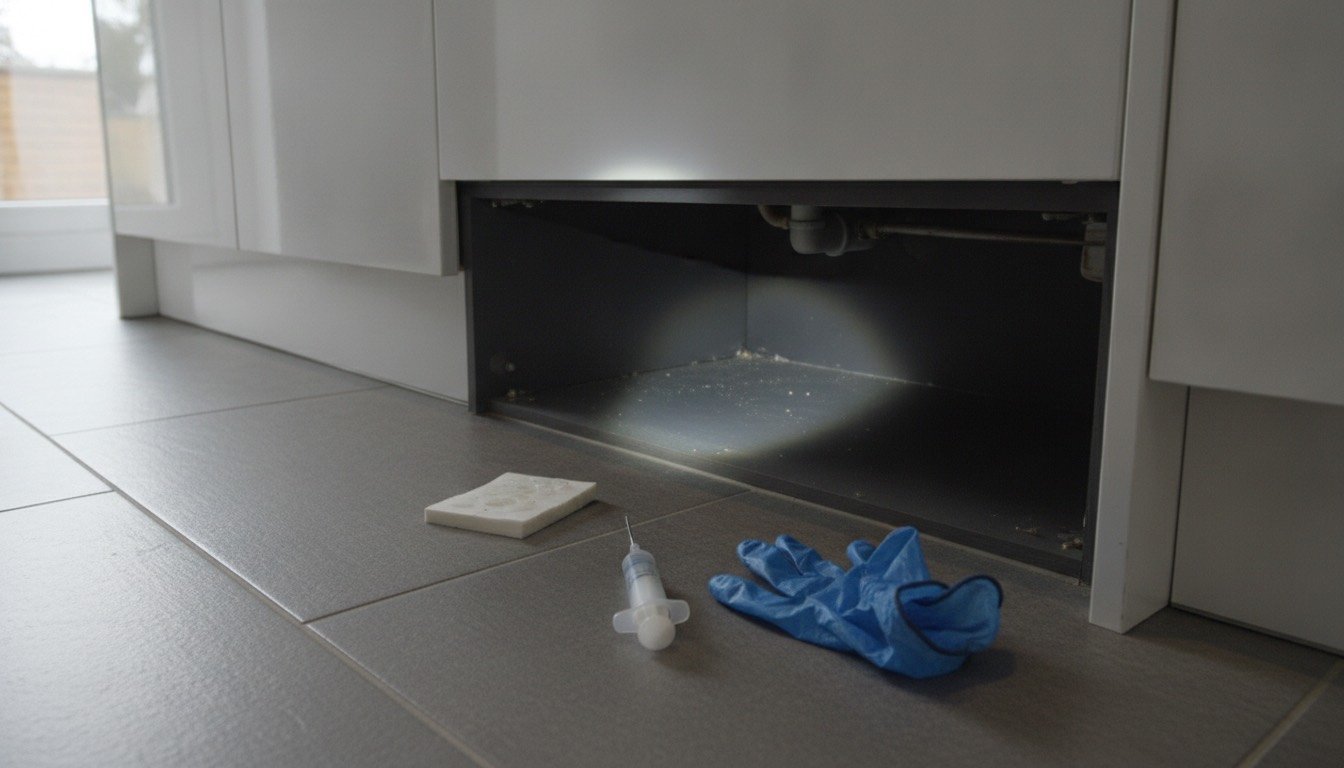
- •4. Day 3: apply gel in pea-sized 0.25–0.5g spots, 20–30 per kitchen — hinge recesses, worktop overhang undersides, behind the fridge compressor, under the dishwasher fascia, the kickboard void, pipe entries. Many small beats few large.
- •5. Day 3: puff a light film of dust into voids you cannot gel — isolated socket boxes, floor edges, cavities at pipe collars. A visible drift is too much.
- •6. Day 4: proof. Silicone the worktop-to-wall junction and sink surround, pack steel wool into pipe collars before foaming, fit brush strips to door gaps. For Oriental cockroaches, add drain work — see our P-trap guide.
- •7. Days 10–14: re-bait. Where gel has gone, replace it and add two nearby; where untouched, relocate it.
- •8. Weeks 3–6: change traps fortnightly and log the catch. Numbers usually rise in week one as insects move to feed, then fall sharply — judge progress at week three.
- •9. Declare it over only after three consecutive weeks of zero catch in the original positions, then leave two traps down permanently.
Troubleshooting
- •Nothing eating the gel: better food is available, or you sprayed near the placements. Re-clean, lift pet food overnight, and after two untouched weeks switch active ingredient.
- •Now in the bathroom: they follow warmth and pipework, so the airing cupboard and bath panel void are classic secondary sites. Bait and proof them too.
- •Large black ones by the cellar or back door: Oriental cockroach walking in. The fix is external — clear leaf litter and bin stores, repair broken gully grates, dust the perimeter.
- •Clears, then returns in a flat: the source is next door or a shared riser. Escalate to the managing agent or environmental health.
- •Damp alongside the sightings: they are following moisture — see our damp and mould guide. Rodents in the same building mean the same open gaps, covered in the mice guide.
When to call a professional — and how to read the quote
Book someone if German cockroach is confirmed in a flat or block, if you run a food business, if you see insects in daylight, if they are in more than one room, or if anyone at home is immunosuppressed or asthmatic.
- •Reasonable quote: priced per property, two or three visits included, monitor traps left in place, a written report for the landlord or freeholder, BPCA or NPTA membership and checkable insurance.
- •Suspect quote: single-visit 'guaranteed eradication' of German cockroach, blanket spraying of kitchen surfaces as the opening move, no monitoring traps, per-room pricing that inflates on arrival, or £800–£1,200 of sealing demanded before treatment.
- •Fair questions: which species is it, which active ingredient and why, how many follow-ups are in this price, and what does the guarantee cover if they are still here at six weeks?
Found this useful?
There's plenty more — hundreds of guides and honestly-tested product reviews for every corner of your home.
Browse All Guides