Laundry & Fabric Care · 6 min read · 16 May 2026
How to Wash Trainers Without Wrecking Them
The machine is riskier than the internet admits, and the radiator is where trainers go to warp. The safe clean for canvas, knit, leather and the stubbornly white.
By the Nims Casa editorial team — written from professional cleaning experience and checked against our editorial standards.
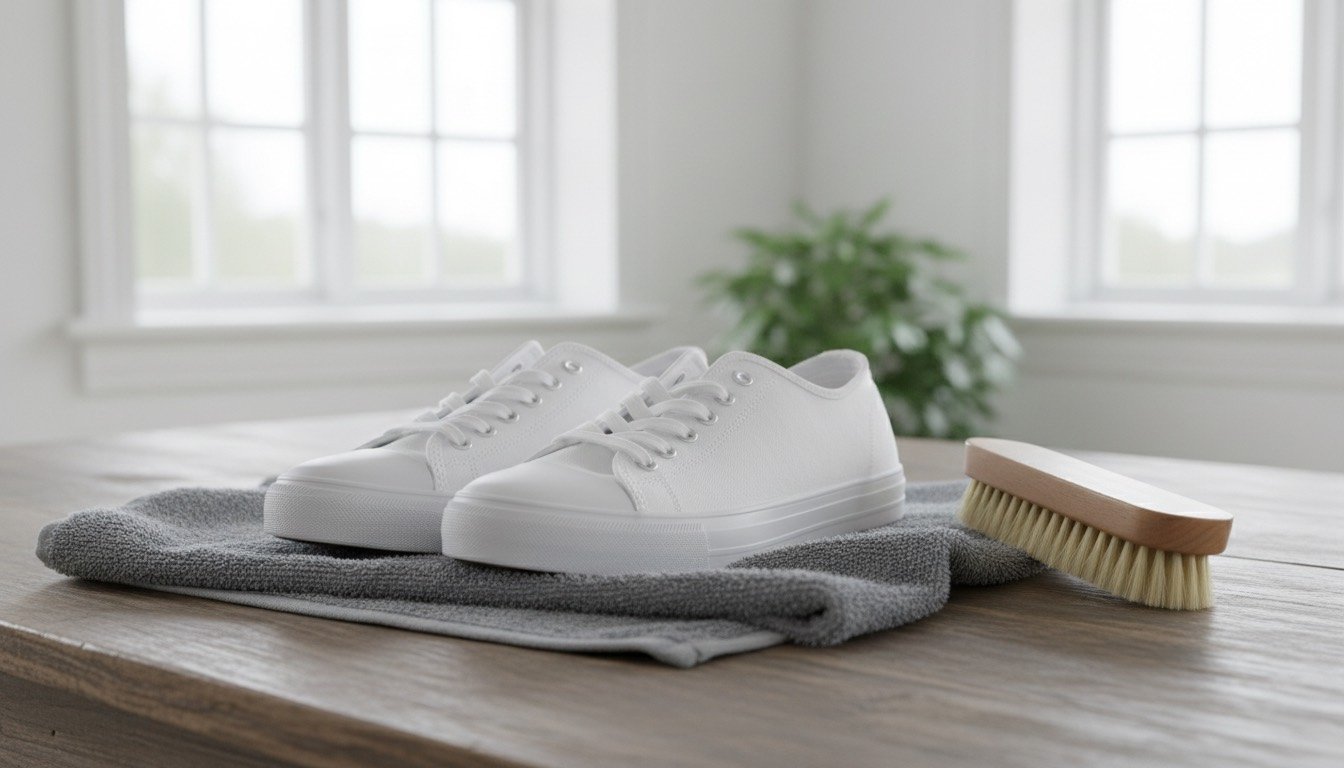
Trainers get the hardest life in a UK wardrobe and the least considered cleaning — usually a panicked cycle in the washing machine the night before a wedding, a match, or the first day back at school. Some pairs survive it. Glued-sole trainers, leather trainers and anything with proper foam midsole cushioning often don't, coming out misshapen, delaminated at the toe, or with sole rubber gone chalky and cracked.
This guide covers the safe way to clean almost any trainer by hand in around ten minutes, exactly which pairs can go in the washing machine and on what settings, how to dry them without a radiator or tumble dryer wrecking the shape, and how to keep white soles and uppers looking new rather than grey.
Tools and materials you need before you start
A washing-up bowl, a soft brush and a bit of patience clean most trainers just as well as any specialist kit. Here's what's worth having in, with realistic 2026 UK prices — most of it doubles as everyday kit, covered fully in our student cleaning essentials guide.
- •Soft-bristled brush or old toothbrush — free, or £3–£6 for a dedicated shoe brush.
- •Melamine sponge (magic eraser) — packs of six for £1.50–£3, lifts scuffs off white midsoles without scrubbing.
- •Washing-up liquid, or dedicated trainer cleaner (£6–£10) for tougher marks.
- •Microfibre cloths — around £3–£5 for a multipack.
- •Mesh laundry bag — £3–£6, essential for any machine wash.
- •Newspaper or kitchen roll for stuffing and drying — under £1.
- •Suede brush and eraser combo — £5–£8, only if you own suede or nubuck.
- •Bicarbonate of soda or a shoe deodoriser spray — £1–£3, for smell rather than stains.
The hand-wash method, step by step
This works for canvas, mesh knit, most synthetics and — done gently — leather and suede too. About ten minutes of actual work, plus drying time.
- •Remove laces and insoles first. Wash laces in a mesh bag with a towel or a normal load; hand-wash insoles separately and lay flat to dry — they hold onto odour longer than any other part of the shoe.
- •Deal with dry dirt before adding water. Bang soles together outdoors and brush off caked mud with a dry stiff brush. Wet mud smears; dry mud mostly falls away.
- •Mix warm, not hot, water with a squirt of washing-up liquid. Hot water can loosen the glue holding soles and overlays on, so lukewarm is the safe upper limit.
- •Work over the uppers with a soft brush dipped in the solution, gentle circles on knit, suede-look and coated leather, firmer on plain canvas and rubber. Rinse the brush often.
- •Tackle the midsole and any white rubber rand with a melamine sponge — mildly abrasive, which is exactly what lifts scuffs, so keep it away from soft mesh or suede.
- •Wipe over with a clean, barely damp cloth, checking the tongue and heel collar, which trap grime other steps miss.
- •Stuff each trainer firmly with newspaper or kitchen roll, then stand somewhere with airflow away from direct heat, swapping the paper as it turns damp.
When — and how — it's safe to machine wash trainers
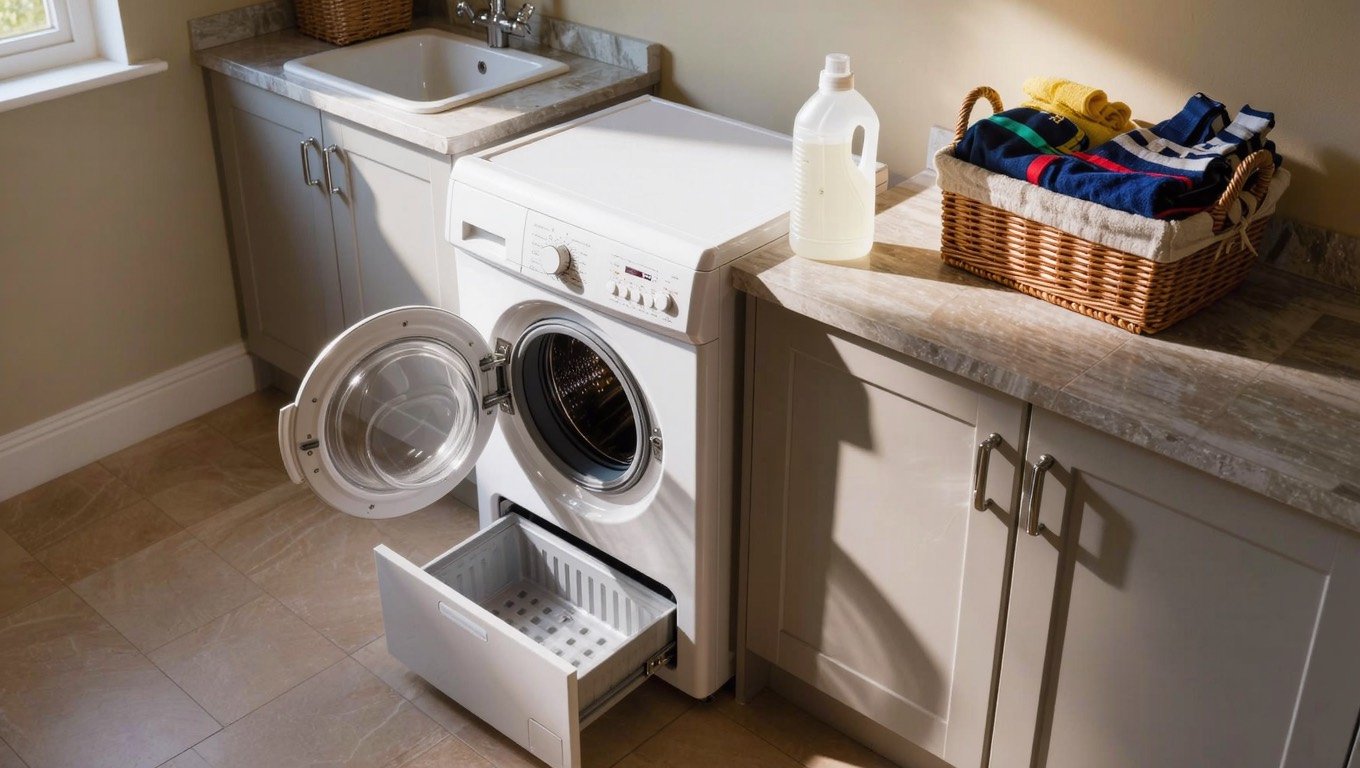
Canvas trainers and knitted synthetic uppers generally survive a washing machine if protected properly: a cool 30°C gentle or delicates cycle, inside a mesh laundry bag or old pillowcase, with a couple of towels added to the drum. Use a mild liquid detergent rather than bio powder — the enzymes can be harsh on foam midsoles over repeated washes. Most trainers don't carry a reliable care label; where one exists, check it against our guide to laundry symbols.
Some trainers should never go in the machine: leather and suede uppers, anything with glued-on decoration or foam overlays, and cushioned running shoes with proper midsole foam (the £90–£180 kind). Tumbling and prolonged wet weight stress the adhesives, and a hot spin can permanently crush cushioning out of shape. For those pairs, hand-washing isn't a compromise — it's the correct method.
Material-specific care: leather, suede, canvas and knit
Not every trainer responds to the same treatment, and knowing which is which avoids expensive mistakes.
- •Leather and faux leather: wipe with a barely damp cloth rather than soaking, and condition occasionally (£5–£9) to stop cracking.
- •Suede and nubuck: never use water directly — brush in one direction, use a suede eraser on scuffs, and apply a protector spray (£6–£10) before wet weather, not after.
- •Canvas: the most forgiving material. A bicarbonate-of-soda paste left on stubborn marks for ten minutes before brushing lifts most scuffs.
- •Knitted or mesh synthetic: gentle machine wash is usually fine, but scrub grubby areas by hand first — the machine alone rarely shifts ground-in dirt.
- •White midsoles: the melamine sponge is the single most effective tool; for yellowed soles, a peroxide-based paste left an hour in daylight can lighten but won't fully reverse UV yellowing.
Drying trainers without ruining the shape or the soles
Heat is the one universal enemy. Radiators, tumble dryers and sunny windowsills warp the toe shape as materials dry unevenly, yellow white soles through UV and heat, and soften the glue holding soles on until it lets go. The fix is unglamorous: newspaper stuffed firmly into each shoe, changed once damp, left somewhere airy with no direct heat, ideally for 24–48 hours. Drying trainers indoors during a wet spell follows the same rules as drying clothes indoors without causing damp — a dehumidifier or a cracked window beats turning up the heating.
Common trainer-washing mistakes to avoid
- •Washing on a hot cycle 'to be sure' — the single most common cause of split soles and shrunk uppers.
- •Tumble drying, even on a low setting — heat and tumbling together is worse than either alone.
- •Bleaching yellowed white soles — whitens unevenly and leaves rubber brittle.
- •Scrubbing suede with a wet brush — crushes the nap into dark, shiny patches that won't brush out.
- •Leaving muddy trainers to dry before brushing — dried mud lifts off easily; wet mud stains.
- •Skipping the insoles — why supposedly clean trainers still smell.
- •Storing damp trainers in a closed cupboard, a fast route to the growth covered in our guide to mould on clothes and wardrobes.
When to call a professional (or accept defeat)
Specialist trainer cleaning and restoration services operate in most UK cities, typically £15–£30 a pair, with sole repainting or repair running £25–£45 on top — worth it for an expensive or sentimental pair with damage beyond a home clean. A cobbler can re-glue a lifting sole for £10–£20, best done before the gap lets water in. For everyday school and gym trainers, a regular five-minute hand wash beats an occasional expensive rescue — the logic behind a proper PE kit and trainers wash routine.
Frequently asked questions
**How often should I wash trainers?** Weekly for everyday school or gym pairs keeps dirt from setting in; occasional-wear trainers need cleaning whenever visibly dirty, and always after a muddy outing.
**Can I put trainers in the tumble dryer on a low heat?** No. Even low heat combined with tumbling warps shapes and weakens glue. Air-drying stuffed with paper is slower but doesn't risk the shoe.
**Why have my white trainers gone yellow even though I barely wear them?** UV light and oxidisation, usually from storage near a window, gradually yellow rubber and foam whether worn or not. Keep unworn pairs out of direct sunlight.
**Is washing-up liquid strong enough, or do I need a proper trainer cleaner?** For everyday dirt, a mild washing-up liquid solution is genuinely as effective as branded cleaner — the difference is convenience, not power.
**Will machine-washing trainers damage my washing machine?** Occasionally, if you skip the mesh bag — trapped grit and metal eyelets can scratch the drum or snag the door seal. If wash loads leave the machine smelling musty, an occasional deep clean using our how to clean a washing machine guide sorts it.
**My trainers still smell after washing — what's going wrong?** Nearly always the insoles. Odour-causing bacteria live in the foam, so reusing an unwashed insole brings the smell straight back. Hand-wash insoles separately and dry completely flat.
Found this useful?
There's plenty more — hundreds of guides and honestly-tested product reviews for every corner of your home.
Browse All Guides