Laundry & Fabric Care · 6 min read · 14 August 2026
How to Wash PE Kit and Trainers: The Sunday-Night Routine That Works
The 30°C sports wash, the pillowcase trick for trainers, and why fabric softener is the reason kit smells the moment it's worn again — a 40-minute Sunday routine that actually works.
By the Nims Casa editorial team — written from professional cleaning experience and checked against our editorial standards.
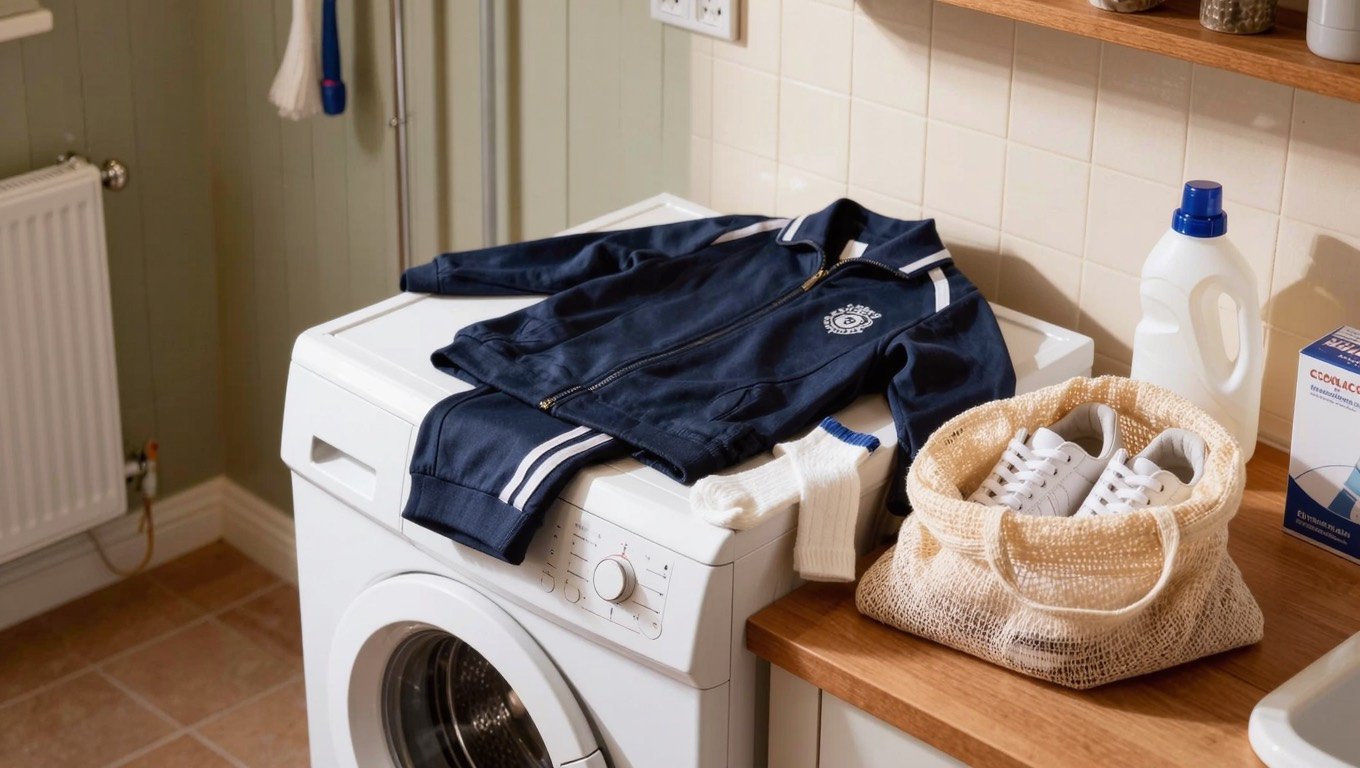
Most PE kit comes home on a Friday, festers in a drawstring bag over the weekend, then goes in with the family wash at 40°C with a capful of softener. That routine is exactly why polyester tops smell within ten minutes of being worn again: softener coats the wicking fibres in a waxy film that traps sweat and feeds bacteria, and the sealed bag incubates them for 48 hours.
The fix costs under £15 in supplies and takes about 40 minutes on a Sunday evening. Below is the routine we use, plus the honest answer to the question every parent asks: yes, most trainers can go in the machine — with precautions.
Safety First
A few genuine hazards first — two wreck things permanently and one is a fire risk.
- •Never tumble dry trainers. Sole adhesives soften from around 70°C, dryers routinely exceed that, and loose rubber in a hot drum is also a documented dryer fire risk.
- •Never machine wash leather school shoes. A full soak degrades the leather and stitching; they come out stiff, cracked and often a size tighter. Damp cloth and polish instead.
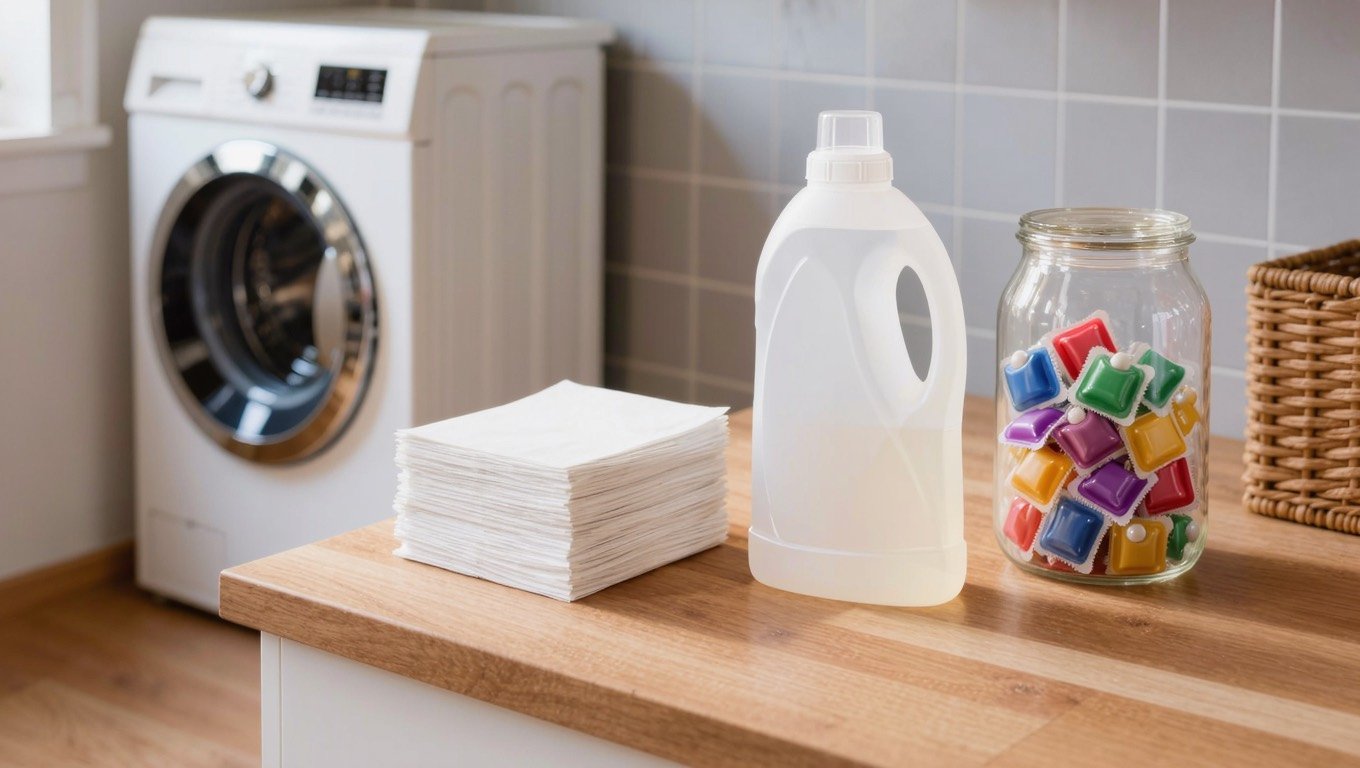
- •Keep sanitiser and detergent pods locked away from younger children — pods look like sweets and cause hundreds of UK poisonings a year.
- •Empty every pocket first. Stones chip the door glass, and a forgotten mouthguard will not survive a spin cycle.
What You'll Need
Everything comes from a supermarket and lasts most of a school year.
- •Sports detergent (£5–£7), or your normal bio detergent at half dose — the half dose matters more than the label
- •Laundry sanitiser (£4–£5) — kills odour bacteria at 30°C, which detergent alone does not
- •A mesh laundry bag or an old pillowcase you can knot shut (£0–£3)
- •Bicarbonate of soda (£1.50) for insoles
- •White vinegar (£1) for the monthly deep-strip soak
- •A stiff washing-up brush, old newspaper and two old towels for trainer day
Time and Cost: What's Realistic
The routine is about 40 minutes of actual work: ten minutes sorting and pre-treating, five loading, then hanging and repacking once the cycle finishes. Technical fabric dries indoors in two to four hours, so a 6pm wash is dry and bagged by bedtime. Trainers are the slow item — 24 to 48 hours of air drying — which is why they get washed fortnightly on a Friday night, not on Sunday.
Running cost is roughly 50p a week in detergent, sanitiser and electricity at 30°C. Compare that with replacing a £12 wicking top mid-term because the smell became permanent, and the maths settles itself.
The Sunday 40-Minute Routine, Step by Step
The order matters more than the products. Sweat and skin bacteria sit on the inside of the fabric, so everything washes inside out, and technical fibres never see softener or high heat.
- •1. Empty the PE bag completely the moment it comes home, and give the bag itself a wipe inside.
- •2. Pre-treat grass, mud and deodorant marks while the fabric is dry. Our full stain removal guide covers the right chemistry for each, but for grass, neat bio detergent worked in with a soft brush and left 15 minutes handles most of it.
- •3. Turn everything inside out — tops, shorts, socks.
- •4. Load all the technical (polyester/elastane) items together on a 30°C sports or synthetics cycle, maximum 800rpm spin.
- •5. Dose half the normal amount of detergent. Over-dosing leaves residue that feeds bacteria; it is the single most common mistake we see.
- •6. Add laundry sanitiser to the fabric-softener compartment. This is what actually kills odour bacteria at low temperature — and never, ever use actual softener on wicking fabric.
- •7. Cotton polos, white socks and towels go in a separate 40°C load with a normal dose — see our guide to keeping whites white if they have gone grey.
- •8. Hang technical kit the minute the cycle ends — it dries in two to four hours on an airer. Follow the ventilation rules in our guide to drying clothes indoors without causing damp, and keep elastane waistbands off hot radiators — heat kills the stretch.
- •9. Repack the bag the same evening — Monday morning becomes a non-event.
- •10. Once a month, run the machine empty on a hot maintenance cycle — a drum that smells will make everything you wash smell. Here is how to clean the washing machine itself.
Can You Machine Wash Trainers? Yes — the Pillowcase Method
Canvas, mesh and most synthetic trainers wash perfectly well in a machine. Leather, suede, and anything with gel units or lights should not go in — for those, see our full guide on how to wash trainers without wrecking them. For standard school PE trainers:
- •1. Remove the laces and insoles. Laces go in with the kit wash; insoles get washed by hand in warm soapy water.
- •2. Bang the soles together outside and brush off dry mud with the washing-up brush — mud in the drum ends up in the door seal.
- •3. Put the trainers in a pillowcase and knot it shut, or use a mesh bag. This stops the drum-thumping and protects both shoes and machine.
- •4. Add two old towels to balance the load and quieten the cycle.
- •5. Wash at 30°C on a delicates cycle, 600rpm spin or lower, half a dose of detergent.
- •6. Air dry stuffed with scrunched newspaper, swapping the paper after a few hours; allow 24–48 hours. Never a radiator or tumble dryer, and out of direct sun — heat yellows white midsoles and softens sole glue.
Troubleshooting: When the Smell Survives the Wash
If kit smells clean off the airer but reeks minutes into wear, the fibres are loaded with softener residue and bacteria. Strip it: soak for an hour in warm water with white vinegar at one part to four, then rewash at 30°C with sanitiser and no softener. Stubborn cases need two rounds.
Smelly insoles get a dry treatment: dust generously with bicarbonate of soda, leave overnight, then bang the powder out. If they still smell after two treatments, replacement insoles cost £8–£12 — stop fighting them. Shin pads want a five-minute hand wash in warm soapy water and a full air dry before they go back in the bag. The bag itself can usually take a 30°C machine wash — check the care label first; our laundry symbols guide decodes every one.
When to Stop and Spend the Money
Be honest about the endpoint. A polyester top that still smells after two vinegar strips has bacteria embedded in the fibre core, and no domestic process will fix it — supermarket replacements run £4–£10 and that is the right call. Trainers whose soles are lifting after a wash had failing glue already; re-gluing rarely holds through PE lessons, so budget for a new pair.
The exception is proper leather school shoes. A local cobbler will re-heel and restitch a quality pair for £15–£25, which beats replacing them at £40-plus. Professional trainer-cleaning services exist too, at £15–£25 a pair — worth it for expensive shoes, but for £25 PE trainers the pillowcase method is all the help they will ever need.
Found this useful?
There's plenty more — hundreds of guides and honestly-tested product reviews for every corner of your home.
Browse All Guides