Garden & Outdoor · 5 min read · 2 June 2026
Landscaping Mistakes to Avoid: What They Cost, and Where DIY Has to Stop
Gardens rarely fail on the planting. They fail on levels, water and ground conditions, and those are the errors that cost four figures to unpick two years later.
By the Nims Casa editorial team — written from professional cleaning experience and checked against our editorial standards.
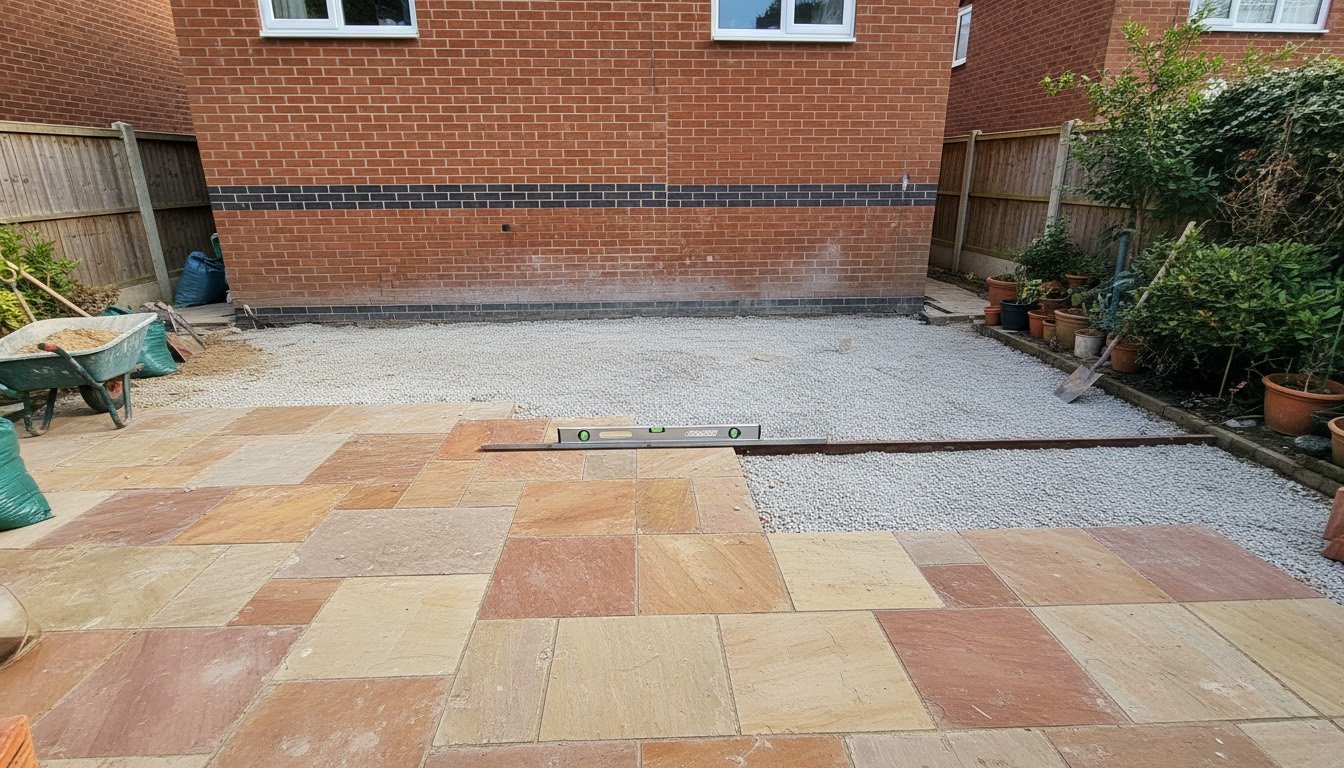
Almost every garden we have been called back to fix went wrong in the first fortnight, before a single plant went in. Levels, drainage and ground preparation get decided early, buried quickly, then cost thousands to correct once forty tonnes of hardcore and a patio sit on top of them. Planting mistakes, by contrast, are cheap: you dig the shrub up and move it.
So this is ranked by consequence rather than frequency, and it ends with the part most guides duck: which jobs a competent DIYer can take on, and which need someone qualified and insured.
The mistakes ranked by what they cost to put right
Severity here means the bill, the risk or the legal exposure. The first three turn a £4,000 garden into a £9,000 one.
- •Raising ground or paving above the damp proof course: £2,000–£6,000 to lift and relay, plus internal damp repairs.
- •Striking a buried electricity or gas service while digging: potentially fatal, and £800 upwards to repair.
- •An unengineered retaining wall over 600mm: collapse risk, and a rebuild costs more than doing it properly first time.
- •Paving a front garden in impermeable material with no drainage: planning enforcement, and water pushed onto a neighbour.
- •Skimping the sub-base under paving: rocking, sunken slabs within two winters; a 20m² relay runs £1,800–£3,200.
- •Planting thirsty trees close to the house on clay: subsidence claims, which insurers do not take lightly.
- •Cutting hedges between March and August: an offence under the Wildlife and Countryside Act 1981 if nests are disturbed.
Ground levels and the damp proof course
This is the most expensive mistake in British landscaping, and it happens because raising a patio is the easy way to deal with a sloping garden. The damp proof course sits roughly two brick courses above outside ground level on most homes built after 1875. Bridge it with paving, decking or a heap of topsoil and moisture climbs straight past it into the wall.
The rule is simple: finished paving sits at least 150mm below the DPC and falls away from the building at a minimum of 1:80, which is 12mm of drop per metre. If you cannot achieve that, you dig down — you do not build up. Where the level change is awkward, resolving it on paper while planning the garden layout costs nothing and saves the retrofit. A channel drain across the back door helps a wet threshold; it does not cure a buried wall.
Water has to go somewhere, and 'away' is not a plan
Every square metre of new paving is a square metre that no longer soaks up rain. A 40m² patio creates roughly 25,000 litres of runoff a year. Decide where it goes before you lay a slab.
In England, paving more than 5m² of a front garden in an impermeable surface needs planning permission unless the water drains to a permeable area inside your boundary. Even in a back garden a soakaway must sit at least 5m from any foundation under Part H. Sorting garden drainage at design stage beats trenching through a finished lawn.
- •Fall paving towards a border, lawn or channel drain — never towards the house or a boundary.
- •Use permeable jointing or a gravel margin where you can; it is the simplest route to compliance.
- •Test the ground before specifying a soakaway. Heavy clay often will not accept the volume.
- •Never connect patio drainage into a foul sewer. It overloads the system and breaches your water company conditions.
Retaining walls and the 600mm line
Soil weighs roughly 1.8 tonnes per cubic metre, and considerably more saturated after a week of British rain. Most DIY retaining walls fail because they were built for the dry weight and given nowhere for water to escape.
Our working line: up to 600mm of retained height a competent DIYer can build a sleeper or block wall safely, provided the drainage detail is right. Above 600mm, get a structural design. Above 1m, treat it as a structural job, and note that a wall over 1m adjacent to a highway needs planning permission too. The retaining wall build sequence matters more than the material.
- •100mm perforated land drain at the base, laid to fall and discharged somewhere real.
- •At least 300mm of clean 20mm gravel backfill, wrapped in geotextile so silt cannot clog it.
- •Weep holes every metre in solid walls, and no compacted clay tight against the back face.
- •Foundations at least 450mm deep on firm ground, deeper near tree roots or made ground.
The genuinely dangerous ones
Four mistakes in this trade put people in hospital rather than out of pocket, and all four are avoidable with an afternoon of preparation.
- •Digging blind. Garden electricity cables are often at 450mm and frequently shallower after earlier works; gas services sit around 375–450mm. Hire a CAT and Genny for £45–70 a day and hand-dig within 500mm of anything you find.
- •DIY outdoor electrics. In England and Wales a new outdoor circuit is notifiable under Part P. Use a registered electrician or notify Building Control at £200–350. Unnotified work surfaces at sale.
- •Tree work off a ladder. Chainsaw use above shoulder height belongs to an arborist with the tickets and liability cover. Check for a Tree Preservation Order first; in a conservation area the council needs six weeks notice.
- •Plant hire without training. Mini diggers go to anyone with a card. On a slope, near a boundary wall, or over an unknown drain run is where garden projects go badly wrong.
Where DIY stops and a professional starts
This is the boundary we would give a friend. Nothing on the first list needs a trade; everything on the second is notifiable, structural, or carries a risk that is not yours to take.
- •Do it yourself: soil prep and turfing, planting and mulching, raised beds under 600mm, timber edging, gravel paths, fence panels in existing posts, patios under 15m² on level ground, hedge trimming below shoulder height, and above-ground irrigation from an existing outside tap.
- •Get a professional: retaining structures over 600mm, ground works near foundations or a party wall, drives crossing a footway, new outdoor circuits, irrigation plumbed into the mains, work on protected trees, digger work on a slope, and any level change bringing soil within 150mm of the DPC.
- •Grey area, take advice first: patios over 25m², steps with more than three risers, and drainage tying into an existing surface water system.
The slow-burn mistakes that surface in year three
The rest are cheaper, but they are why gardens stop looking good. Plants get bought for instant effect and planted at half their spacing, so the border becomes a thicket. Bark gets piled against stems and rots the collar — use the depth and material set out in our mulch types and quantities guide, 50–75mm deep and clear of trunks. Sprinklers get fitted where drip lines would use a third of the water, so read the drip versus sprinkler comparison first.
The biggest slow-burn error is designing a garden nobody has time to keep. Be honest about the two hours a week you will really give it, then plant to match; low-maintenance planting that still looks deliberate is a legitimate goal, not a compromise.
Next step, in order: chalk the DPC height on the wall and measure down; watch where surface water goes in the next downpour; scan for services along anything you intend to dig; then price the layout against real UK rates.
Found this useful?
There's plenty more — hundreds of guides and honestly-tested product reviews for every corner of your home.
Browse All Guides