DIY & Maintenance · 6 min read · 9 May 2026
New Homeowner Checklist (Printable): Your First Week, Month and Year in a UK Home
The removal van leaves and the house is yours, along with every problem the last owner quietly lived with. Here is the order to tackle them in, with real UK costs beside every job.
By the Nims Casa editorial team — written from professional cleaning experience and checked against our editorial standards.
The removal van pulls away and the house is suddenly yours, along with every problem the previous owner learned to live with. Almost none is dramatic: a weep on a joint under the bath, a gutter uncleared since 2019, a boiler silting up with no service history. Caught in month one, those cost nothing to £150. Eighteen months later, £600 to £4,000.
This is the order we give people who ring three weeks after completion, prices attached.
Day One: Find These Six Things Before You Unpack
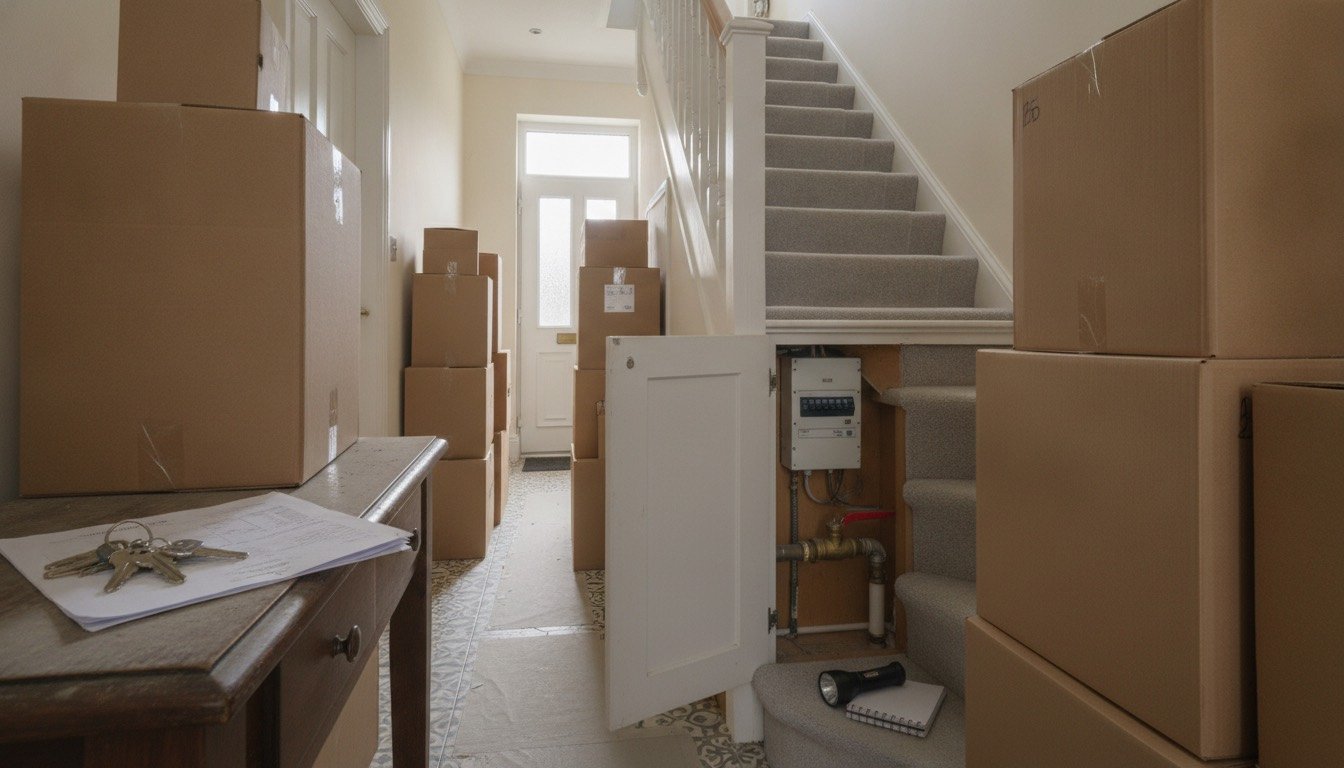
Walk the house with a torch and your phone before a box is opened. It is free, takes under an hour, and is the difference between a £40 mop-up and a £3,000 claim.
- •Internal stopcock, usually under the kitchen sink. Turn it off and on to prove it moves; £90 to £160 to replace a seized one.
- •External stop tap, in a cover near the boundary. Lift it, clear the silt; a stopcock key is £6.
- •Consumer unit: photograph the labelling, press the RCD test button. Five minutes, free.
- •Gas emergency control valve beside the meter. Know which way it turns. Two minutes.
- •Boiler data plate and Benchmark logbook. No paperwork usually means no service since installation.
- •Loft hatch, drain covers, water meter: open all three, photograph the reading. Twenty minutes, free.
Week One: Safety, Security and Meter Readings
Spending fast is justified this week. Finish it with an overnight meter test: read it last thing, use nothing, read again at six. A dial that moved means water is escaping, and our guide to finding a water leak in your house narrows down where.
- •Change both door cylinders; you cannot know how many keys exist. A TS007 three-star anti-snap cylinder is £25 to £55 and fits in fifteen minutes; a locksmith is £70 to £120.
- •Photograph and submit gas, electricity and water readings on completion day. Ten minutes, free, and it settles most opening-bill disputes.
- •Smoke and CO alarms on every floor: £15 to £25 each sealed, £110 to £180 for a radio-interlinked set of three.
- •Boiler service if no certificate covers the last twelve months: £80 to £140 with a Gas Safe engineer, the best value in year one.
- •Check buildings insurance ran from exchange, not completion.
The First Month: Turn the Survey Into Costed Jobs
A RICS Level 2 report costs £400 to £900 and a Level 3 survey £700 to £1,500. Most buyers read theirs once, panic at the amber ratings, then shelve it. Surveyors hedge deliberately: "further investigation recommended" means they could not see enough, not that the roof is failing.
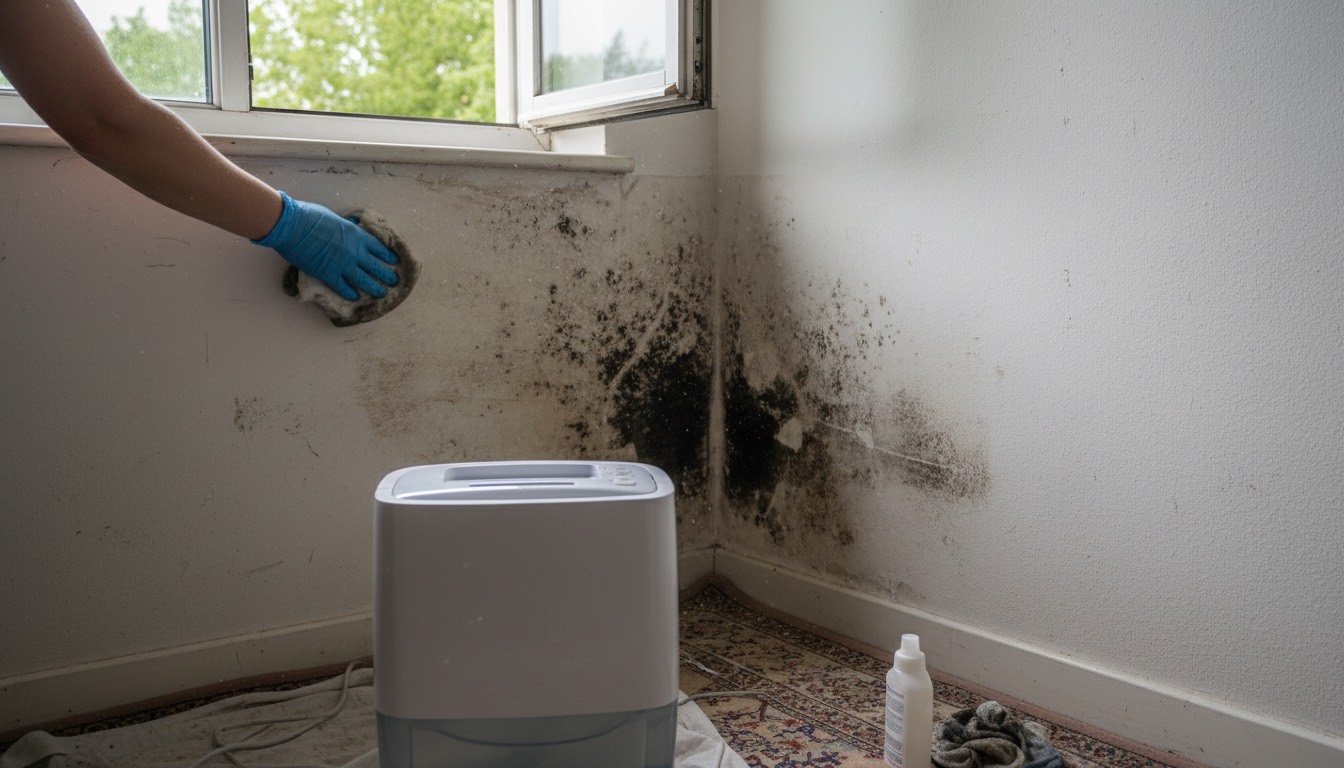
Sort each flagged item into safety, water, then cosmetic. Damp and mould found in your first autumn is usually condensation, under £200 to solve; ignored through two winters it becomes replastering at £600 to £1,200 a room.
- •EICR if the consumer unit predates 2008: £150 to £300 for a house, £120 to £220 for a flat.
- •Lift the drain covers and run a tap. Standing water means a partial blockage; a CCTV survey is £80 to £200.
- •Test the heating in June. A radiator cold at the bottom is sludge, not air: £150 to £250 chemical flush, £350 to £700 power flush.
- •Collect the guarantees that transfer with the house: FENSA or CERTASS, Gas Safe Building Regulations, damp and roofing warranties.
Your First Year, Season by Season
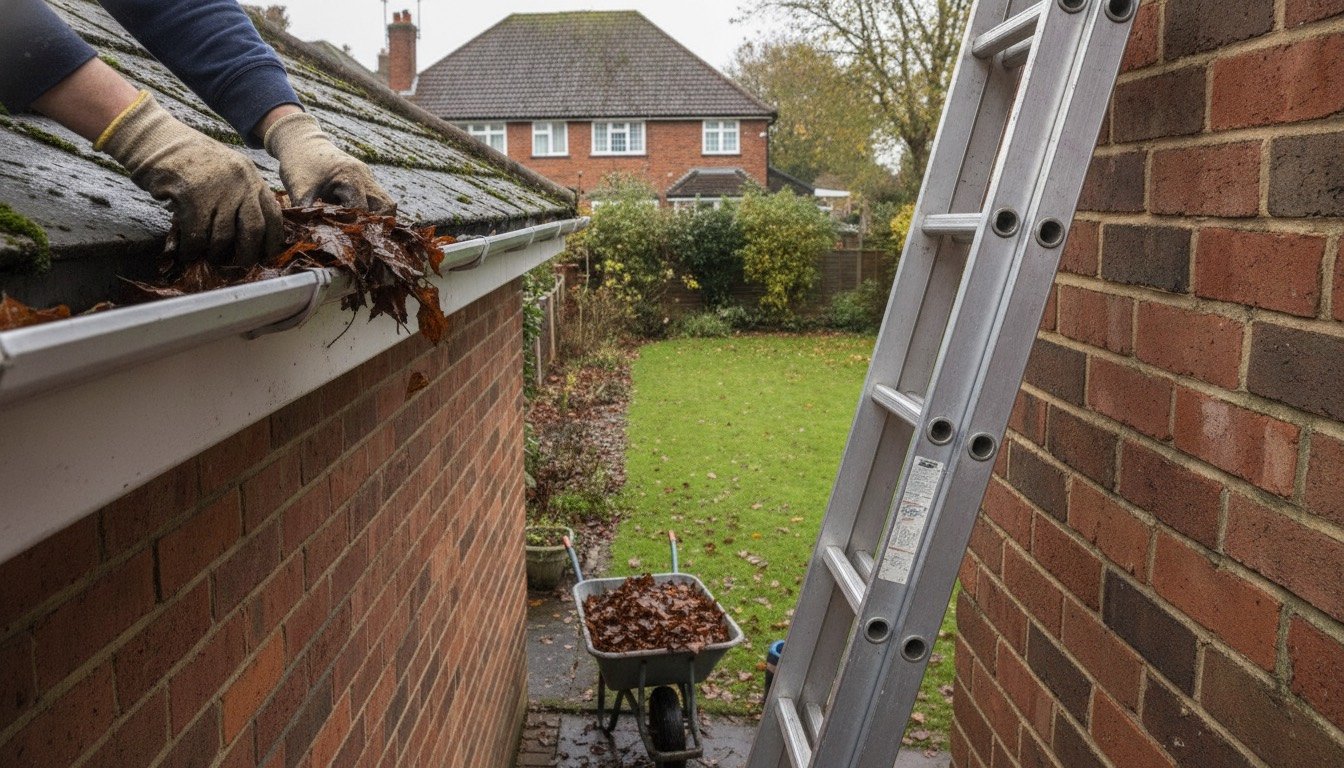
British weather does the scheduling. The wet season runs October to March, so keeping water out is finished by late September; paint, render and timber wait for May to August. Autumn is the season you cannot skip, and clearing the gutters is the cheapest damp prevention there is.
- •Spring: check the exterior for cracked render, slipped tiles and blocked airbricks. Half a day, £20 to £60.
- •Summer: the only reliable window for exterior painting, repointing and treating fencing. One to two days, £100 to £250.
- •Autumn: gutters cleared, chimney swept (£60 to £100), loft pipework lagged (£12 a roll), heating run for an hour. £40 to £120.
- •Winter: interior jobs only — filling, draught-proofing, decorating; check the loft on a wet night for daylight and damp. £30 to £90.
- •Monthly: test the alarms, check under the sinks, behind the washing machine and the boiler pressure. Ten minutes, free.
The Kit Worth Buying in Week One
You need enough to stop a leak, hang a shelf and see into a loft. The list below is £150 to £250 and removes the £110 to £160 half-day minimum charge from a dozen jobs a year. Our fuller essential tools for homeowners list covers year two.
- •Stopcock key and water-pump pliers, £18. Turns a failed flexi hose from a flood into a puddle.
- •Combination detector for studs, joists and live cables, £25 to £45. Non-negotiable before drilling plasterboard.
- •18V cordless combi drill and masonry bits, £70 to £130. Victorian brick wants hammer action.
- •Head torch, 2m level, filling knife, PTFE tape, low-modulus silicone: £45 together.
- •Consumables tin: wall plugs, bleed key, tap washers, 15mm compression coupling. £20.
What Jobs Cost: Labour, Materials and a Quote You Can Trust
Materials are rarely the story on small domestic work: expect 65 to 80 per cent of a repair bill to be labour, dropping to roughly half on a re-roof or bathroom. Quoted £480 to fit a £90 extractor fan? Ask how many hours that buys. Batching jobs into one visit is the cheapest trick going, as our handyman rates breakdown shows. Rates below exclude London; add 25 to 40 per cent inside the M25.
A quote worth accepting is written, itemised, names materials by specification and asks no more than 25 per cent up front. Be wary of a lump sum with no breakdown, a cash-only discount that removes your consumer rights, a deposit above a third, and anyone who knocked uninvited. Firms offering free damp surveys almost always find you need an injected damp-proof course at £70 to £120 a metre; pay £250 to £400 for an independent surveyor.
- •Handyman: £110 to £160 half day, £180 to £280 full day.
- •Plumber: £50 to £80 an hour, £70 to £120 call-out.
- •Electrician: £45 to £65 an hour, £250 to £380 a day.
- •Gas Safe engineer: £80 to £140 a service, £75 to £120 an hour.
- •Decorator: £150 to £220 a day, plus £60 to £110 of paint per bedroom.
- •Roofer: £200 to £350 a day for two; slipped-tile repairs, £150 to £350.
Short on Time or Money? Do These Six First
Nobody finishes all this in year one, which is why checklists get abandoned by March. If you manage six things, take these. The last separates owners who enjoy their houses from those who dread the post: our guide to annual home maintenance costs breaks the figure down by property age and type.
- •Free the stopcock. Free. Prevents catastrophic water damage.
- •Working smoke and CO alarms on every floor. £40 to £90.
- •Boiler service, £80 to £140 — cheaper than a £2,000 to £3,500 mid-January replacement.
- •Gutters cleared, downpipes into a gully. Up to £150. Prevents the damp walls where four-figure repairs begin.
- •New door cylinders, £50 to £110 — insurers ask about signs of forced entry.
- •Open a maintenance pot: one per cent of property value a year, or £900 to £1,800 for a three-bed.
Found this useful?
There's plenty more — hundreds of guides and honestly-tested product reviews for every corner of your home.
Browse All Guides