Cleaning Guides · 6 min read · 15 July 2026
Open Shelving vs Closed Cabinets: Cost, Upkeep and What Actually Fixes to an Old Wall
The choice is usually sold as a styling decision. In a pre-war house it is really a decision about wall construction, grease, and how much wiping you are willing to do every week.
By the Nims Casa editorial team — written from professional cleaning experience and checked against our editorial standards.
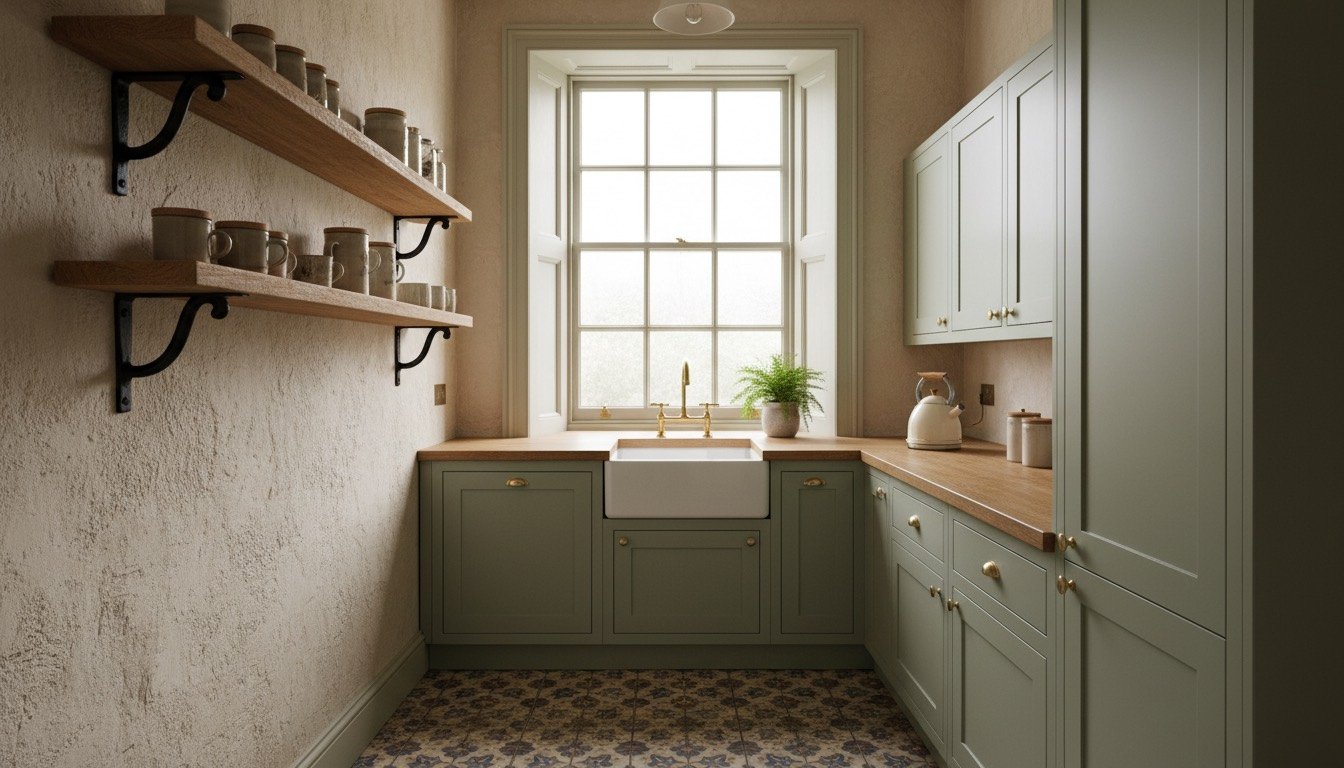
Every kitchen we strip out tells the same story: the previous owner put up three metres of open shelving because it photographed well, then filled the bottom shelf with everyday things and let the top one collect a tacky grey film.
The honest comparison is not about looks. It is about how much airborne cooking grease your kitchen produces, how much wall you actually have, and — in anything built before about 1930 — whether the wall behind the plaster will hold a fixing at all.
Side by side: the differences that matter
Strip out the styling and the two systems differ on six practical points, measured across a typical 1.8m run of wall.
- •Cost to fit 1.8m: open shelving £70-£220 in materials DIY, £250-£400 with a joiner. Closed wall units £180-£450 flat-pack plus fitting, or £600-£1,100 per linear metre made-to-measure.
- •Storage volume: cabinets win outright. A 720mm-high wall unit holds roughly three times what two 250mm shelves hold on the same wall area.
- •Visual weight: shelving keeps a small room feeling wider. Wall units 720mm high on both sides of a 2.4m galley genuinely feel oppressive.
- •Cleaning load: open shelving means wiping everything on it, not just the shelf — 15-25 minutes a week per 1.8m run near a hob.
- •Tolerance of a bowed wall: shelves forgive it, cabinets do not. A 15mm bow over 2m, normal in lime plaster, is invisible behind a shelf and glaring on a run of doors.
- •Load on the fixing: a filled 1.8m oak shelf is 35-50kg on two brackets. A filled 600mm wall unit is 30-40kg spread across a hanging rail.
Performance: grease, dust and cold external walls
Frying, roasting and boiling put a fine aerosol of oil into the air, and household dust bonds to it. On a closed shelf the door takes the hit; on an open one, every mug does. With a recirculating extractor rather than a ducted one, expect anything unused for three weeks to need washing before use, not just dusting — our notes on why houses get dusty so quickly explain what is actually settling.
Older housing adds a second problem. A solid 9-inch brick wall with no cavity runs several degrees colder than an internal one, and a closed cabinet screwed tight to it traps still, humid air against a cold surface. We regularly pull units off north-facing external walls to find black mould on the back of the carcass and none at all on the room side. Open shelving avoids that, which is one genuine argument for it in a Victorian back kitchen. If you must fit closed units there, pack them off the wall on 12mm battens.
Installation: this is where old houses decide for you
In a post-1970s house with plasterboard on studs, both options are a straightforward afternoon. In a pre-war house neither is, and that difficulty usually settles the argument.
Solid walls are typically soft Victorian brick behind 12-18mm of lime plaster on a haired backing coat. Standard 8mm nylon plugs spin in old lime mortar and pull out under load. Drill on rotary only — switch the hammer action off until you are through the plaster, or you will blow a saucer-sized crater off the wall and end up reading how to repair old plaster walls instead of hanging shelves. Fix into the brick itself with 10mm resin anchors or 100mm frame fixings, never into the plaster.
Internal walls are usually lath and plaster on studs, and there is no reliable 400mm centre in a Victorian house: we find studs at anything from 330mm to 480mm, sometimes with a noggin exactly where you wanted a bracket. Locate them with a fine bradawl, and pilot every screw — riven laths crack if you overtighten.
Two more cautions. Pre-1970s wiring predates the modern safe-zone rules, so rubber-sheathed cable can run diagonally across a wall; use a detector and treat it as advisory. And deep sash window reveals often leave 400-600mm less usable wall than you measured, which quietly rules out a continuous cabinet run.
Ten-year cost, honestly totalled
Take that 1.8m run. Open shelving in 25mm oak on cast-iron brackets costs about £190 in materials. Re-oil once a year at £8 a time and replace nothing: ten-year outlay roughly £270. Add the 17 hours a year of extra wiping you are donating and it stops looking cheap.
Two 900mm flat-pack wall units with soft-close hinges run £220-£380 fitted yourself, £450-£600 with a fitter at £200-£280 a day. Over ten years expect one set of hinge replacements at £4-£8 each and possibly new door fronts at £120-£250. Ten-year outlay: £400-£900. Bespoke joinery starts around £600 per linear metre — the figures in our custom built-in shelving cost guide apply equally to fitted cupboards.
So closed storage costs roughly two to three times more over a decade and buys back around 170 hours of cleaning. That is the trade in plain terms.
Maintenance and the weekly reality
Open shelving is only pleasant to live with if what sits on it is used constantly. Everyday mugs, plates, oil and salt are fine, because turnover cleans them. Seasonal glassware and the spice jars you open twice a year become chores. The rule we give clients: anything used less than weekly belongs behind a door.
Closed cabinets shift maintenance to the doors and hinges rather than the contents — a wipe of the frontals during a normal kitchen deep clean, plus a hinge adjustment once a year. The hidden cost is clutter accumulating unseen, which the zoning approach in our kitchen cupboard organisation guide keeps in check.
Who each option suits
Choose open shelving if your kitchen is under 2.6m wall to wall, you cook mostly on the hob with good extraction, and the wall is sound enough to take a proper fixing. It suits utility rooms, pantries and boot rooms particularly well: high traffic, low grease.
Choose closed cabinets if you cook with fat regularly, own a lot of low-frequency items, or have anyone in the house with a dust allergy. They are also the sensible answer in a rental, where end-of-tenancy wall repairs cost more than the units did. For small rooms, the constraints in our small-space storage guide apply either way.
The verdict
For most UK kitchens, and especially older ones, the answer is neither purely: closed cabinets on the cooking wall, one or two open shelves elsewhere. Doors take the grease where grease is produced; shelves keep the room feeling open where they sit out of the splatter zone. That mix costs less than a full run of cupboards and cleans far more easily than a fully open kitchen.
In a solid-wall period property, let the wall have the final word. Sound brick behind decent plaster will carry either. Crumbling lime mortar, blown plaster or laths that flex under a thumb mean you repair the wall before you fix anything to it — and there, open shelving on two heavy brackets into solid brick is the lower-risk start. Get the fixings right and you can change your mind about the styling later for the price of a shelf.
Found this useful?
There's plenty more — hundreds of guides and honestly-tested product reviews for every corner of your home.
Browse All Guides