Heating & Cooling · 9 min read · 14 May 2026
Why Is My House So Dusty? The Real Causes, Ranked — and What Actually Fixes It
Dust that reappears within 48 hours is not a cleaning failure — it is a supply problem. Here is how to find the source, fix it safely, and spot the three jobs that must never be DIY.
By the Nims Casa editorial team — written from professional cleaning experience and checked against our editorial standards.
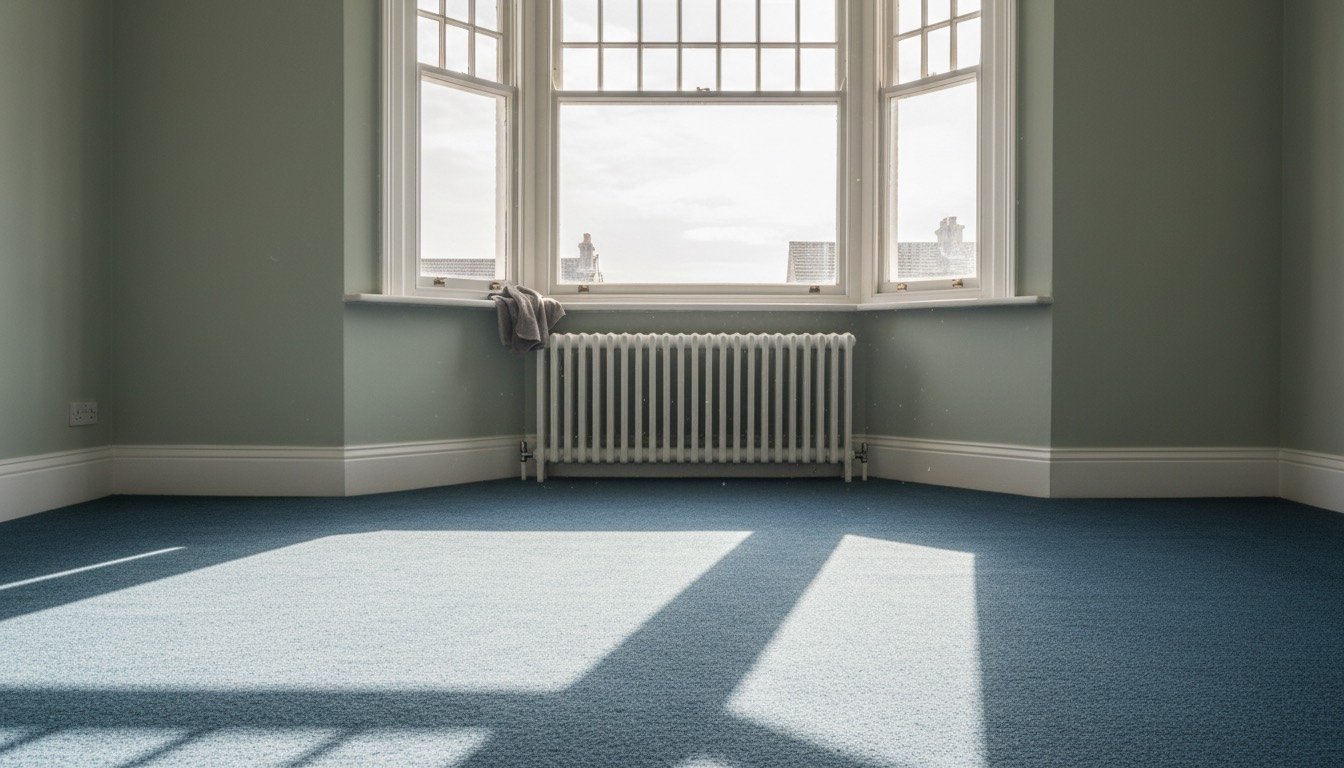
If you can write your name on the sideboard two days after polishing it, you do not have a cleaning problem. Something in the house is either manufacturing fine particles or letting them in faster than you can remove them, and no amount of dusting will change the arithmetic. The fix is always upstream of the cloth.
In UK housing the culprit is usually one of five things, and you can narrow it down in an afternoon with an LED torch, a £12 hygrometer and a close look at your carpet edges. What follows is the diagnosis in order, then the repairs in order of risk — because a handful of the jobs people cheerfully attempt (sanding textured ceilings, blocking airbricks, poking at a sooty flue) are precisely the ones that put fibres or carbon monoxide into the air you breathe.
Ten-minute diagnosis: work out what you are actually looking at
Before buying anything, spend ten minutes gathering evidence. Dust has a texture, a colour and a pattern of deposition, and each of those points somewhere specific. Do this in the room that bothers you most, ideally on a still, dry day so you are not measuring one afternoon's weather.
- •Torch test: close the curtains, shine an LED torch beam across the room at head height and look at it side-on. A visible galaxy of drifting motes means an airborne load, not surface dust — treat it as a ventilation and source problem, not a housekeeping one.
- •Timing test: wipe a dark, flat surface, note the date, and check daily. A visible film in 24 to 48 hours is heavy. Five to seven days is normal for an occupied, carpeted UK home.
- •Carpet edges: dark grey lines along the skirting, under doors and around the perimeter of a room are filtration soiling — air being drawn through the carpet pile from a void beneath, with the pile acting as the filter.
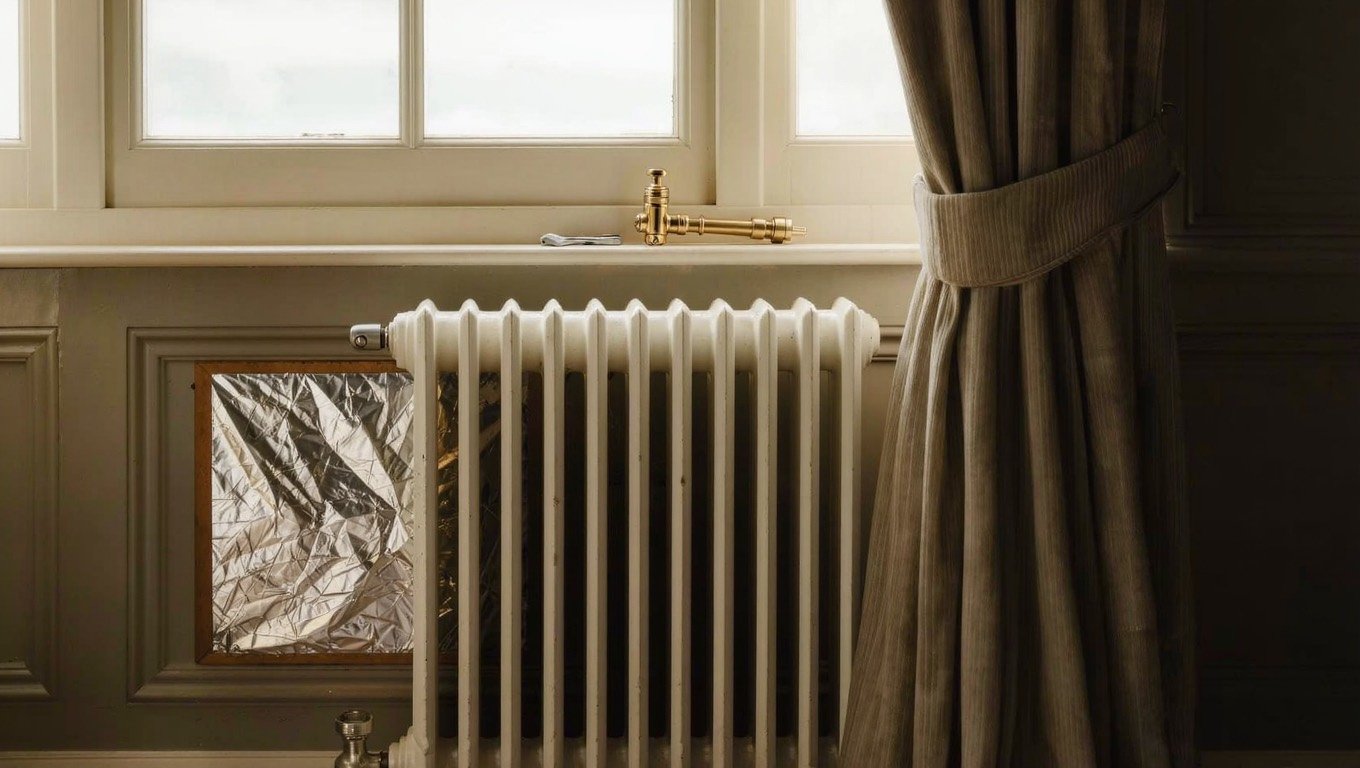
- •Radiators and ceilings: grey shadowing on the wall above a radiator, or dark stripes tracking across a ceiling between the joists, points to combustion soot from candles, a wood burner or an open flue rather than ordinary household dust.
- •Loft hatch: pale, faintly itchy dust settling on the landing furniture is usually mineral wool fibre pulled down through an unsealed hatch by the stack effect.
- •Pinch test: fluffy grey balls are textile fibre and skin; gritty, sand-like grains are masonry, plaster or soot; talc-fine powder is insulation, plasterboard or ash.
Symptom to cause: reading the pattern
Match what you found above against this list. Most homes tick two or three lines, not one — dust problems are usually additive, which is why single fixes so often disappoint.
- •Dust returns within 48 hours and is far worse from October to March — heating-driven convection plus a leaky building fabric. Warm air rises and escapes at the top of the house, dragging cold, dirty air in through floors, hatches and flues.
- •Black lines at carpet edges, stair nosings and under internal doors — filtration soiling from a suspended timber floor, standard in anything built before about 1930.
- •Grey film on every surface since a stove was installed — a poorly sealing stove door, refuelling with the air control shut down, or an unlined flue.
- •Fine dust plus itchy eyes and morning congestion — dust mite allergen from bedding, mattresses and upholstery, which is not the dust you can see.
- •One room far dustier than the rest, with no obvious source — a tumble dryer venting indoors, or a condenser dryer whose lint filter and heat exchanger have not been cleaned.
- •Gritty dust for weeks after DIY — plaster, MDF and cement fines, which stay airborne for hours and re-settle every time someone walks past.
- •Whole house dustier since new windows or insulation went in — the fabric was tightened but the ventilation was never upgraded to match, so what little air movement remains is now concentrated through a few dirty routes.
The likeliest causes, ranked
In a typical carpeted British home, the majority of settled dust is fibre and skin generated indoors — carpet pile, bedding, towels, upholstery and jumpers shedding as you use them. That is cause number one by a distance, and it is also the one people most often overlook while hunting for something exotic. Sorting bedding, mattresses and vacuuming habits usually does more than any gadget; a mattress alone sheds and harbours a surprising volume, which is why a proper mattress clean belongs in the plan.
Second is outdoor ingress through the building fabric: underfloor voids, unsealed loft hatches, open flues, gaps behind skirting and the perimeter of ill-fitting windows. Third is indoor combustion — candles, stoves, gas hobs used without extraction. Fourth is the vacuum itself, because a bagless machine with a tired filter re-emits the finest particles straight back into the room. Fifth, and often the hidden multiplier, is under-ventilation, which lets everything else accumulate rather than being flushed away. If several of those apply, work through the broader indoor air quality picture rather than chasing one item.
Fixes in order of risk, with realistic costs
Work down this list, not across it. Each tier is cheap and reversible before the next one becomes worth considering, and the first tier alone resolves a good proportion of complaints.
- •Free to £50, no risk: shoes off at the door; 1.2m of barrier matting inside the main entrance (£30 to £80, and worth every penny); damp microfibre rather than a dry duster, working top-down; bedding washed weekly at 60°C; vacuum high-traffic areas twice a week and empty bagless bins outside, never over a kitchen bin.
- •£20 to £150, low risk, an hour or two each: draught-proof the loft hatch with a compression seal kit (£20 to £30, 45 minutes); vacuum and brush out the radiator fins where warm convection currents launch dust upward — see cleaning radiators properly; wipe extractor grilles and replace MVHR filters if you have a heat-recovery system (£25 to £60 a set, twice yearly, 20 minutes).
- •£40 to £120 per room, low risk, a full day: seal gaps between floorboards and behind skirting with timber slivers and a flexible acrylic sealant. This is the single most effective fix for filtration soiling. Pair it with a systematic pass to find the remaining air leaks so you are not sealing one route and loading another.
- •£120 to £400, low risk: a sealed HEPA vacuum that does not leak fines at the seams (compare options in our vacuum cleaner picks), and where allergies are involved, a room-sized HEPA air purifier matched to floor area — reckon on £10 to £25 a year in electricity plus filters.
- •£150 to £600, needs a trade: replacing a feeble bathroom or kitchen extractor with a properly rated unit and overrun timer, sweeping a flue, or having a heat-recovery system commissioned and balanced. See the whole-house ventilation guide before committing to anything ducted.
Humidity: the number almost everyone gets wrong
Buy a £10 to £15 digital hygrometer and put it in the dustiest room. You are aiming for 45 to 55 per cent relative humidity. Below about 40 per cent — common in a well-heated home in January — static increases and fine particles stay airborne for hours instead of settling where you can remove them. Above about 60 per cent, dust mites thrive, because they absorb moisture from the air rather than drinking; hold a house below 50 per cent through the winter and mite populations decline on their own.
The usual UK driver of high readings is moisture generated indoors: a single load of washing dried on a rack releases roughly two litres of water into the room. If that is you, read drying clothes indoors without causing damp, and consider whether a dehumidifier earns its place. If your readings sit low and the house still feels dusty, the answer is ventilation and source control, not more machines — the signs of inadequate ventilation are worth checking against.
Before you seal the house up: airbricks, gas and radon
There is a real temptation, once you understand filtration soiling, to close every hole in the building. Do not. Airbricks serving an underfloor void keep the timbers dry and rot-free, and any vent or airbrick serving an open-flued gas appliance or a solid fuel stove is a life-safety component. Blocking one is a carbon monoxide risk, full stop, and it is never a DIY judgement call.
Radon deserves a mention too. In Affected Areas — parts of Devon, Cornwall, Somerset, Derbyshire, Northamptonshire, north-east Scotland and swathes of Wales — reducing underfloor ventilation while sealing the floor above can raise indoor radon concentrations. A UKHSA test pack costs around £50 to £60 and runs for three months; the UK action level is 200 Bq/m³ with a target of 100 Bq/m³. If yours comes back high, budget realistically using our radon mitigation cost guide and get the work designed properly.
Where DIY stops and a professional starts
Most of this article is competent-DIYer territory: matting, sealing floorboards, draught-proofing a hatch, changing filters, cleaning radiators and dryers, running a hygrometer. These five are not, and the reason in every case is that the failure mode is invisible and the consequences are not reversible.
- •Textured coatings applied before 2000 (Artex and similar): may contain chrysotile asbestos. Never sand, drill, scrape or wire-brush them, and never vacuum the debris. Get a survey (£200 to £400) and have it encapsulated or removed by a licensed contractor.
- •Suspected asbestos insulating board, old loose-fill loft insulation or a damaged garage roof: stop work, close the door, ventilate to outside and call a surveyor. Sweeping makes it dramatically worse.
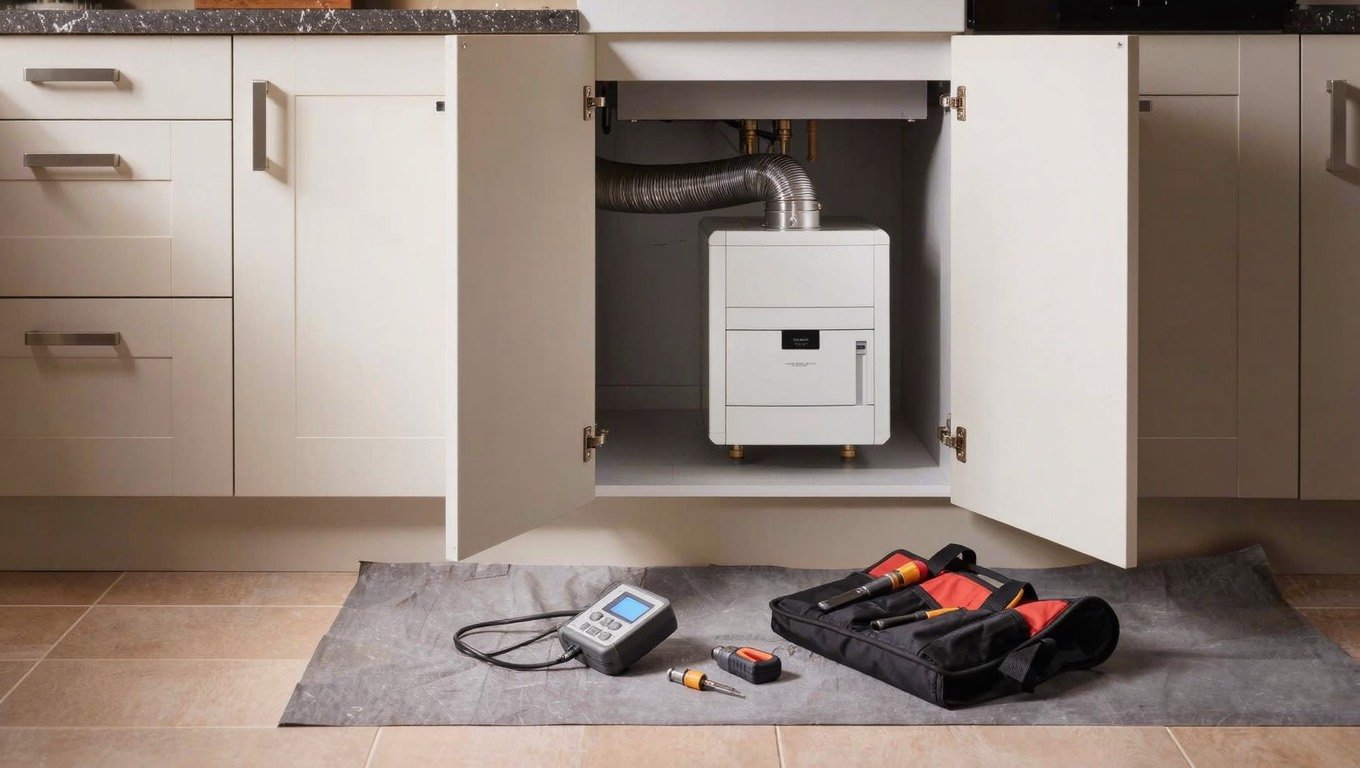
- •Any vent, airbrick or flue serving a gas appliance: Gas Safe registered engineer only. This includes deciding whether a vent can be reduced or relocated.
- •Chimneys, flues and soot fall: a HETAS or NACS registered sweep, £60 to £90, annually for wood and twice yearly for heavy use. Rodding a flue yourself risks pulling a dense soot load into the room.
- •New or relocated extractor fans in a bathroom: notifiable electrical work under Part P in England and Wales — use a registered electrician who will issue the certificate.
- •Persistent dust alongside damp, mould or a musty underfloor smell: that is a building pathology problem, not a cleaning one, and a surveyor will cost less than three years of guessing.
What a good outcome looks like
Be realistic about the timeline. After sealing a suspended floor and fitting barrier matting, expect a fortnight of no obvious change while the existing load in carpets and upholstery works its way out, then a clear improvement in weeks three and four. Filtration soiling lines already burnt into a carpet will not lift with domestic cleaning — they are trapped fines, not a stain — so treat that as cosmetic damage you have stopped, not repaired.
The honest benchmark is this: a wiped surface that stays presentable for five to seven days, a hygrometer sitting between 45 and 55 per cent, and no visible haze in the torch beam. If you have done the first two tiers and the dust is still back in 48 hours, you have missed a source — go back to the pinch test, because the texture of the dust will tell you which one.
Found this useful?
There's plenty more — hundreds of guides and honestly-tested product reviews for every corner of your home.
Browse All Guides