Energy & Insulation · 6 min read · 28 April 2026
Portable vs Standby Generator: Differences, Costs and Which Suits a UK Home
One costs about £2,000 over a decade and lives in the shed. The other costs £14,000 and starts on its own. With British power cuts, only one of them usually makes sense.
By the Nims Casa editorial team — written from professional cleaning experience and checked against our editorial standards.
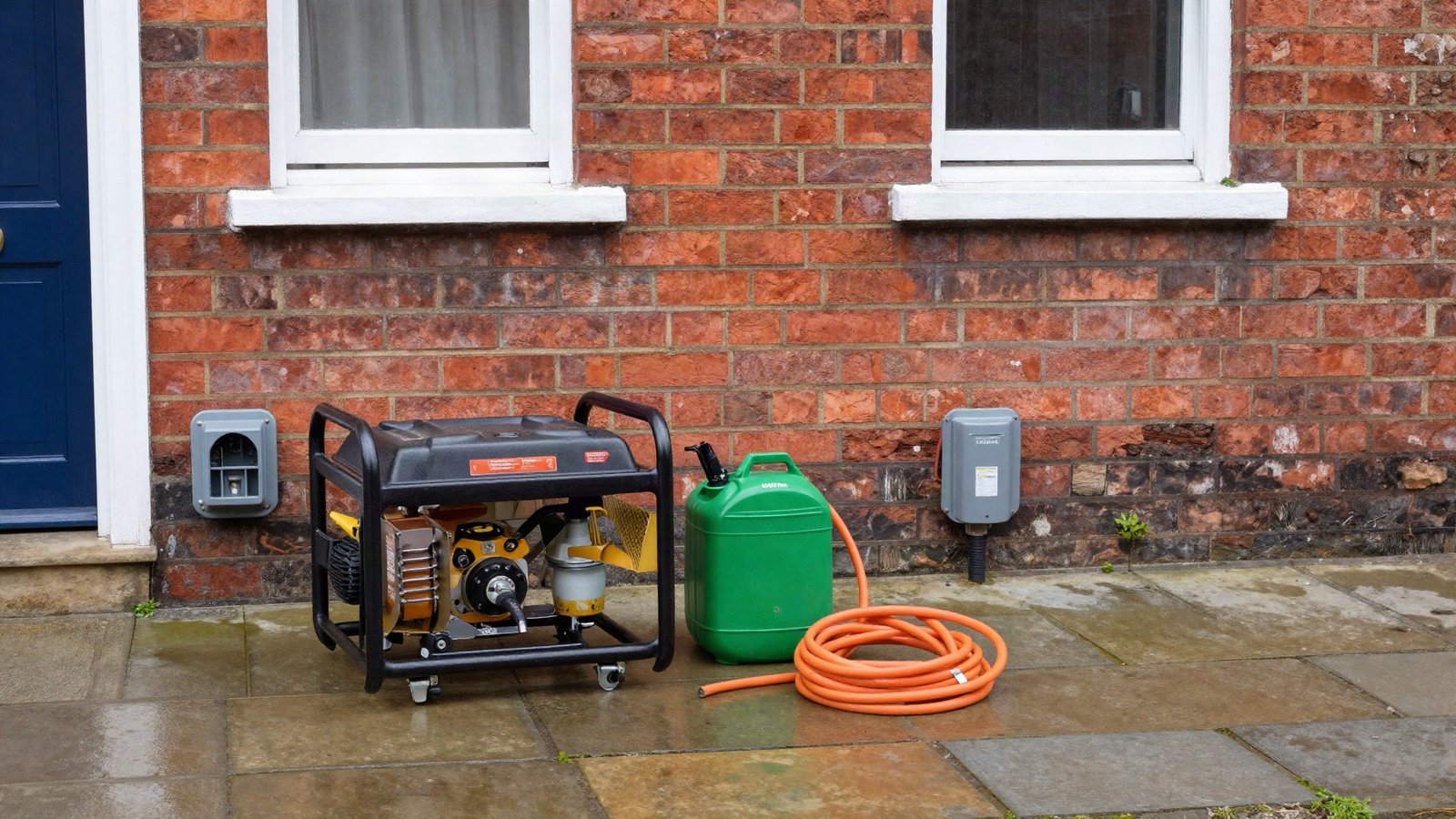
Backup power in Britain is a different problem from backup power in the American Midwest. The average UK home loses supply for 30 to 40 minutes a year, and most cuts end inside two hours, so you are insuring against a rare inconvenience rather than a weekly event. The exception is real: at the end of an overhead line in mid-Wales, Cumbria or west Devon, one winter storm can take the lights out for three days.
The other factor is the house. If yours went up before 1930 — solid brick walls, lath and plaster, wiring added to rather than replaced — the generator is the cheap part. Getting its power into your circuits safely is where the money goes.
Side by Side: The Honest Comparison
A portable is a tool you deploy; a standby set is a system that sits there being expensive until the night it earns its keep.
- •Output: a decent portable inverter gives 2 to 3.5kW continuous, around 8 to 15A at 230V. A domestic standby set is 6 to 13kW.
- •Starting: portable means going out in the rain to pull-start it and run leads. Standby fires on an automatic transfer switch 10 to 30 seconds after the supply drops.
- •Noise: a quality inverter is 48 to 60dB at 7m. A cheap open-frame set is 90dB and up, which in a terrace is a complaint waiting to happen.
- •Siting: a portable lives in the shed. A standby set needs a permanent base, roughly 1.5m clearance from windows, doors and boundaries, and planning advice in a conservation area.
Performance: What Each One Will Actually Run
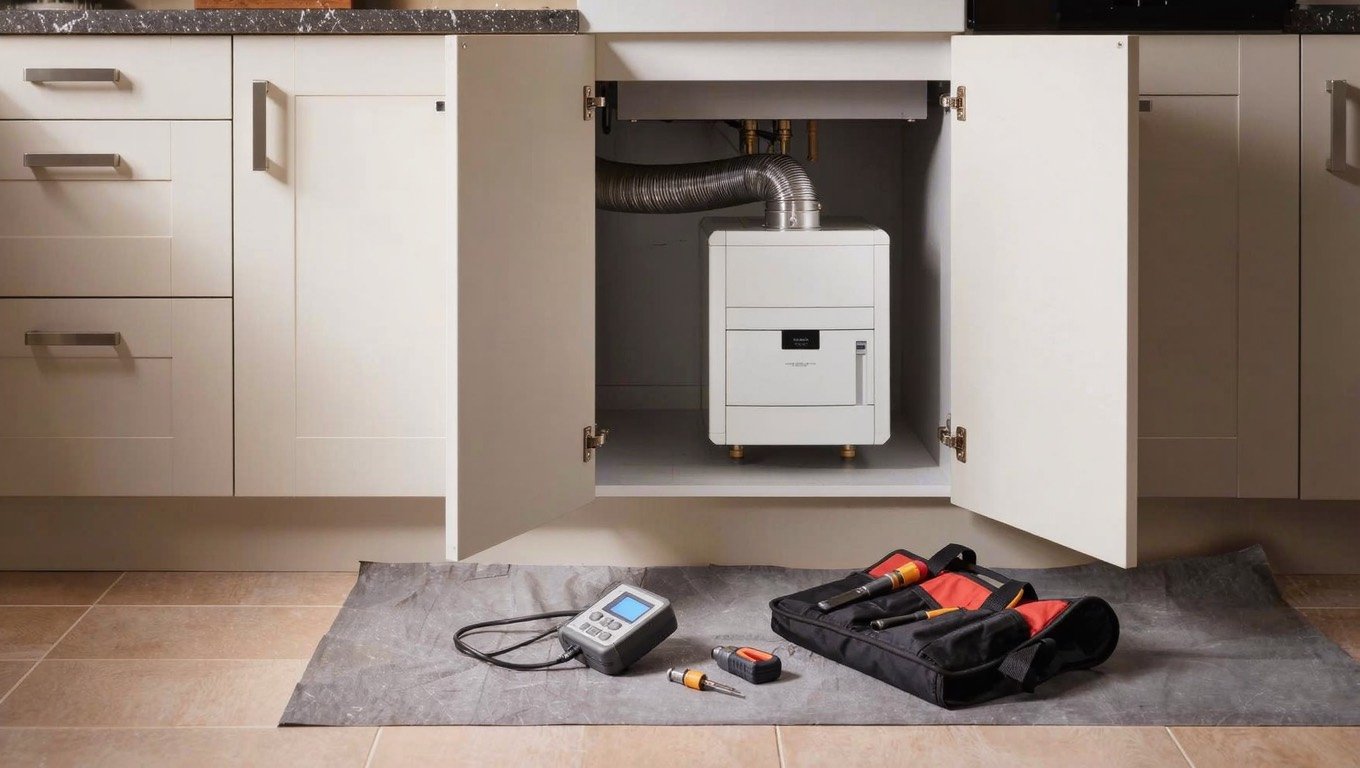
The most useful number in British backup power is this: a gas combi or system boiler draws only 120 to 250W. Pump, fan, ignition and circuit board, that is the lot. A 2kW inverter therefore keeps a whole house warm, the thing people most often miss when pricing standby for a gas-heated home.
Anything with a circuit board in it — boiler, heat pump, fridge — needs a clean sine wave under about 5% total harmonic distortion. Inverter sets deliver 1 to 3%; cheap open-frame AVR sets produce 12 to 25% and have killed more boiler PCBs than power cuts ever have. Work out peak demand first: our method for sizing a home generator covers start-up surge, and calculating your electrical load stops you buying twice.
- •Gas combi or system boiler: 120 to 250W running.
- •Fridge-freezer: 100 to 200W running, but 600 to 1,200W for a second or two on compressor start.
- •Kettle: 2,200 to 3,000W. On a 2.2kW set it is the only thing running at that moment.
- •Electric shower at 8.5 to 10.5kW, or a 3kW immersion heater: not realistic on any portable.
- •Air source heat pump: 1.5 to 4kW running with a higher start-up draw. Genuine standby territory.
Installation, and What an Older House Adds
Never backfeed the house through a socket. That so-called suicide lead energises your meter tails and, through the street transformer, the network beyond. The legal route in England and Wales is a changeover switch and an external generator inlet, fitted under Part P and notified through NICEIC or NAPIT. Budget a day of an electrician's time on a modern board.
On a pre-war house it is rarely that simple, and this is where the quote grows.
- •Fuse boards: a rewireable BS 3036 board with no RCD will not take a changeover. Add £600 to £950 for a consumer unit first.
- •Earthing: most urban terraces sit on a PME supply, which BS 7671 restricts exporting to some generator arrangements. An earth electrode must be driven in, awkward through Victorian clinker under concrete.
- •Cable routes: chasing solid nine-inch brickwork takes lime plaster off in sheets. Route the inlet through an existing airbrick, coal chute or cellar light well, and make good with lime.
- •Ceilings: do not drop cables through lath and plaster from above. The laths crack, the keys let go, and a £120 cable run becomes a £900 ceiling.
- •Exhaust: this is the one that kills. Ground-floor airbricks feed the void under suspended floors and sash windows never seal, so a set running within 3m pushes carbon monoxide indoors. Site it 5m away and downwind, never in a porch or open garage doorway, and fit a CO alarm to BS EN 50291.
The Ten-Year Cost, With the Numbers Shown
Purchase price is the least interesting figure. Three routes, costed over a decade.
- •Portable, three-bed 1908 terrace on gas heating: £950 for a 2.2kW inverter, £700 for a changeover and inlet, £120 of oil, plugs and stabiliser, £180 of petrol bought and rotated. Around £2,000, or £200 a year.
- •Standby, same house: £5,500 for an 8kW LPG set, £4,800 for the base, gas connection, transfer switch, earth electrode and notification, then £320 a year servicing and £60 of exercise fuel. About £14,100, or £1,410 a year.
- •Battery power station, first-floor Victorian flat: £1,400 for a 2kWh LiFePO4 unit, no installation, fuel or servicing, replaced once around year ten. £1,400 to £2,800 all in.
Maintenance and Fuel Storage
Both fail for the same reason: they are asked to work after two years of neglect. Petrol goes stale in roughly 90 days and gums a carburettor jet solid; a standby set's starter battery dies quietly while nobody checks the charger.
- •Portable: run it under real load, not off-load, for 30 minutes every 8 to 12 weeks. Use a stabiliser, or shut the fuel tap and run the bowl dry before storage.
- •Oil at the first 20 hours, then every 50 to 100 hours or annually. Half a litre of 10W-30 is £8; skipping it scraps the machine inside 400 hours.
- •Store no more than 30 litres of petrol at home, in approved containers of 10 litres or less, kept outside the dwelling.
- •Standby: an annual service is £250 to £400, and the starter battery wants replacing every 3 to 5 years.
Who Each One Suits
- •Portable inverter, 2 to 3.5kW: right for most UK homes. Gas or oil heating, mains water, cuts measured in hours. Our tested portable generator picks start around £550.
- •Standby, 8 to 13kW: rural overhead-line properties, all-electric homes and heat pumps, houses with a borehole or pumped drainage, and households depending on a stairlift or oxygen concentrator.
- •Battery power station: flats, mid-terraces with no outdoor space, noise-sensitive neighbours. Silent, indoor-safe, no fuel storage. See the current home battery backup options.
- •Nothing at all: honestly right for many people. A torch, a camping stove, a full freezer and one warm room beat a generator you never maintained.
The Verdict
For a gas-heated British house with an average outage record, a 2.2 to 3kW inverter on a proper manual changeover is the correct buy. It carries the boiler, freezer, router and lights for roughly a seventh of what standby costs. Check it against the current standby generator price guide.
Standby earns its keep in three situations only: frequent multi-day cuts, a genuinely all-electric house, or medical dependency. If none apply, spend the difference on preparation. Work through a power cut checklist, then browse our energy and insulation guides.
Found this useful?
There's plenty more — hundreds of guides and honestly-tested product reviews for every corner of your home.
Browse All Guides