Costs & Hiring · 6 min read · 12 July 2026
Red Flags When Buying a House: A UK Buyer's Diagnosis Guide
Most of the expensive surprises in a new house were visible on the second viewing. Here is how to read the symptoms like a tradesperson, and where you stop looking and pay a professional.
By the Nims Casa editorial team — written from professional cleaning experience and checked against our editorial standards.
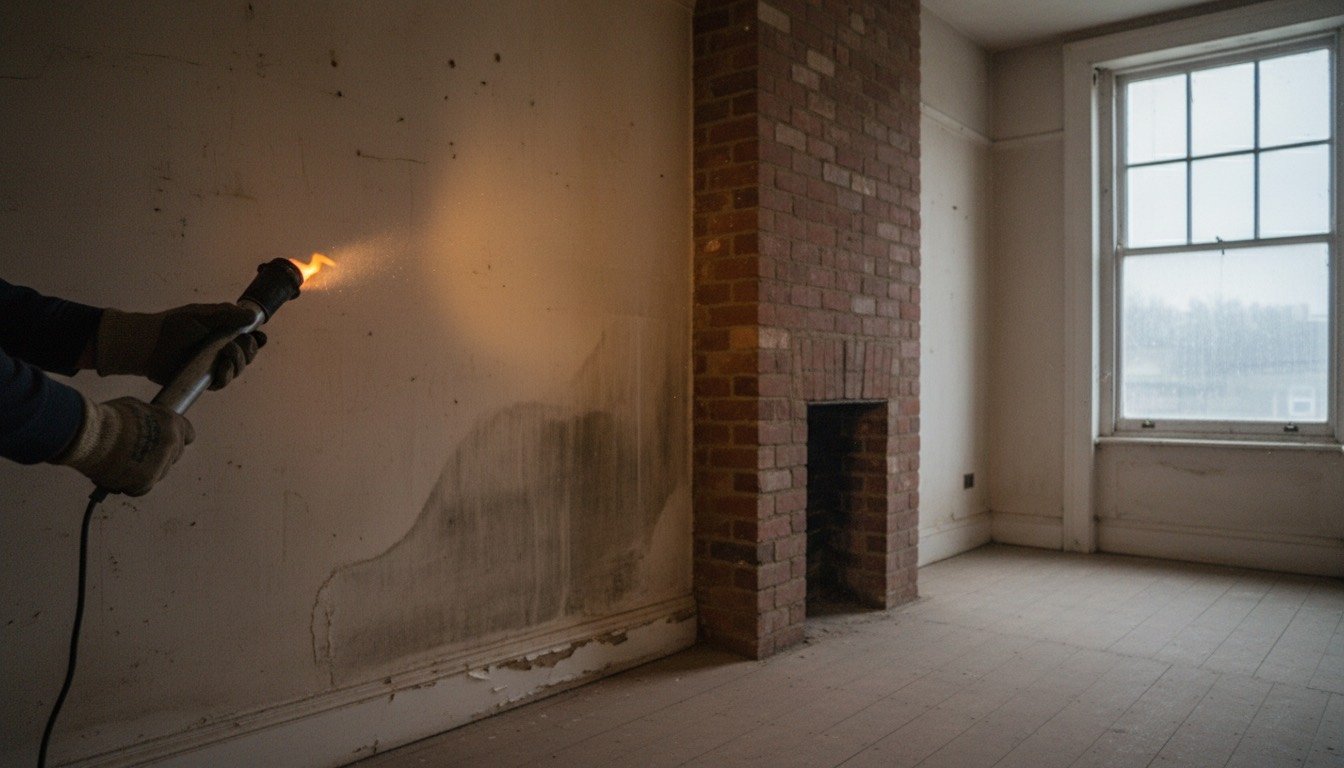
Almost every expensive surprise in a house was sitting in plain sight before contracts were exchanged. It had been painted over, or hidden behind a wardrobe nobody moved. The pattern across UK housing stock is repetitive: condensation blamed on rising damp, a boiler two years past retirement, a roof at the end of its covering life, and building work with no paperwork behind it.
What follows works the way a trades diagnosis does: symptom, likely cause, how likely it really is, cost, then the line where you stop poking about and pay someone qualified. Take a torch to your second viewing, and go on a wet day if you can.
The ten-minute diagnosis on your second viewing
First viewings decide whether you like the house; the second is for a survey of your own. Everything below is safe, non-destructive and rarely refused, and it pairs with a printable home inspection checklist for buyers.
- •Open the loft hatch and put the torch on the underside of the roof: daylight through tiles, black staining on rafters, sagging felt, and above all a thick sprayed foam coating.
- •Run the shower and both bath taps for two minutes: watch the flow drop, listen for hammering pipes, check the bath drains.
- •Press a thumbnail into skirting and sills in the coldest, north-facing back bedroom. Spongy timber means water has been sitting there.
- •Lift a corner of any suspiciously new carpet downstairs, and look behind free-standing wardrobes on external walls.
- •Photograph the boiler badge and the service sticker inside the casing; no sticker usually means no service history.
- •Sight along the ridge and gutter lines from across the road; both should be straight.
- •Open the consumer unit cupboard. Ceramic rewireable fuses or a wooden backboard means the installation predates the 1970s.
Symptom to cause: reading the house, not the decor
Sellers redecorate before marketing, so the useful signal is a mismatch: one fresh wall in a tired room, or new laminate in the only room with a solid floor.
- •Tide mark up to about a metre on a ground-floor wall with a salty bloom — usually a damp-proof course bridged by a raised patio or render, not true rising damp, which is rare.
- •Black speckled mould in corners, on window reveals and behind furniture — condensation and cold bridging, a ventilation problem rather than a building fault; our guide to damp and mould in UK homes separates the two.
- •Diagonal cracks over about 5mm, tapering along their length and running through bricks as well as mortar — genuine movement. Read settling cracks versus structural cracks before you panic or dismiss it.
- •Horizontal cracking in mortar beds at regular intervals up a cavity wall — corroding wall ties, common in 1930s to 1960s coastal housing.
- •Bamboo-like stems with red-purple speckling and shovel-shaped leaves near a boundary — Japanese knotweed, a lender problem as much as a garden one.
Ranked by how likely each flag is to cost you
Buyers worry in the wrong order. Cracks terrify people and rarely cost anything; a 22-year-old boiler and a 1974 consumer unit get shrugged off and cost five figures in two years.
- •Condensation and mould — extremely common, cheap. Two decent extractor fans and better heating habits, £250 to £700.
- •Boiler at end of life — very common, £2,200 to £3,800 fitted.
- •Blocked gutters causing penetrating damp — very common, £150 to £900, and the cheapest thing here to prevent.
- •Roof covering past its life — common in original 1930s clay or 1970s concrete tiles; £6,000 to £14,000 on a three-bed semi.
- •Pre-1970s wiring — common in period stock; a full rewire costs £4,000 to £8,000 depending on region and access.
- •Sprayed foam loft insulation — increasingly common and disproportionately painful, because several lenders decline the mortgage outright. Removal, £2,500 to £5,500.
- •Subsidence needing underpinning — rare, and the reason everyone fears cracks. £15,000 to £50,000, though most movement is monitored, not underpinned.
Fixes in order of risk, cheapest first
Work down this list. The top removes most of the doubt for nothing; escalate only when the cheap answers fail to explain what you see.
- •Free: revisit after heavy rain. Half of all reported damp drops off the list once you have watched the gutters run properly.
- •Free: ask for boiler service records, the electrical certificate and any damp or roof guarantees. Silence is a finding.
- •Low risk: commission the right survey. A RICS Level 2 suits a conventional post-1930s house in fair order; anything older, extended or moving needs a Level 3, and fee bands sit in our survey and inspection cost guide.
- •Moderate and worth it: a drain CCTV survey at £150 to £350 on a period terrace with mature trees, and an EICR at £150 to £300.
- •Only when justified: a structural engineer at £500 to £900, rather than a free damp-proofing survey, which is a sales visit with a moisture meter.
Where DIY stops: the UK professional boundary
Buyers get this wrong in both directions: poking at things they should not touch, or paying specialists to confirm the obvious. The line is clear, and some of it is legal rather than advisory.
- •Fine for a competent DIYer: torch inspection from the loft hatch, thumbnail-testing timber, lifting a carpet corner, running taps, tapping render, photographing meters and the stopcock.
- •Fine once you own it: fitting extractor fans on an existing circuit, clearing gutters from a footed ladder, repointing at ground level, redecorating once the cause of damp is cured.
- •Professional by law: gas appliances and pipework need a Gas Safe registered engineer, and notifiable electrical work under Part P — new circuits, consumer unit replacement, most bathroom work — needs a registered electrician or a Building Control application, as our list of electrical repairs you should never DIY sets out.
- •Professional in practice: walking a pitched roof, disturbing textured coatings or panels in a pre-2000 house that may contain asbestos, altering any load-bearing wall, and interpreting structural movement.
- •Stop and call someone the same day for: a smell of gas, scorching at the consumer unit, a joist you can push a screwdriver into, or a crack that has widened between viewings.
Paperwork flags a survey will not catch
Surveyors report on the building, conveyancers on the title, and expensive problems live in the gap. Ask specifically for FENSA or CERTASS certificates for windows fitted since April 2002, a Building Regulations completion certificate for every extension, loft conversion and knocked-through wall, the Gas Safe Benchmark logbook, and the current EPC. An F or G rating also restricts letting the property later. On a leasehold flat, check the remaining term, ground rent escalation and any outstanding Section 20 major works notice.
When to renegotiate and when to walk
Nearly everything above is a price negotiation, not a deal-breaker, provided you hold written quotes. Damp, roofs, boilers and rewires are known quantities with known costs; a house needing all four is not a bad house, just a cheaper one than the asking price suggests.
Walk away from three things only: active movement no engineer will put a figure on, a valuation retention you cannot cover in cash, and a seller who refuses access for a specialist inspection. The last is always the most telling.
Found this useful?
There's plenty more — hundreds of guides and honestly-tested product reviews for every corner of your home.
Browse All Guides