Laundry & Fabric Care · 6 min read · 14 August 2026
School Uniform Stain Removal: Grass, Ink, Mud and Felt Tip Solved
Grass, biro, mud and mystery lunch: the September stain rotation. Here's how to clear each one without setting it into a polyester blend for good.
By the Nims Casa editorial team — written from professional cleaning experience and checked against our editorial standards.
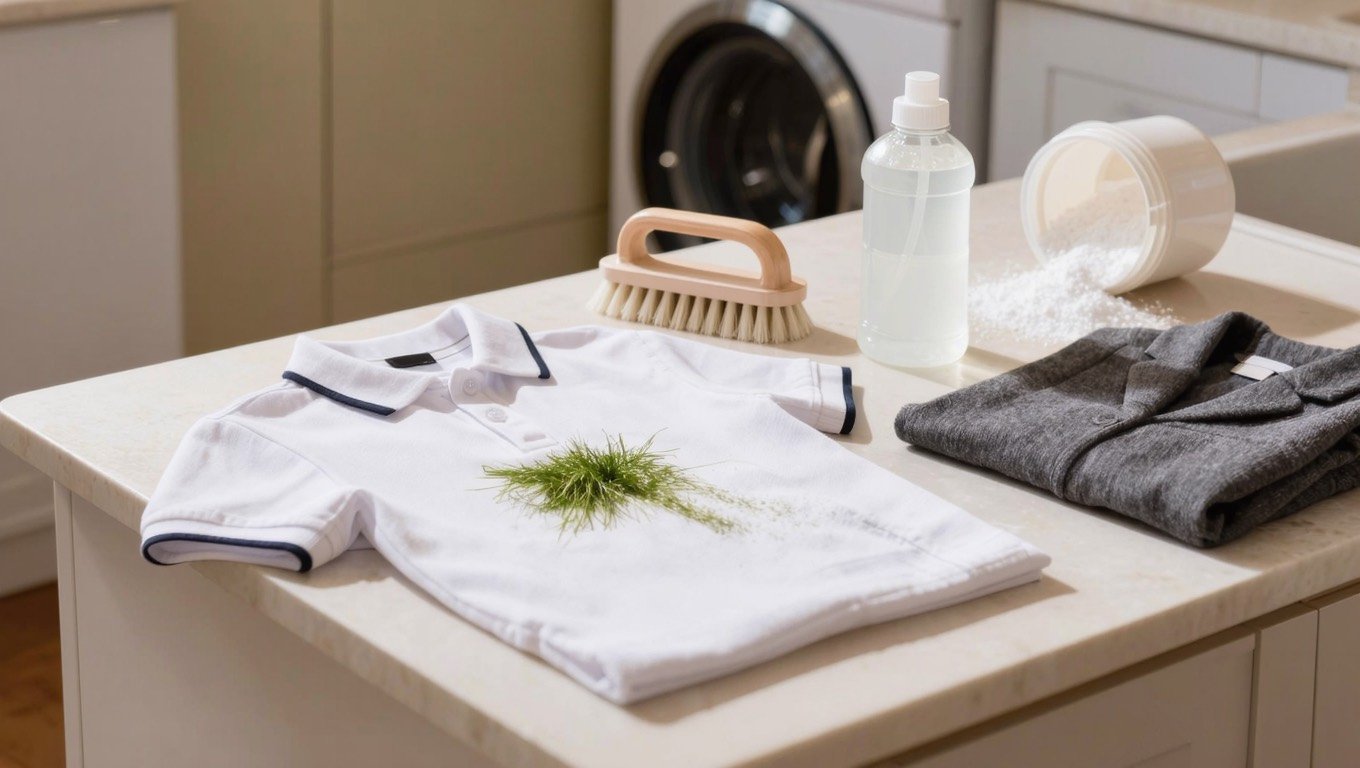
Two weeks into September and the uniform basket tells the story: grass ground into grey trousers, a biro line across a white polo, mud from the walk home and something orange from lunch that nobody will own up to. None of it is hard to shift if you treat it correctly — and almost all of it becomes permanent if you throw everything into a hot wash and hope.
Heat sets stains, and modern uniforms are mostly polyester blends, which grip set-in colour far more stubbornly than cotton. The working rule for everything below: identify the stain, treat it cold, wash warm, and only tumble dry once the mark has definitely gone.
Safety First (and Keeping a Rented Home Out of It)
Never mix chlorine bleach with anything else — especially vinegar — because the gas produced is dangerous. Chlorine barely features here anyway: on polyester it yellows rather than whitens. Surgical spirit is flammable, so use it away from the hob, in a ventilated room, stored out of children's reach.
If you rent, treat at the sink, never over carpet — a dropped capful of oxygen bleach solution leaves a pale patch that costs far more than the shirt. Everything here is deposit-safe: no chlorine near worktops or machine seals, and if ink or mud reaches a rented carpet, blot with cold water rather than scrubbing, then use a proper carpet stain remover.
Tools, Materials, Time and Cost
The full kit costs under £15 and lasts most of a school year:
Realistic time is five to ten minutes of active work per garment, plus soaking you can ignore. Supermarket polos are £3–5, but blazers run £25–60 and badged jumpers £12–20, so the ten minutes pays for itself on anything with a logo.
- •Biological laundry liquid (£3–6) — the enzymes handle grass, food and blood
- •Oxygen bleach powder (sodium percarbonate booster, £4–6)
- •Surgical spirit from any pharmacy (£2.50) — your biro solvent
- •Washing-up liquid — first responder for greasy food marks
- •A soft nail brush, plus clean white cloths or kitchen roll
- •White vinegar (79p) for rinsing residues out
The Method: Same Five Steps, Different Solvent
The protocol never changes; only the treatment in step three does. These are the same rules as our full stain removal guide, tuned here for uniform fabrics.
Now the stain-by-stain treatments — this is the part worth pinning to the fridge:
- •1. Scrape or blot off anything on the surface. Never rub — rubbing drives the stain into the weave.
- •2. Flush from the back of the fabric with cold water, pushing the stain out the way it came in.
- •3. Apply the right treatment for the stain type and give it 15–20 minutes to work.
- •4. Wash at 30–40°C with biological detergent.
- •5. Check before drying. If a shadow remains, treat again while damp — the dryer bakes in whatever is left.
- •Grass: enzyme territory. Rub neat biological liquid into the mark, leave 20 minutes, wash at 40°C. Trouser knees usually need two rounds — it's chlorophyll bonded to protein, and enzymes eat exactly that.
- •Biro: lay the mark face-down on a folded white cloth and dab surgical spirit through from the back so the ink transfers into the cloth below. Rinse cold, then bio wash. Works nine times out of ten on same-week marks.
- •Felt tip: most children's pens are formulated washable — cold rinse, bio wash, done. Permanent marker gets the biro treatment and honest odds of 50/50.
- •Whiteboard pen: usually easy, because dry-wipe ink is designed not to bond. Work in washing-up liquid, rinse, then dab with surgical spirit if a shadow remains.
- •Mud: the one stain you leave alone. Let it dry fully, brush every crumb off with a dry nail brush, then pre-treat with bio liquid and wash at 40°C. Smearing wet mud grinds clay into the fibre for good. Muddy PE trainers get the same dry-first rule before our trainer washing routine.
- •Curry and tomato lunches: scrape, rinse cold, work in washing-up liquid, rinse, bio wash. Turmeric often leaves a yellow ghost — a day hanging in daylight breaks it down. Genuinely.
- •Blood: cold water only, immediately — heat cooks the protein into the fibre. Soak 30 minutes in salted cold water or bio solution, then wash cool.
Polyester Blends: Temperature Limits and Name Labels
Check the label before any of this — our laundry symbols guide decodes it. Most school trousers, skirts and jumpers are 60–70% polyester capped at 40°C, and hotter washes don't clean polyester better anyway: above 40°C you risk setting stains, greying the fibre and wrecking skirt pleats. The iron is the other trap — running it over an untreated mark sets the stain as surely as the dryer does, so press around fresh marks, never over them.
Name labels matter too. Iron-on labels survive roughly a year of 40°C washes if you turn garments inside out and skip the tumble dryer; regular 60°C washes peel them within weeks. If one lifts, re-iron it through baking paper for ten seconds. Stick-on labels last around 40–50 washes, so keep the sheet and re-stick each term.
Whitening Greyed Shirts Safely
White polos go grey from being washed with the rest of the uniform and from detergent residue in hard water. The fix is a deep soak, not a hotter wash. Dissolve two scoops of oxygen bleach in water at about 40°C, submerge the shirts overnight, then machine wash as normal. Sodium percarbonate is safe on polyester where chlorine yellows it. Do this every half-term and wash whites as their own load in between — there's a fuller routine in how to keep whites white.
Troubleshooting
When a mark survives the wash, respond in this order:
- •Stain still visible after washing: do not dry it. Repeat the treatment while damp — you get two or three more attempts before it is truly set.
- •Yellow ghost reappears days later: residual grease or turmeric. Washing-up liquid, rinse, then a sunny windowsill.
- •Stains linger across whole loads and the machine smells musty: the drum is greasy and re-depositing soil — run a maintenance cycle from our washing machine cleaning guide.
- •Biro reappeared after ironing: heat spread the thinned ink. Re-treat with spirit from the back; lower odds this time, but not zero.
- •Collars greying again within weeks: you're overdosing detergent for your water hardness — drop to the hard-water dose and add a vinegar rinse.
When to Call a Professional — and When to Give Up
Blazers are the boundary. Most are structured and wool-blend, and home spot-treatment leaves watermarks and shiny lapels. A dry cleaner charges £8–12 and treats biro and food marks as part of the job — tell them exactly what the stain is, because solvent choice depends on it.
Be honest about the maths on everything else. A £3.50 polo with a term of felt tip across it is a rag with a name label in it; save the chemistry for the badged jumper and the blazer. Old biro that has survived hot washes and an iron, or dye transfer from a stray red sock, usually stays put. Knowing when to stop is part of doing this well.
Found this useful?
There's plenty more — hundreds of guides and honestly-tested product reviews for every corner of your home.
Browse All Guides