Roofing & Exterior · 6 min read · 19 June 2026
Signs of Foundation Problems in UK Homes (And Which Ones Actually Matter)
A hairline crack above a door and a 6mm diagonal crack through brickwork are not the same problem, and the gap between them is about £20,000. Here is how surveyors tell them apart.
By the Nims Casa editorial team — written from professional cleaning experience and checked against our editorial standards.
Almost everything that frightens homeowners about their foundations turns out to be plaster shrinkage, thermal movement, or a Victorian bay doing what Victorian bays have done since 1890. The minority that is genuinely progressive looks different, behaves differently through the year, and needs evidence rather than panic.
What follows is the triage a building surveyor runs on a first visit: what to measure, what each symptom means in British housing stock and British clay, and the point where carrying on yourself becomes useless and dangerous.
Quick diagnosis: five minutes, a steel rule and a torch
Do this before you ring anyone. Half the callouts we attend are settled in ten minutes with a rule and a cup of tea.
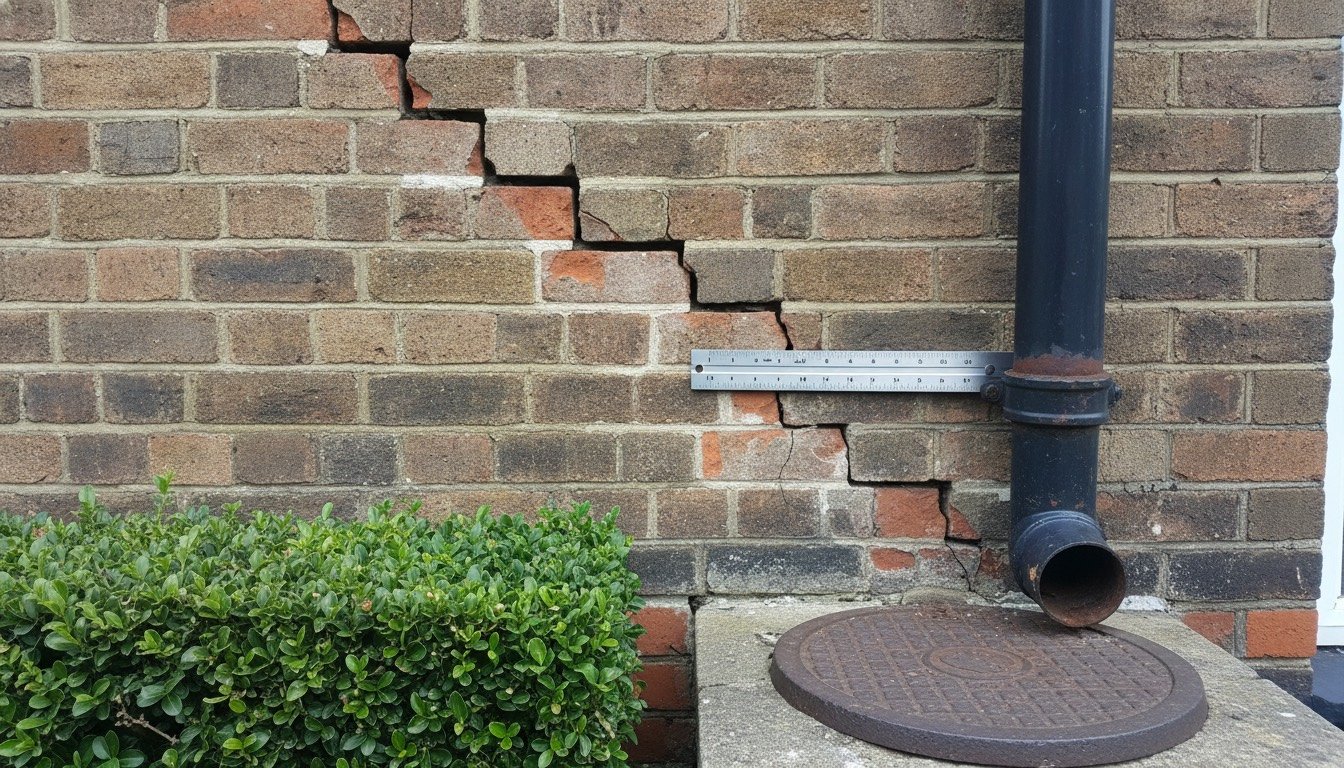
- •Measure the widest point rather than guessing. Surveyors grade against BRE Digest 251: under 1mm is aesthetic, 1-5mm a filler job, 5-15mm needs advice, over 15mm needs an engineer this week.
- •Check whether the crack splits bricks or only follows mortar. Stepped cracking through joints is usually old, slow movement; sheared brick faces and a taper mean something is rotating.
- •Look for the same crack on the inside face. External-only cracking is often render or pointing failure; a crack through the full wall thickness is structural until proven otherwise.
- •Open every door and window on that elevation. Binding that has worsened over six months matters. Doors that stick each February and free up by June are humidity.
- •Put a spirit level on the floor. A fall of more than roughly 20mm over 2m on a solid floor is worth recording, especially near an old chimney breast.
- •Photograph everything with the rule in shot and the date on the image. Those photos are the most valuable thing you will produce.
Symptom to cause: what each sign usually means
Pattern matters more than width. A 4mm crack in the wrong place beats a 10mm crack in the right one, and our check on how to tell if a foundation crack is serious works through the same logic in detail.
- •Diagonal stepped cracks widening towards the top, at a corner or beside a bay: clay shrinkage subsidence, and there is nearly always a tree within 10-15m.
- •Cracks that open through August and close by March: seasonal clay movement. Irritating, rarely progressive, almost never worth underpinning.
- •Horizontal cracks at roughly 450mm intervals, sometimes with a bulge: cavity wall tie corrosion in a 1920s to 1970s house. A wall problem, not a foundation one.
- •A vertical crack where a two-storey house meets a single-storey extension or bay: differential settlement between foundations of different depths, and it usually stabilises.
- •Skirtings lifting and a solid floor doming upwards: sulphate attack on hardcore beneath a pre-1970s slab, nothing to do with the footings.
- •Sudden cracking beside a boggy patch of garden or a smell from a gully: a fractured drain washing fines out of the subsoil, and the most fixable cause here.
The causes, ranked by how often they turn up
Insurer data on UK subsidence claims has been consistent for decades. The top two below account for most genuine cases.
- •Clay shrinkage from vegetation. London Clay and the Essex, Kent and Oxford clays shrink hard in a dry summer, and willow, poplar, oak and ash draw moisture from 15-25m away. Peak season for fresh cracks is late August to October.
- •Escape of water. A cracked salt-glazed drain or leaking supply pipe erodes soil from under a footing; older terraces with clay drains beneath the rear addition are the usual victims.
- •Shallow historic footings. Victorian walls often sit on 300-450mm of brick corbelling, against the 900mm-plus trench fill the Building Regulations expect on clay today.
- •Heave. Fell a mature tree on clay and the ground swells back over 5-15 years, lifting foundations. The upward force exceeds subsidence and the damage is often worse.
- •Mining. In former coalfield areas, ground movement is handled by the Coal Authority rather than your insurer.
- •True failure with no external trigger, which is rare and the last thing an engineer concludes, not the first.
Fixes in order of risk, cheapest first
Work down this list. Jumping to the bottom because a firm offering a free survey said so is how people spend £30,000 on a £600 drain problem.
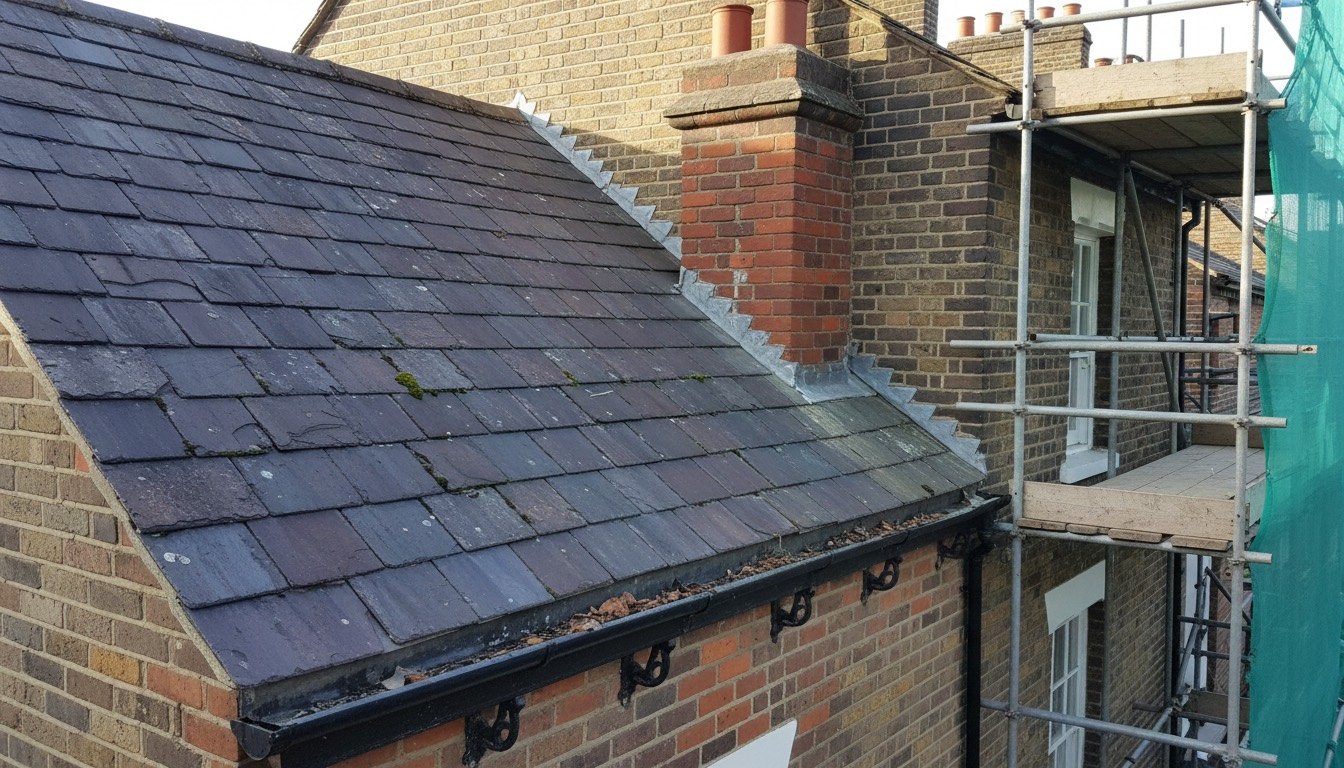
- •Sort the water first. Blocked gutters, a downpipe discharging onto soil rather than into a gully and a leaking overflow all soak the ground beside a footing. Gutter cleaning and maintenance is the cheapest structural insurance there is.
- •Book a CCTV drain survey, £150-350. Repairs run £400-2,500, and a no-dig liner avoids excavating alongside the footing itself.
- •Manage vegetation rather than removing it; crown reduction on a three-year cycle beats felling on clay. Check for a Tree Preservation Order, and in a conservation area give the council six weeks' written notice first.
- •Monitor for a full year. Crack gauges cost £8-15, and monthly readings across one wet and dry cycle tell an engineer more than any single visit. Consultant monitoring runs £500-1,500.
- •Only then fill and redecorate, using flexible caulk rather than rigid filler on anything recently moved.
- •Crack stitching with helical bars bedded into the mortar beds, £60-120 per linear metre, for walls that have moved but stopped.
- •Underpinning, £1,200-2,000 per linear metre and £15,000-50,000 for a typical elevation; resin injection is £5,000-15,000 but unsuitable in soft clay. Our breakdown of foundation repair costs sets out what sits inside those figures.
Where DIY has to stop: regulations, insurance and the neighbours
Never dig a trial pit beside your own foundation to see what is down there. Undermining a 350mm Victorian footing has dropped walls onto people; proper trial pits go in short lengths with shoring, by someone insured to do it.
Do not fill or redecorate cracks before your insurer has seen them. Subsidence, heave and landslip are standard perils on UK buildings policies, usually with a £1,000 excess, and the insurer appoints its own loss adjuster and engineer. Repairing first destroys the evidence, so notify before you touch anything and read up on filing a home insurance claim first.
Structural repair is notifiable building work. Underpinning, pile-and-beam schemes and new lintels need a building notice or full plans submission to building control, with calculations to Approved Document A, and the completion certificate gets asked for on sale. The Party Wall etc. Act 1996 catches almost every underpinning job in a terrace or semi: excavating within 3m of a neighbour's structure below their foundation level, or within 6m on a 45-degree line, requires a Section 6 notice at least a month in advance. In a former coalfield, damage may instead go to the Coal Authority under the Coal Mining Subsidence Damage Act 1991.
Instruct an independent structural engineer, IStructE or ICE registered rather than one attached to a repair firm, if a crack exceeds 5mm and is growing, passes through bricks and the full wall thickness, tapers, appeared within weeks, or sits near a removed chimney breast with no sign-off. A report costs £400-900. Our guide on when to call a structural engineer covers what to ask for, and on a pre-1930 house it pairs with the common problems in 100-year-old houses mistaken for movement every week.
Found this useful?
There's plenty more — hundreds of guides and honestly-tested product reviews for every corner of your home.
Browse All Guides