Cleaning Guides · 6 min read · 2 July 2026
How to Remove Mould from Bathroom Grout (and Stop It Coming Back)
Roughly a third of the time, the black stuff along a shower joint isn't mould in the grout at all. Diagnose it in five minutes, then fix the problem you actually have.
By the Nims Casa editorial team — written from professional cleaning experience and checked against our editorial standards.
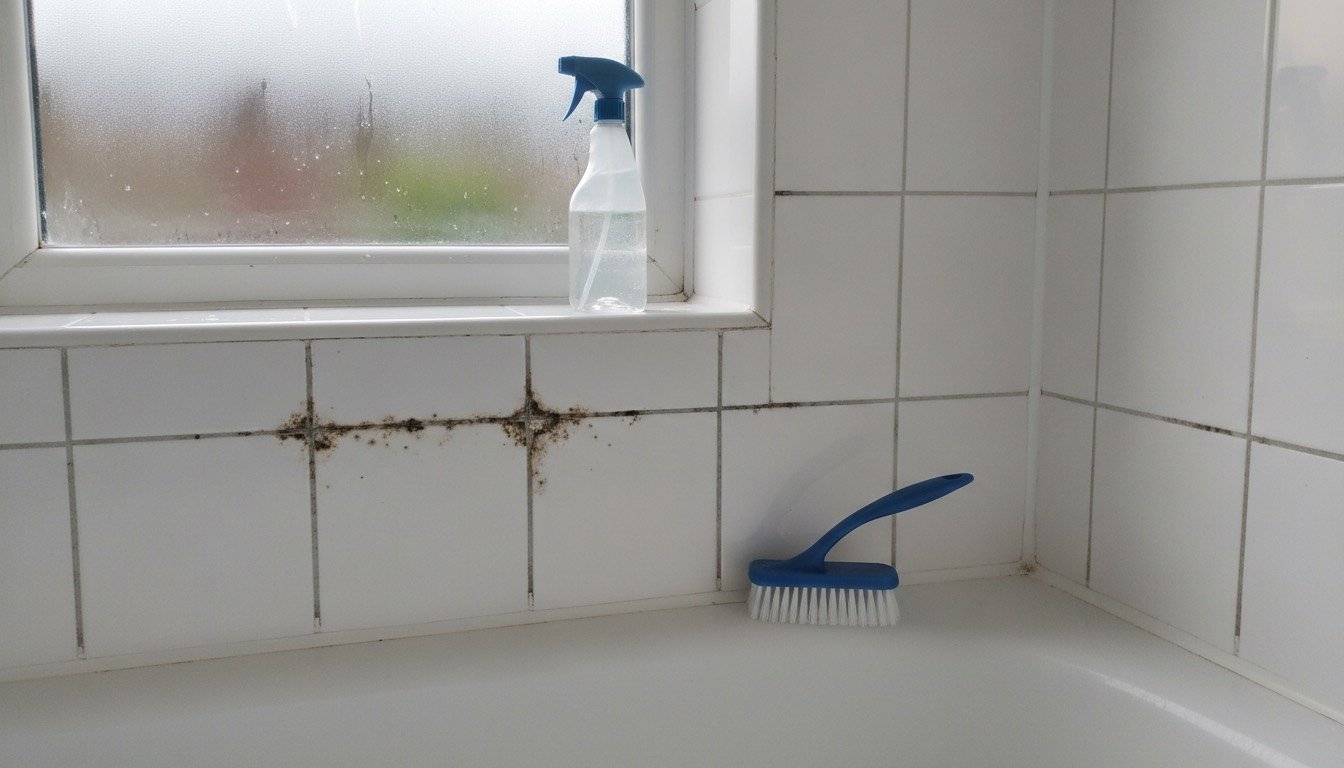
Black speckling along shower joints is the most common thing we get asked to sort out on a bathroom deep clean, and roughly a third of the time it isn't in the grout at all. It's inside the silicone bead, or a waxy film of soap and body oil on the surface, or grout permanently darkened by water.
All three look identical from a metre away and each needs a different fix. Five minutes of diagnosis is the difference between a 45-minute job with a £4 spray and a lost weekend raking out joints. If there's no growth and the joints are just grubby, our guide to cleaning grout without wrecking it is the better start.
Diagnose it first: five minutes and a cotton bud
Test on a dry surface. Wipe the tiles and run the extractor for ten minutes first — wet cement grout reads two shades darker than dry, which alone convinces people they have mould.
- •Bleach-dot test. Dilute thin bleach 1:10, dab one black spot with a cotton bud, leave ten minutes. Vanishes: surface mould, cleanable. Fades to grey: rooted into porous grout, so expect a partial regrout. No change: not mould.
- •Finger test. Rub the joint hard through a cloth. Black transferring as a greasy smear is soap and body-oil residue holding dirt, not a colony.
- •Location test. Hard line between two tiles, or soft bead where tile meets bath or tray? Press it — silicone gives, grout doesn't. This changes the whole job.
- •Knuckle test. Tap across the tiles. A hollow note over an area that stays damp means water is behind them; stop and read the last section.
- •Whole-room check. Black bloom on the ceiling or behind the door too? The grout is a symptom — deal with the damp and condensation first.
Safety first: the mixes that put people in A&E
- •Never mix chlorine bleach with anything acidic — limescale remover, vinegar, descaler, many bathroom sprays — or with the ammonia in glass cleaner. Both give off a toxic gas.
- •Nitrile gloves, splash goggles and an FFP2 mask if you're scrubbing or raking dry grout: disturbed mould throws spores and cement dust contains silica.
- •Window open, extractor running throughout and thirty minutes after. Keep anyone with asthma or a suppressed immune system out.
- •Spot-test chlorine on hidden coloured grout. It strips pigment, and a bleached stripe looks worse than the mould did.
Tools, materials, time and cost
A shower enclosure is 45 to 90 minutes if the grout is sound, or a half-day if you're raking and replacing joints, plus 24 hours before anyone showers. Materials come in under £15. Bicarbonate fizzing with vinegar, incidentally, is a party trick: they neutralise into salty water, weaker than either alone.
- •Chlorine-based mould remover spray, £2 to £7 (HG, Astonish, Dettol), or supermarket thin bleach at 60p a litre diluted 1:10. Swap to 3% hydrogen peroxide, £4 to £8, on coloured grout that chlorine would bleach.
- •A stiff nylon grout brush, £3 to £5. Never a wire brush — it scores the glaze and gouges soft grout, leaving it thirstier than before.
- •Washing-up liquid or an alkaline degreaser, a non-scratch pad and kitchen roll, £2 to £4.
- •Optional: grout rake or carbide multi-tool blade, £6 to £20; 3kg of wall grout with a mould inhibitor, £10 to £16; penetrating sealer, £10 to £18.
The method, step by step
The step almost everyone skips is the first one, and it's why mould sprays collect one-star reviews. Soap scum and body oils form a waxy film over the grout; spray a mould killer onto that and it never reaches the spores underneath.
- •1. Degrease the whole tiled area — hot water, washing-up liquid, non-scratch pad, top to bottom, shifting limescale at the same time in hard-water areas. Rinse clean, then dry the joints with a microfibre: wet grout dilutes whatever comes next.
- •2. Apply the treatment to the joints, not the tile faces. A cotton bud along the line uses a fraction of the product and keeps chlorine off chrome and painted plasterboard.
- •3. Let it dwell 10 to 15 minutes — contact time does the killing, not effort. On stubborn joints, lay kitchen roll along the line and soak it; a poultice stays wet for an hour.
- •4. Scrub along the joint with the nylon brush at 45 degrees, so the bristles drop into the channel rather than skate over it. A metre at a time.
- •5. Rinse down and dry off, then repeat on any joint still grey. Two moderate applications beat one hard scrub, which erodes the grout.
- •6. Once fully dry — 24 hours, not two — apply a penetrating grout sealer, wipe the excess off the tiles within five minutes, and leave it overnight.
When the black is in the silicone, not the grout
Cured silicone doesn't stain the way grout does. Mould grows inside the bead, feeding on plasticisers and soap residue worked into micro-splits along the edge. Bleach lightens the surface for a fortnight, then it returns, because you never reached the colony.
The fix is replacement: cut the bead out with a sharp blade, scrape the residue, wipe the channel with methylated spirit, let it flash off, then run fresh sanitary-grade silicone containing a fungicide. About £8 to £12 and an hour. Fill the bath, or stand in the tray, while you seal so the joint sits at its widest. Our guide to replacing silicone sealant covers the tooling.
Troubleshooting: why it keeps coming back
- •Back in two weeks, same spots: the colony was never killed. You treated a greasy surface, or cut the dwell time short.
- •Back in a month, spreading along the joint: the grout is porous and holding moisture. Seal it, or rake out and replace the top 3mm.
- •Back everywhere, ceiling included: this is ventilation. A bathroom extractor must shift 15 litres per second under Part F, and a tired axial fan on 4 metres of flexible ducting often manages half that. Check the signs of poor ventilation, run the extractor fan and trickle vent check on the fan you already have, and fit one with an overrun timer if it is not clearing the room.
- •Dark within an hour of a shower and staying dark: the grout is saturated. Look for a cracked joint or failed sealant letting water behind.
When to stop and call someone in
Surface mould on sound grout, over an area smaller than about a square metre, is a cleaning job. Past that you have a building fault, and cleaning only delays the bill.
- •Hollow-sounding tiles, or grout that crumbles to powder when raked: the substrate is wet and a tiler must find the source. Reckon on £150 to £400 to regrout an enclosure, £900 to £2,500 to retile.
- •Staining on the ceiling below, or a musty airing cupboard: an active leak, and it gets dearer every week.
- •Mould over roughly a square metre, or recurring across walls and ceiling: get a damp survey, £150 to £350, before spending on cosmetics. Our mould remediation cost guide has the figures.
- •Asthma, a compromised immune system, or a baby sleeping nearby: leave it to someone kitted out for it.
- •If you rent, report it to your landlord in writing rather than quietly cleaning it. Damp and mould are a recognised hazard under the Homes (Fitness for Human Habitation) Act 2018.
Found this useful?
There's plenty more — hundreds of guides and honestly-tested product reviews for every corner of your home.
Browse All Guides