Garden & Outdoor · 6 min read · 12 June 2026
Liquid vs Granular Fertiliser: Differences, Pros, Cons and Real UK Costs
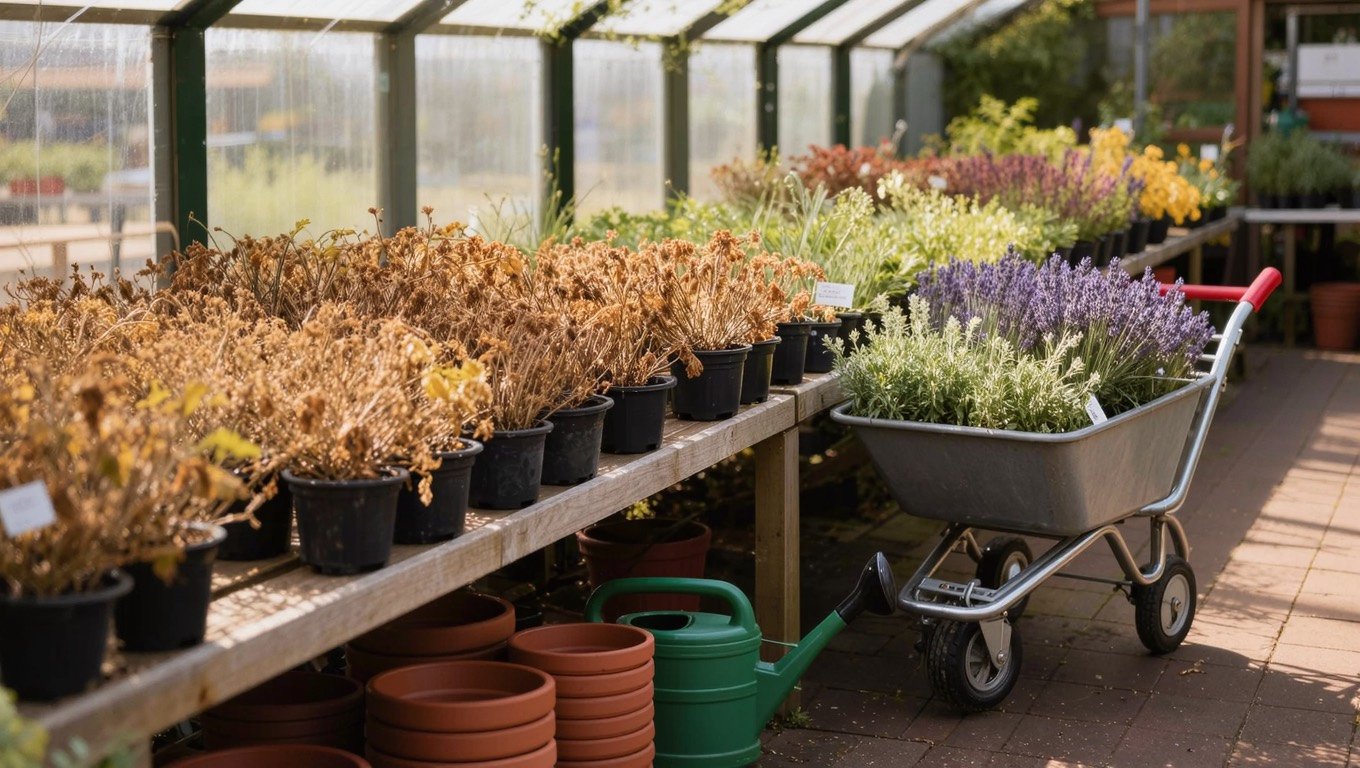
Two shelves in the garden centre, two very different jobs. Which feed your lawn needs depends entirely on what is wrong with it — so diagnose before you buy.
By the Nims Casa editorial team — written from professional cleaning experience and checked against our editorial standards.
Walk into any garden centre in March and two products are competing for the same twenty quid: sacks of granules with a spreader setting printed on the back, and bottles of concentrate promising a greener lawn by the weekend. They are not interchangeable. Buying the wrong one is how people end up with tiger-striped lawns, a scorched band along the path edge, or an empty bottle and a lawn that looks exactly the same.
Most comparisons skip the important step. Before deciding how to feed a lawn, establish whether feeding is the answer at all. Roughly half the lawns we look at in spring are not hungry — they are compacted, shaded, mown too short, or full of moss. Fertiliser on those makes things worse.
Start here: work out which problem you actually have
Five minutes with a hand fork and a screwdriver decides which column of the comparison below matters to you.
- •Uniformly pale yellow-green across the whole lawn, growth slowed — a genuine nitrogen shortage, and the one case where fertiliser is the whole answer.
- •Colour dull but growth fine, and you want it right for a date a fortnight away — that is cosmetic. Liquid with iron delivers in 3–5 days.
- •Yellow or brown in defined shapes, circles or streaks — dog urine, dry patch, disease or mower scalping. Check why grass turns brown first; feed makes patchy grass patchier.
- •Thin, spongy underfoot, moss between the blades — compaction. Push a screwdriver into damp soil; if it stops at 50 mm, sort out aeration before you feed.
- •Clover, dandelion and plantain spreading — weak grass losing ground. Tackle weeds in the lawn and thicken the sward, or you just grow bigger weeds.
- •Lush, dark, soft, with red thread appearing — already over-fed with nitrogen. Stop, raise the mower, and use a potassium-heavy autumn product only.
Liquid vs granular fertiliser: side by side
- •Speed: liquid shows colour in 3–5 days; granular takes 10–21 days unless it is quick-release ammonium sulphate.
- •Duration: liquid 2–4 weeks; conventional granular 6–8 weeks; polymer-coated slow-release 10–12 weeks.
- •Uptake: liquid works mainly through the leaf, so it performs on cold or dry soil. Granular needs moisture and soil life, and does nothing on baked ground.
- •Evenness: an overlap with liquid adds a few percent. A granular overlap doubles the dose in that strip — that is where stripes and scorch come from.
- •Kit: liquid wants a 5-litre knapsack sprayer (£20–30); granular wants a rotary or drop spreader (£25–45). Neither is worth doing by hand above 30 m².
- •Weather: granular must be watered in with 3–5 mm within 48 hours. Liquid needs 4–6 dry hours on the leaf, so rain straight after wastes it.
- •Combinations: granular carries moss killer, weedkiller and iron easily — the classic UK four-in-one. Liquid blends are more limited, though liquid iron alone is excellent.
Performance in a British growing season
Granular is the workhorse. Soil temperature reaches the 8–10°C grass needs somewhere between mid-March in the south and late April in the north, and a coated spring feed applied then carries a lawn to June without further thought. Analysis is typically 12-5-5 or 20-8-8; you want nitrogen high in spring and potassium high in the autumn product, roughly 4-6-10, applied in September or early October.
Liquid earns its place in three situations: a fast pick-up before an event, a top-up on sandy soil that has leached after a wet fortnight, and anywhere you cannot guarantee watering-in. It is also safer in a July dry spell, when undissolved granules sitting on parched soil are a scorch risk. Match either to a sensible lawn fertiliser schedule rather than feeding on impulse.
Ten-year cost, worked through
Take a realistic UK back-garden lawn of 100 m². Figures are 2026 retail and include the applicator, replaced once in a decade.
- •Granular, bulk trade sack: 20 kg at about £45 covers 500 m² at 35 g/m², so £9 a feed. Four feeds a year plus two £30 spreaders — around £420 over ten years.
- •Granular, boxed four-in-one: about £25 per 350 m² box, three or four boxes a year — around £370 over ten years, with moss and weed control included.
- •Liquid concentrate: 1 litre at £25 treats 400 m², so £6 a feed — but it lasts weeks, not months, so budget seven applications a year. About £480 over ten years.
- •Hose-end ready-to-use: roughly £12 per 100 m² application, seven a year. About £840 over ten years — convenient, and the worst value per gram of nitrogen on the shelf.
- •For comparison, a contracted programme runs £25–40 a visit, four or five visits a year; see professional lawn care costs.
Application: the bits people get wrong
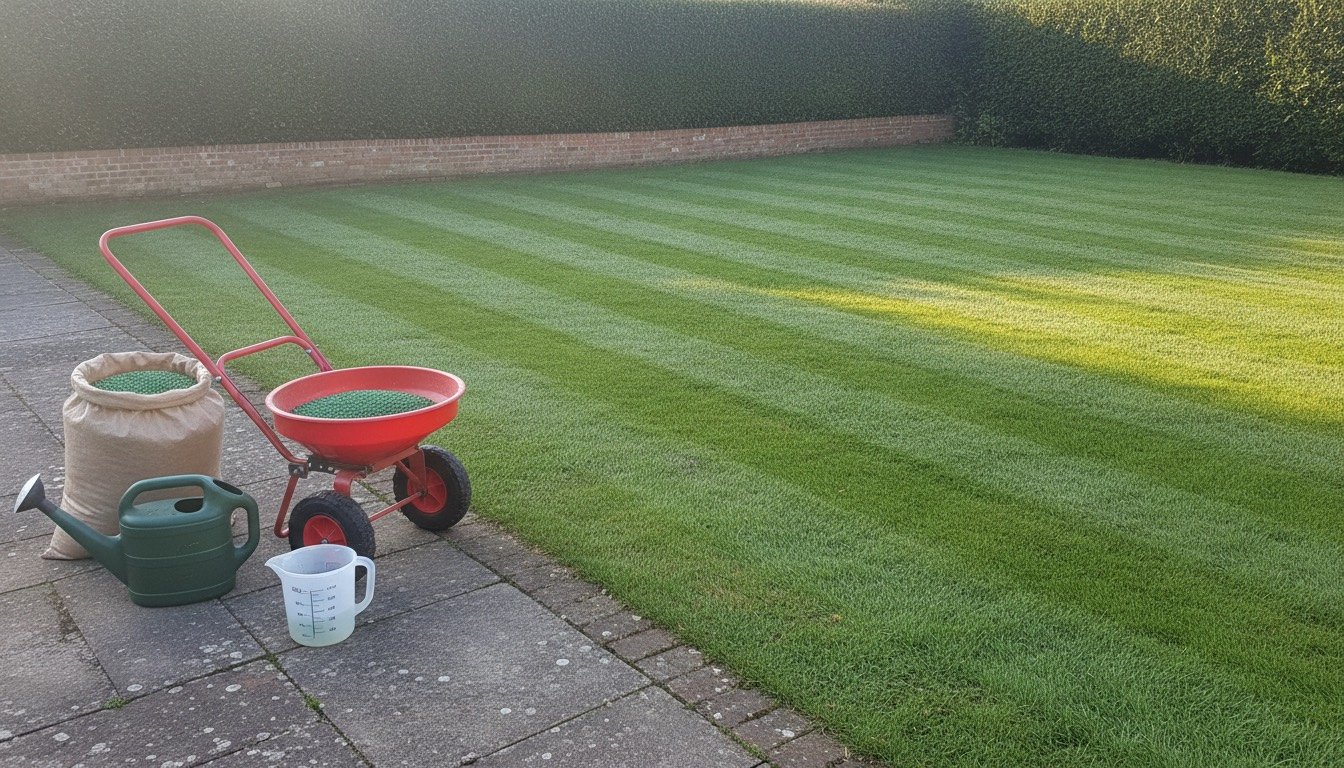
With granular, calibrate first. Run the spreader over a tarpaulin at the label setting and weigh what actually comes out — the dials are optimistic. Apply half the rate in two passes at right angles rather than one heavy pass; that alone eliminates most striping. Sweep granules off paving immediately, because the ferrous sulphate in moss-killing blends stains slabs rust-orange within a day and does not scrub off.
With liquid, dilute exactly as the label says, spray dry foliage on an overcast day, and hold the nozzle 40–50 cm above the grass so the fan overlaps evenly. Do not mow for two days afterwards or you cut off the leaf you have just fed. Neither product goes on frozen, waterlogged or drought-stressed grass, and neither within a metre of a pond or ditch.
Who each one suits
Granular suits the person who wants to think about the lawn four times a year: a bag in the shed, a spreader on the wall, half an hour each season. It pairs naturally with scarifying and overseeding, because slow-release feed will not burn young seedlings, and it is the only sensible choice above 300 m².
Liquid suits small, awkward or high-standard lawns: front gardens under 60 m², anything you look at daily from the kitchen window, and anyone who mows weekly. It is the better tool with no outside tap, and the honest choice for tenants who will not buy a spreader.
The verdict
For most UK lawns, granular slow-release is the primary feed and liquid is the supplement. Buy a coated spring-summer granular and a high-potassium autumn granular, apply them properly, and keep a litre of liquid seaweed or iron for the fortnight before a garden party. That combination costs about £40 a year and beats either approach used alone.
The exception is a small lawn on sand, or one you cannot water in — there, liquid every three weeks genuinely outperforms granular despite costing more. And if the diagnostic list pointed at compaction, shade or scalping, spend the money on a hollow-tine hire and a bag of seed instead. The fundamentals in our UK lawn care guide matter more than which container you buy.
Found this useful?
There's plenty more — hundreds of guides and honestly-tested product reviews for every corner of your home.
Browse All Guides