Organisation & Storage · 6 min read · 24 May 2026
Pantry Organisation Ideas That Survive Real Life
Most pantry systems are built for a photograph, not a Wednesday. Here is the layout, the container logic and the honest costs that keep a UK kitchen cupboard working nine months later.
By the Nims Casa editorial team — written from professional cleaning experience and checked against our editorial standards.
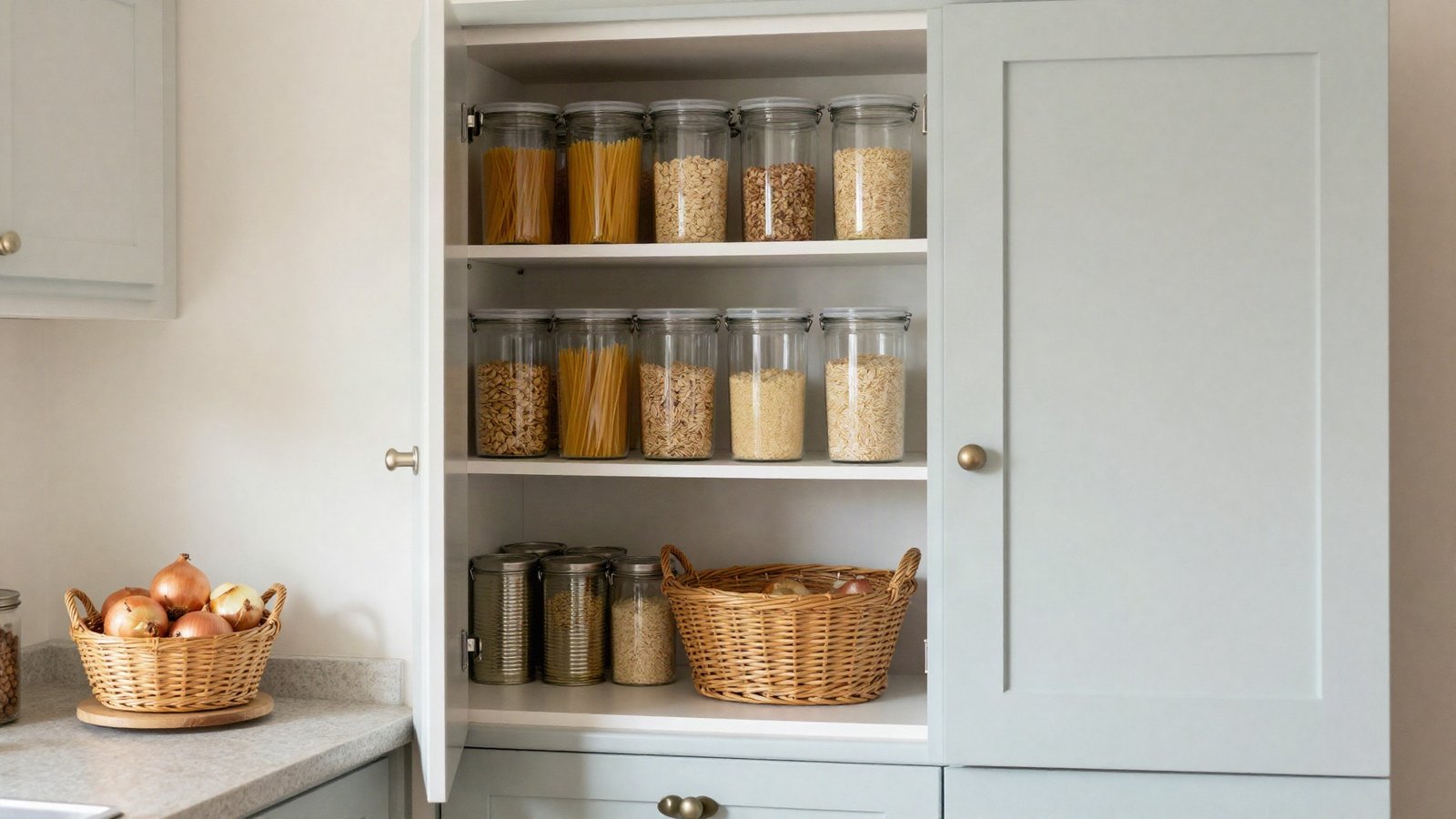
Almost nobody in Britain has a walk-in larder. We have a 500mm tall unit with four wire baskets, a cupboard under the stairs that also holds the hoover and the consumer unit, or two wall cupboards above the kettle quietly designated 'the food ones'. Any system that assumes American shelf depth and a spare wall falls apart within a month.
The honest test is not how it photographs on day one. It is whether, nine months later, somebody can put the shopping away in four minutes without moving three things first.
What Counts as a Pantry in a UK Kitchen
Work out which of these you own before buying a single container. Depth governs everything: anything deeper than about 350mm needs pull-out trays or turntables, or the back becomes an archaeological site.
- •Tall larder unit (500-600mm wide, around 560mm deep): the best of the lot, but deep shelves hide things. Retrofit pull-out baskets or clear trays.
- •Under-stairs cupboard: 1.5-3 square metres with a sloped ceiling. Good for bulk and tins, but check what services live in there first.
- •Repurposed wall units (300mm deep): the most underrated option. Nothing can hide at that depth, which is why they stay tidy.
- •Freestanding larder cupboard or shelving in a utility or alcove: £120-£450 depending on carcass quality — the realistic option in most flats.
The Two-Hour Strip-Out That Comes First
You cannot organise around food you will never eat. Block out two hours and do it in one pass; stopping halfway is how the contents end up on the worktop for a fortnight. If the whole house is like this, use our room-by-room decluttering method first.
- •Empty the cupboard, top shelf included, onto a cleared worktop.
- •Sort into keep, use this month, donate (unopened, in date), and bin.
- •Read the dates properly: 'best before' is quality, so flour six weeks past is usually fine; 'use by' is a safety date and is not negotiable.
- •Wipe shelves with a teaspoon of washing-up liquid in 500ml of warm water, then dry them fully. A damp shelf under a paper bag of flour grows mould in days.
- •Measure the internal height between shelves before you shop. Most people buy 3-litre jars for a 260mm gap and find out too late.
Zones Beat Categories on a Weeknight
Alphabetising spices is a hobby; zoning is a system. Height should map to frequency — the band roughly 900mm to 1500mm off the floor is prime real estate and holds only what you touch several times a week. The same logic that keeps kitchen cupboards working applies here, with more stock to manage.
- •Eye level: tea, coffee, cereal, oil, the pasta and rice you actually cook.
- •Below eye level: tins, jars and bottles in single front-facing rows. Heavy items always go low.
- •Floor level: bulk buys, plus potatoes and onions in ventilated baskets — never sealed, and never beside each other.
- •Top shelf: baking kit, the Christmas tin, spare batteries. If you need a step for it, you should need it twice a year.
- •One labelled 'eat me first' box at eye level. This single box does more for food waste than any container set.
Containers: What to Decant, What to Leave Alone
Decanting everything is expensive and often unhelpful — you lose the cooking instructions and the date. Decant only where it buys you airtightness, pest protection or stackability: flour, sugar, rice, pasta, oats, cereal, nuts, pet biscuits. Tins, jars, bottles and anything you finish in a fortnight stay as they are. Write the decant date and cooking time on the container, never on the shelf.
Realistic UK costs, so you can decide where the money goes:
- •Budget (£25-£45): a dozen clear stackable containers from a supermarket range, two turntables and a chinagraph pencil. Perfectly adequate.
- •Mid (£60-£120): 9L Really Useful Boxes at £7-£9 each for bulk, plus five or six push-button jars at £12-£22 for the daily items.
- •Considered (£150-£250): a matched airtight range across the eye-level shelf, plus retrofit pull-out baskets at £25-£40 each for a deep larder unit.
- •Worth it at any budget: two turntables (£8-£15), a shelf riser (£10-£20) and bag clips (£4).
Damp, Heat and Pantry Moths: The UK Failure Modes
British pantries fail for climate reasons, not tidiness ones. Under-stairs cupboards often sit beside a boiler pipe run or against an uninsulated external wall, swinging between 12°C and 25°C and sweating. Dry goods want somewhere consistently under about 20°C, so if yours runs warm, keep flour and nuts elsewhere. Never block access to a consumer unit, gas meter or boiler.
Pantry moths arrive inside packets from the shop, not through your windows; the giveaway is fine webbing in the corner of a cereal box. Bin every open packet, vacuum the shelf seams, wipe with 50:50 white vinegar, then keep everything airtight for eight weeks. Freezing new flour and rice for 72 hours at -18°C kills weevil eggs before they hatch. Gnawed corners rather than webbing is a different problem and needs proper mouse-proofing — a mouse gets through a 6mm gap, and food in cardboard keeps it coming back.
The Renter-Safe Version: Reversible and Deposit-Proof
All of the above works in a rented flat without touching a drill. The rule we work to is that the cupboard must go back to inventory condition in under twenty minutes — which rules out permanent shelf paper, drilled brackets and screwed-in racks, and little else. The same reversible thinking behind rental-friendly decorating applies to storage. Photograph the cupboard, dated, before you change anything; it settles arguments at check-out.
- •Freestanding first: a slim larder unit that stands on its own feet and moves with you. Fit an anti-tip strap only with written landlord permission.
- •Tension rods at about £5: horizontal to corral a row of tins, vertical to divide baking trays.
- •Loose-laid EVA or ribbed non-slip matting cut to size. It catches spills and lifts straight out. Never peel-and-stick vinyl on painted or veneered shelving.
- •Adhesive hooks rated well above the load; most are honest at 1-2kg. Remove by pulling the tab slowly straight down, not outwards.
- •Stackable boxes instead of fitted shelving: two 9L boxes buy you an extra shelf with no fixings.
- •Note the original shelf peg positions before moving a shelf, and put them back before check-out.
Keeping It Working, and the Questions We Get Most
The reset is the easy part. What keeps a pantry alive is a ten-minute pass before the weekly shop: pull anything nearly empty to the front, move approaching dates into the 'eat me first' box, write the gaps straight onto the list. The commonest reason a system collapses is buying storage before deciding what is being stored — the first of the classic home organisation mistakes.
- •How often is a full reset needed? Once a year if the weekly pass happens; twice if you bulk-buy.
- •Must containers match? No. Matching heights genuinely helps stacking; matching lids only help the photograph.
- •Is bulk buying cheaper? Only if it gets eaten. A 5kg sack that goes stale or gets infested is worse value than five 1kg bags.
- •No pantry at all? Convert one full-height cupboard, or borrow space with small-space storage ideas — a well-run hallway shelf beats a badly run kitchen one.
Found this useful?
There's plenty more — hundreds of guides and honestly-tested product reviews for every corner of your home.
Browse All Guides