Home Decor · 6 min read · 20 June 2026
UK Home Decor Trends 2026: Warm Earth, Texture & 'Midimalism'
Terracotta and clay tones, boucle and wool texture, curved silhouettes and fewer-but-better purchases — how UK homes are decorating in 2026.
By the Nims Casa editorial team — written from professional cleaning experience and checked against our editorial standards.
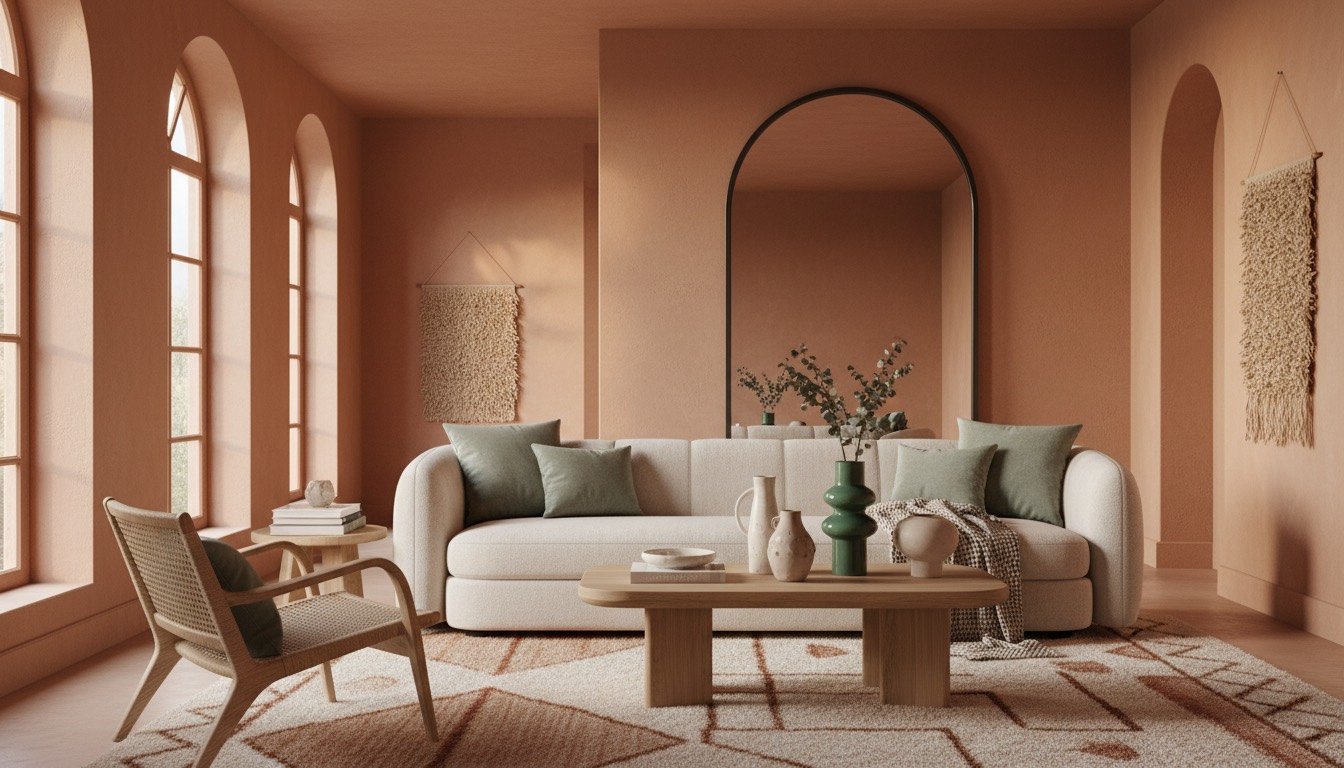
British interiors have moved on from the grey-on-grey decade. Walk into a newly decorated UK living room in 2026 and you'll find warm clay walls, a boucle armchair, an arched mirror and far fewer knick-knacks than five years ago. Designers have a shorthand for the mood: 'midimalism' — minimalism's calm without the coldness, mid-century warmth and personal detail layered carefully back in.
This guide covers what's actually changing in UK homes this year: the colours replacing grey, the textures worth the extra spend, the furniture shapes softening boxy rooms, and the shift towards buying fewer, better pieces.
We'll also cover what nobody puts on a mood board: what these trends cost on a real UK budget, how to keep natural materials looking good, and the mistakes that turn a redecoration into an expensive regret.
Warm, earthy paint colours are replacing cool grey
Soft clay, baked terracotta and muted ochre have become the backbone palette of British homes — shades that keep a room feeling settled under grey UK skies, and that photograph better than the cool greys of the 2010s. Sage and dusty olive greens do similar work, bringing something garden-like indoors. Expect to pay roughly £28–£48 for a 2.5-litre tin of a quality matt or eggshell emulsion in these tones; budget ranges cost less but often need an extra coat, so check how much paint you actually need before you buy.
For drama, jewel tones are appearing in small, deliberate doses: forest green, oxblood and near-black in high-sheen finishes on woodwork, kitchen islands, staircases and front doors. Full 'colour drenching' — painting walls, ceiling and trim the same rich shade — has moved from statement to mainstream this year, and it's one of the colour drenching ideas worth trying for real impact without a full renovation.
Texture is doing more work than colour
The flat, smooth interior is over. This year's rooms are built around touch: boucle and wool upholstery, jute and woven cotton, raw and burl wood, and matte plaster-effect walls. Layering two or three textures within a tight colour palette is the cheapest way to make a room look considered.
Rugs do a lot of this work. Wool and jute rugs in natural, undyed tones are replacing the flatweave prints of a few years ago, and choosing the right rug for your living room — size, pile and material — changes how a room reads more than almost any other single purchase. If you're weighing wool against synthetic options for a hallway or stairs, our guide to carpet types explained covers the trade-offs in wear, cost and cleaning.
Curved furniture and softer silhouettes
Sofas with rounded arms, arched alcoves and mirrors, pill-shaped dining tables and drum-backed armchairs are softening the hard rectangular room that dominated the last decade. Curves suit typical UK room proportions well — a curved sofa or round dining table eases traffic through the tight doorways and narrow hallways common in Victorian terraces and 1930s semis, where a squared-off three-piece suite can block a walkway entirely.
A single curved anchor piece — an armchair, a mirror, a pendant light shade — is usually enough. For layout advice specific to compact UK rooms, see our guide on arranging furniture in a small living room.
Midimalism: buying fewer, better things
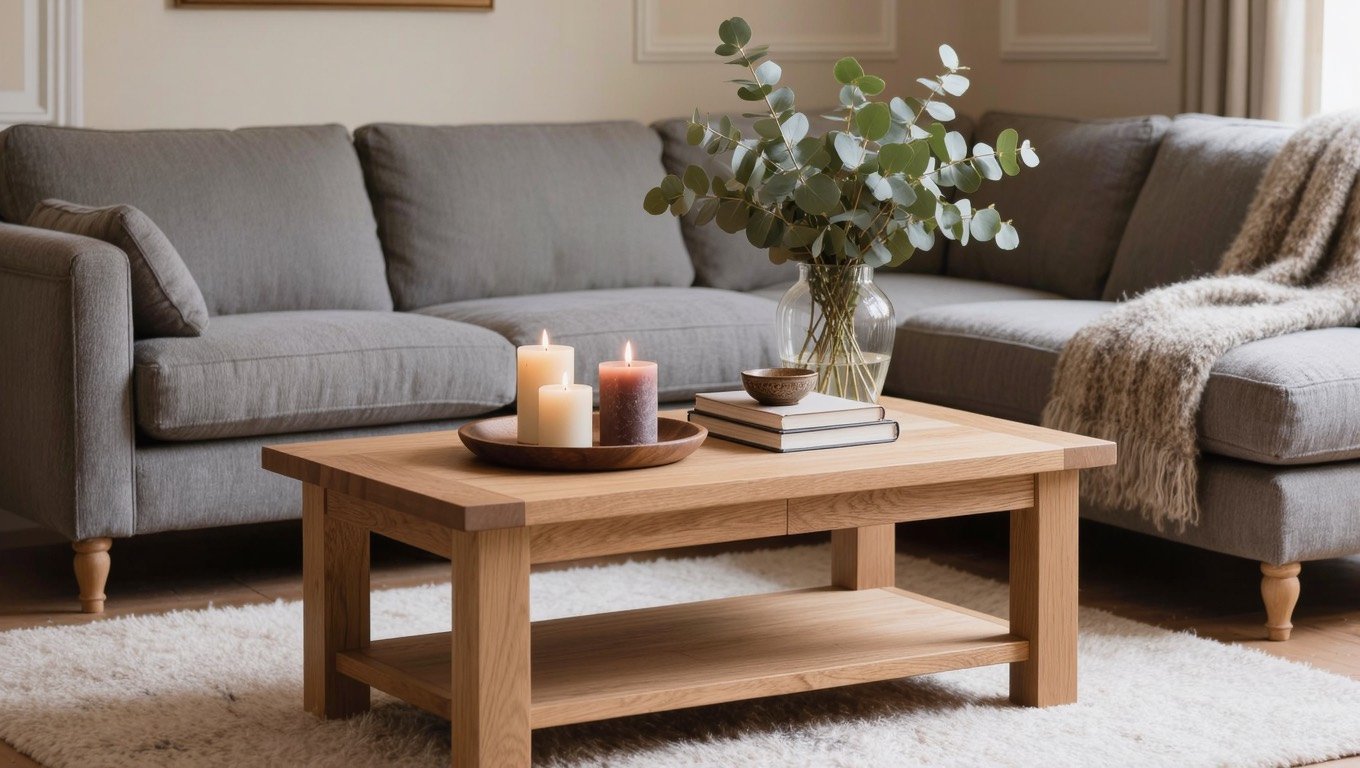
The defining shift of 2026 isn't a colour, it's a rejection of disposable decor. UK shoppers are buying fewer, better pieces: solid wood over veneer, wool over polyester, one well-made vintage or secondhand find over three fast-furniture fillers destined for landfill. A solid oak coffee table might cost £250–£600 against £80–£120 for a veneered flat-pack equivalent, but it can be re-oiled and repaired rather than replaced, which changes the maths over a decade.
This isn't strict minimalism — plenty of 2026 rooms are layered and personal, just curated rather than cluttered. If you're unsure which end of that spectrum suits your home, our comparison of maximalism versus minimalism interior design breaks down the cost and upkeep differences.
Making the look work in a rented home
Much of this look is achievable in a rented UK property without risking your deposit. Removable clay-effect wallpaper, warm-toned peel-and-stick splashback tiles, a boucle throw and cushions, and a single curved mirror can shift a beige rental towards the 2026 look for well under £200. Save anything structural until you've checked your tenancy agreement, and use painter's tape and test patches first. Our guide to rental-friendly decor covers what landlords typically allow and how to reverse changes cleanly.
Caring for natural materials and textured fabrics
Natural-fibre rugs and boucle upholstery are unforgiving with spills — wool can felt or discolour if scrubbed with the wrong product. Blot spills immediately, keep supermarket stain sprays away from wool and boucle, and have natural-fibre rugs and heavily used upholstery professionally cleaned every 12–18 months; expect roughly £4–£8 per square metre for professional wool rug cleaning in most UK cities. Vacuum textured upholstery weekly with a low-suction attachment so grit doesn't work into the weave and wear it from the inside.
Wood finishes need similar attention: raw and burl wood pieces benefit from re-oiling every six to twelve months, which stops them drying out under UK central heating. For the flooring side of the same trend, our guide on making carpet last 20 years has habits that apply as well to a new wool rug as to fitted carpet.
Common decorating mistakes to avoid this year
A handful of mistakes turn these trends from a considered refresh into an expensive muddle:
- •Painting every wall the same earthy tone with no contrast, which flattens a room instead of warming it — leave one lighter surface, such as the ceiling, to bounce light around.
- •Buying 'boucle' fabric without checking the fibre content: some budget versions are 100% polyester and pill or flatten within a year, unlike genuine wool-blend boucle.
- •Mixing too many curved shapes at once so a room loses structure — pair curves with at least one straight, grounding piece, such as a rectangular rug.
- •Choosing a jewel-tone accent wall in a north-facing room with little natural light, which can read as heavy and cave-like rather than dramatic.
- •Skipping a sample pot: earthy paint colours shift dramatically under UK light, so test the actual wall at different times of day before committing a full room.
Frequently asked questions
**What is 'midimalism' in interior design?** Midimalism is the 2026 shorthand for a middle ground between strict minimalism and full maximalism — calm, uncluttered rooms that still carry warmth, texture and personal objects.
**What colours are replacing grey in UK homes in 2026?** Soft clay, terracotta, muted ochre, sage and dusty olive green are the main neutrals, with deep inky blue, forest green and oxblood used as accents on woodwork and doors.
**Is boucle furniture hard to keep clean?** Genuine wool-blend boucle needs specialist care rather than supermarket upholstery sprays — blot spills promptly, vacuum with low suction weekly, and have it professionally cleaned roughly once a year so the loops don't flatten.
**Can I follow these trends in a rented flat?** Yes — most of the look comes from soft furnishings, removable wallpaper and lighting rather than structural changes, so it's achievable within a standard UK tenancy agreement; always check before painting woodwork.
**How much does it cost to redecorate one room in the 2026 style?** A single living room refresh — paint, a wool or jute rug, cushions and one curved accent piece — typically costs £400–£900; adding a solid wood piece or two pushes that towards £1,000–£2,500.
**Will these trends date quickly?** The core idea — warmer neutrals, real materials and buying less but better — is a reaction against disposable decor, so it should outlast a typical five-year trend cycle even as accent colours shift.
Found this useful?
There's plenty more — hundreds of guides and honestly-tested product reviews for every corner of your home.
Browse All Guides